
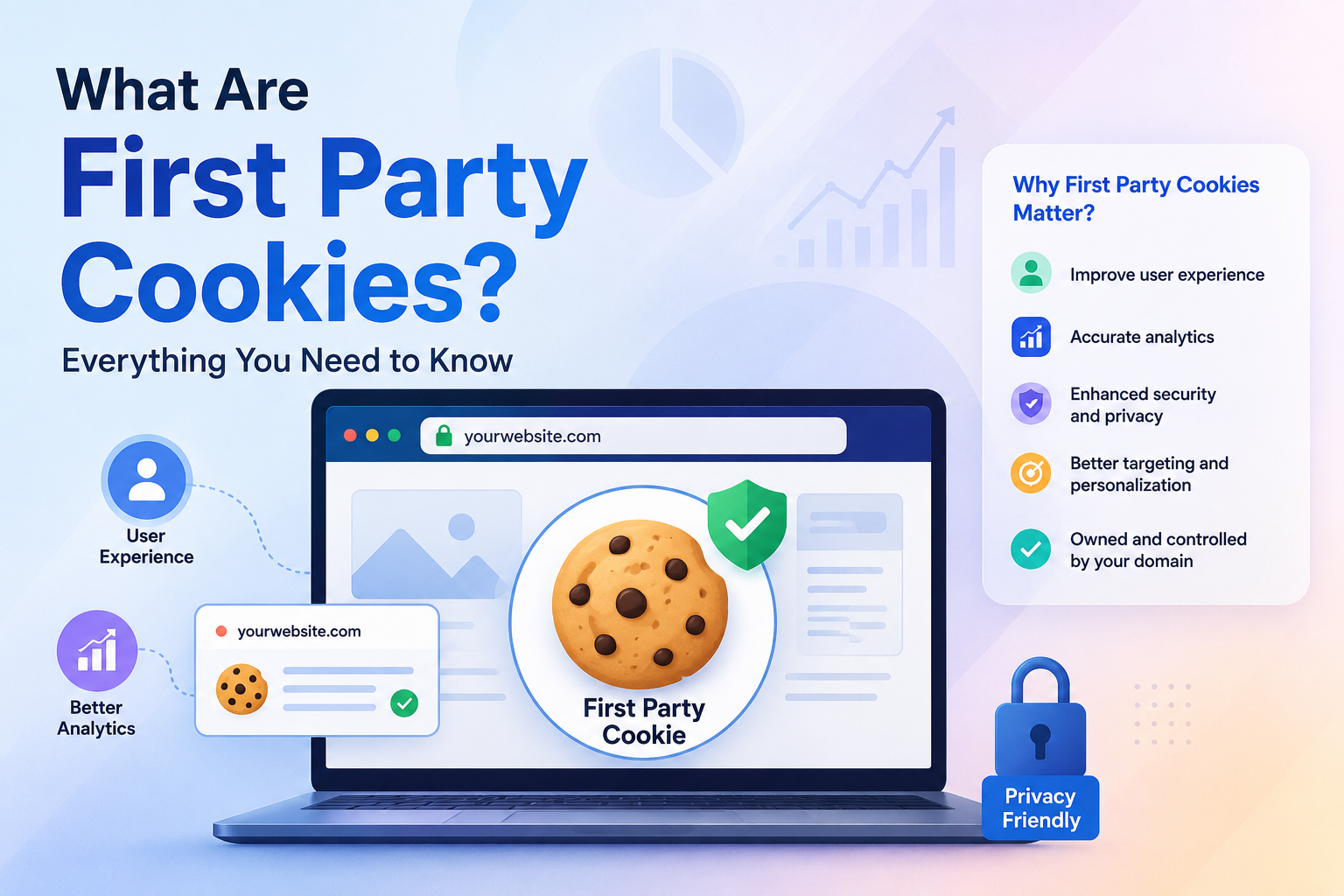
Have you ever wondered how a website remembers your login details or keeps items in your shopping cart while you browse? The secret often lies in small data files stored directly by the site you are visiting. These First Party Cookies are essential tools that help create a seamless and personalized digital experience for every user.
Understanding how these first party cookies function is vital for both site owners and everyday internet users. They act as the backbone of modern web navigation, ensuring that your preferences remain intact as you move between pages. Without them, the internet would feel fragmented and difficult to use.
In an era where data privacy is a top priority, knowing how your information is handled is more important than ever. By learning about First Party Cookies, you gain better control over your online footprint. This guide will walk you through how these files shape your daily interactions with the web while maintaining site functionality.
Key Takeaways
- These files are created by the website you are currently visiting.
- They are primarily used to improve user experience and site performance.
- They help websites remember your settings and login status.
- These tools are generally considered safer than third-party alternatives.
- Managing your browser settings gives you control over data storage.x
Protect Your Website with Privacy-First Solutions
Build trust with privacy-focused tools designed to improve compliance, website performance, and user experience. Explore our plans and choose the perfect solution for your business today.
Defining First Party Cookies
To navigate the modern web effectively, you must first grasp the mechanics of how sites remember your preferences. These small first party cookies serve as the memory of your browser, allowing websites to recognize you during your visit. Understanding this technology is the first step toward mastering your digital footprint.
What is a first party cookie?
A first party cookie is a small data file created and stored by the website you are currently visiting. When you land on a domain, the site sends this file to your browser to keep track of your actions. This process ensures that your settings, such as language preferences or login status, remain consistent while you browse.
If you are wondering what is a first party cookie in terms of utility, think of it as a digital ID card issued by the host. It only communicates with the domain that created it, which keeps your information contained within that specific site. This exclusivity is a primary reason why these files are generally viewed as helpful rather than intrusive.
The technical origin of cookie data
The technical origin of these files lies in the communication between your browser and the web server. When you request a page, the server generates a unique identifier and sends it back to your device. Your browser then saves this data locally, ensuring that every subsequent request to that same domain includes the identifier.
It is important to distinguish this from external data sources. While a first party cookie is generated by the host domain, other types of cookies may come from third-party advertisers or trackers. Knowing what is a first party cookie helps you identify when a site is managing your data directly versus when an outside entity is attempting to monitor your activity.
How First Party Cookies Work on Your Website
Every time you visit a website, a silent conversation happens between your browser and the server. This process ensures that the site functions correctly and remembers your specific needs during your visit.
The interaction between browser and server
When you request a webpage, your browser sends an HTTP request to the server. The server responds by sending the requested content along with a “Set-Cookie” header. This header instructs your browser to store a small piece of data on your local device.
Once stored, your browser automatically includes this cookie in every subsequent request to that same domain. This allows the server to recognize you as the same user who visited just moments ago. This seamless exchange is the foundation of modern web functionality.
Session cookies versus persistent cookies
Cookies are generally categorized by their lifespan and how they are stored on your machine. Understanding these two types helps you see how websites maintain your state across different browsing scenarios.
- Session cookies: These are temporary files that exist only while your browser is open. They are deleted automatically once you close your browser window.
- Persistent cookies: These files remain on your device for a set period or until you manually delete them. They allow sites to remember your login status or language settings over long periods.
Understanding session duration
Session duration is determined by the server’s configuration and your own browsing habits. Most systems define a session as the time elapsed between your first request and the moment you close the browser or remain inactive for a specific threshold.
If you leave a site open without interacting, the server may eventually expire the session for security reasons. This ensures that your private data is not left vulnerable if you step away from your computer.
Managing long-term user preferences
Persistent cookies are essential for creating a personalized experience that lasts beyond a single visit. Developers use these to store information like your preferred currency, dark mode settings, or items left in a shopping cart.
By setting an expiration date far into the future, the server ensures that your preferences are reloaded every time you return. This capability significantly improves your user experience by removing the need to reconfigure settings repeatedly.
First Party Cookies vs Third Party Cookies: Key Differences
The debate regarding first vs third party cookies is central to modern internet privacy and data management. While both mechanisms store information on your device, they function in fundamentally different ways to track your online behavior. Understanding these variations is essential for any professional managing a digital presence.
The distinction in domain ownership
The primary difference lies in who creates and manages the cookie. First party cookies are generated by the website you are currently visiting. They are tied directly to the domain you see in your browser address bar.
In contrast, third party cookies are created by domains other than the one you are visiting. These are often placed by advertisers or analytics platforms to track your activity across multiple websites. This ownership distinction determines whether the data remains within a single ecosystem or is shared across the broader web.
Security and data accessibility
Security protocols differ significantly between these two tracking methods. Because first party cookies are restricted to the originating domain, they are generally considered more secure and transparent. They help maintain your preferences and login states without exposing your data to external parties.
Third party cookies vs first party cookies present a different risk profile regarding data accessibility. Third party trackers can follow your journey across various sites, creating a comprehensive profile of your interests. This cross-site capability is exactly why many users and regulators view them as a potential privacy concern.
| Feature | First Party Cookies | Third Party Cookies |
|---|---|---|
| Domain Origin | Same as the site visited | External third-party domain |
| Primary Purpose | User experience and site function | Advertising and cross-site tracking |
| Privacy Level | High transparency | Low transparency |
Why third party cookies are being phased out
The digital landscape is shifting rapidly as privacy concerns take center stage. Major web browsers are actively restricting or blocking third party trackers to protect user anonymity. This transition forces businesses to rely more heavily on direct, first party data collection.
By moving away from external tracking, companies can build more sustainable relationships with their audience. This shift ensures that your data collection practices remain compliant with evolving global standards. Ultimately, prioritizing first party data is the most effective way to ensure long-term success in a privacy-focused internet environment.
The Role of First Party Cookies in User Experience
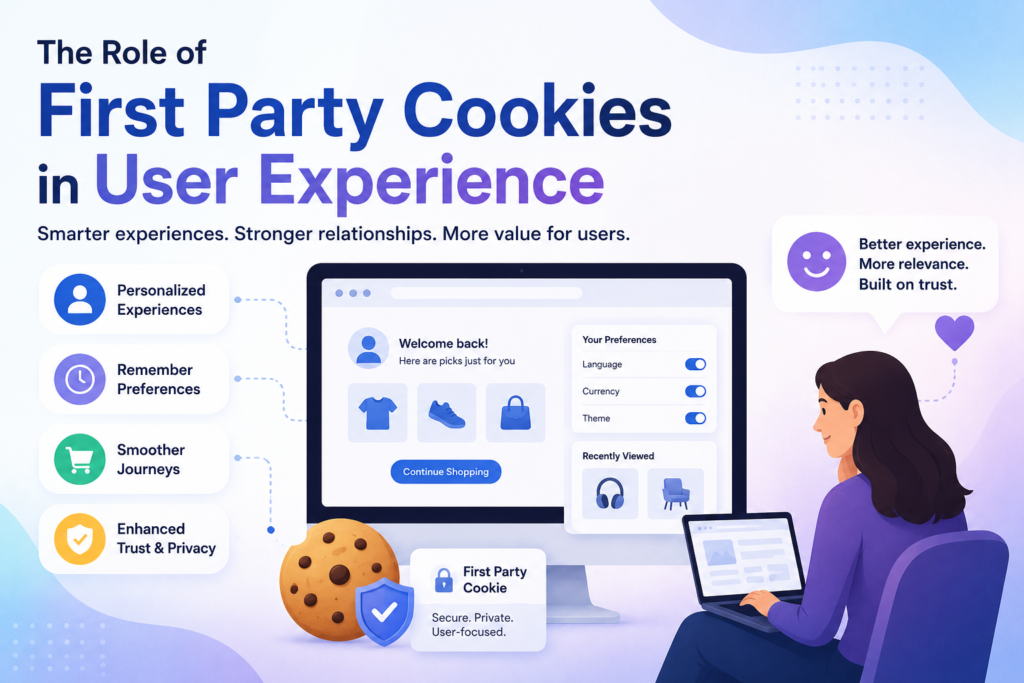
Understanding the role of First Party Cookies reveals how they transform a generic site visit into a tailored journey. These small data files act as the foundation for a smooth, intuitive interaction between you and the websites you frequent.
Personalizing content for returning visitors
When you return to a website, you expect it to remember your preferences. First Party Cookies allow platforms to recognize your device and display content that aligns with your previous interests.
This level of customization saves you time by removing the need to re-select language settings or regional preferences. It creates a sense of familiarity that makes your browsing experience feel more efficient and welcoming.
Maintaining shopping cart functionality
Have you ever wondered how your items stay in your cart even after you navigate away from a page? This is a primary function of these cookies, which act as a temporary memory for your session.
By storing your product selections, these cookies ensure that your shopping journey remains uninterrupted. You can browse multiple categories or compare different items without the frustration of losing your progress.
Streamlining authentication and login states
Security and convenience often go hand in hand when you access your personal accounts. These cookies help maintain your login state, so you do not have to enter your credentials every time you refresh a page.
This streamlined authentication process is vital for platforms that require frequent interaction. By securely managing your session, these cookies allow you to move between different areas of a site while keeping your account access active and protected.
Privacy Regulations and the Future of Internet Tracking
Modern internet users are demanding more control over their personal information, forcing a global shift in data collection standards. This evolution is not just a trend but a fundamental change in how businesses approach internet tracking to maintain user trust.
Compliance with GDPR and CCPA
Legal frameworks like the General Data Protection Regulation (GDPR) in Europe and the California Consumer Privacy Act (CCPA) have set a new bar for transparency. These laws require organizations to obtain explicit consent before they can monitor user behavior.
Failure to adhere to these standards can result in significant financial penalties and reputational damage. Consequently, companies are now prioritizing data minimization to ensure they only collect what is strictly necessary for their operations.
The shift toward privacy-first browsing
The industry is moving rapidly toward a privacy-first model where the user experience is prioritized over aggressive data harvesting. This shift encourages brands to build deeper, more meaningful connections with their audience through transparent communication.
By focusing on first-party data, businesses can still deliver personalized experiences without relying on invasive methods. This approach respects the user’s digital footprint while maintaining the effectiveness of modern marketing strategies.
How browsers are restricting internet tracking
Major web browsers are taking proactive steps to limit internet tracking by blocking unauthorized scripts and cookies. These technical restrictions make it harder for third parties to follow users across different websites.
Browser-level privacy features now automatically prevent cross-site monitoring by default. As a result, you must adapt your technical infrastructure to ensure your site remains functional while staying compliant with these new browser standards.
Benefits of Using First Party Cookies for Your Business
Adopting a robust data strategy centered on First Party Cookies can transform how you interact with your digital audience. By moving away from reliance on external tracking, you gain full control over the information gathered on your domain.

Building direct relationships with your audience
When you own the data collection process, you foster a deeper sense of trust with your visitors. This transparency allows you to create personalized experiences that resonate with individual preferences without feeling intrusive.
“In the digital age, the most valuable currency is not just data, but the trust you build with your customers through transparent interactions.”
Improving site performance and load times
Many third-party scripts introduce significant latency, which can frustrate users and hurt your search rankings. By utilizing First Party Cookies, you reduce the number of external requests your server must handle during a page load.
This streamlined approach ensures that your website remains fast and responsive. A quicker site directly correlates with higher conversion rates and improved user satisfaction.
| Feature | Third-Party Tracking | First-Party Data |
|---|---|---|
| Data Ownership | External Vendors | Your Business |
| Load Speed | Often Slower | Optimized/Faster |
| User Trust | Lower | Higher |
Data accuracy and reliability
Relying on First Party Cookies ensures that the information you collect is clean and directly tied to your specific user base. You avoid the discrepancies often found in aggregated data sets provided by third-party intermediaries.
This high level of accuracy empowers your team to make informed business decisions based on real behavior. When your data is reliable, your marketing campaigns become more effective and your return on investment becomes much easier to track.
Managing and Implementing First Party Cookies
You can take control of your data collection by mastering the technical side of cookie management. A well-structured approach ensures that your website remains both functional and compliant with modern privacy standards. By focusing on transparency and technical precision, you build a foundation of trust with your audience.
Grow Your Business with Smarter Website Solutions
From secure tracking to faster performance, our solutions help you optimize every visitor interaction. Visit our homepage to explore products built for modern, privacy-first businesses.
Best practices for cookie consent banners
Your cookie consent banner serves as the first point of interaction regarding user privacy. It must be clear, concise, and easy for visitors to understand. Transparency is the most critical element when you ask for permission to track user behavior.
Ensure that your banner provides an explicit option to accept or decline non-essential tracking. Avoid using dark patterns that trick users into agreeing to data collection. A clean design that aligns with your brand identity helps maintain a professional user experience.
Configuring server-side tracking
Moving your tracking logic to the server can significantly improve your data reliability. By using a first party cookie setup on the server side, you bypass many of the limitations imposed by modern browser privacy features. This method allows you to maintain control over the data sent to third-party analytics platforms.
To implement this, you will need to set up a dedicated tracking server or use a cloud-based container. This configuration ensures that your data collection remains robust even as browser restrictions tighten. It also helps in reducing the load on the client-side tracking browser, which can improve overall site performance.
Auditing your website for cookie compliance
Regular audits are necessary to keep your website in line with evolving privacy regulations. You should periodically scan your site to identify every first party cookie currently in use. This process helps you verify that all tracking scripts are functioning as intended and remain compliant with laws like GDPR or CCPA.
Consider using automated compliance tools to track changes in your site’s cookie environment. If you update your website or add new plugins, perform a fresh audit to ensure no unauthorized tracking has been introduced. Consistent monitoring is your best defense against potential legal issues and loss of user trust.
Common Misconceptions About First Party Data
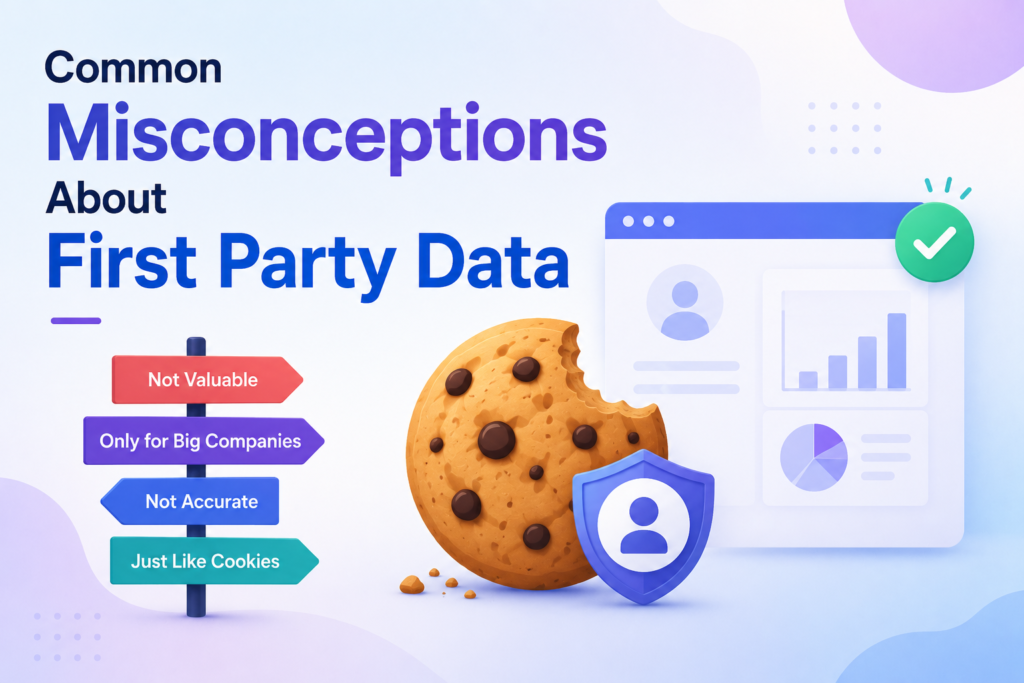
You might be surprised to learn that some common fears about data collection are based on misunderstandings. While the digital landscape is complex, not every piece of information gathered by a website is designed to compromise your privacy. Understanding the nuances of how your data is handled helps you navigate the web with more confidence.
Are first party cookies inherently invasive?
A common belief is that any form of internet tracking is malicious. However, a first party cookie is often essential for the basic functionality of the sites you visit. These small files remember your preferences, such as language settings or items in your shopping cart, to ensure a smooth experience.
Without these tools, you would have to log in or reset your preferences every time you refreshed a page. They are not designed to spy on your private life but rather to make your browsing session more efficient. When used correctly, they serve as a bridge between your needs and the website’s performance.
Distinguishing between data collection and data sharing
It is vital to separate the act of collecting data for site utility from the practice of sharing that data with third parties. Many users assume that if a site collects information, it automatically sells that data to advertisers. In reality, a first party cookie is typically restricted to the domain that created it.
Data collection for internal site improvement is a standard practice that helps businesses understand how to better serve their audience. In contrast, data sharing involves passing your information to external entities for profiling. By knowing this difference, you can better evaluate which websites prioritize your privacy.
The myth of total anonymity online
Many people strive for total invisibility, but the reality is that complete anonymity is a myth in the modern digital age. Even without cookies, your browser sends signals like your IP address and device type to every server you contact. This form of internet tracking is a fundamental part of how the web functions.
While you can take steps to limit your digital footprint, achieving absolute silence is nearly impossible. Instead of chasing total anonymity, focus on understanding how your data is used by the platforms you trust. Being informed is your best defense against unnecessary data exposure.
Ready to Future-Proof Your Website?
Stay ahead of evolving privacy regulations with reliable tracking and compliance solutions. Discover powerful features that help grow your business while protecting your visitors’ data.
Conclusion
Modern web architecture relies on a delicate balance between user convenience and data privacy. You now possess the knowledge to navigate this complex ecosystem with confidence.
First party cookies serve as the backbone for personalized digital experiences. They allow your website to remember preferences while respecting the boundaries set by global privacy standards like GDPR and CCPA.
Your ability to manage these tools determines the long-term success of your online presence. Brands like Google and Apple continue to shift the industry toward stricter tracking protocols. Adapting your strategy now ensures your business remains resilient against these evolving technical changes.
Prioritize transparency with your audience to build lasting trust. Clear consent banners and robust server-side tracking practices demonstrate your commitment to ethical data handling. These steps protect your users and improve the overall quality of your site performance.
Take action today by auditing your current tracking methods. Implementing these best practices will secure your digital footprint for years to come. Your visitors deserve a seamless, private, and efficient browsing experience every time they interact with your brand.
FAQs
What is a first party cookie and how does it function?
A first party cookie is a small text file created and stored by the website you are currently visiting. These files allow the website to remember your specific data and settings, such as your language preferences or items in a shopping cart, ensuring a consistent and functional user experience. Because they are generated by the host domain, they are generally considered more secure and less invasive than other forms of internet tracking.
What are the primary differences when comparing first vs third party cookies?
The main distinction between third party cookies vs first party cookies lies in domain ownership. First party cookies are set by the site you are directly interacting with (for example, Amazon or The New York Times). In contrast, third-party cookies are placed by external domains, often for advertising or cross-site tracking. While the former is essential for site functionality, the latter is increasingly restricted by browsers like Apple Safari and Mozilla Firefox due to privacy concerns.
How do session cookies differ from persistent cookies?
Session cookies are temporary and are deleted as soon as you close your web browser; they are typically used to track your progress through a site during a single visit. Persistent cookies, however, remain on your device for a predetermined duration. These are used for long-term functions, such as keeping you logged into your Spotify account or remembering your custom site settings across multiple visits.
Why is the industry moving away from third party cookies?
The shift toward a privacy-first digital landscape is driven by consumer demand and strict regulations like the GDPR and CCPA. As a result, major platforms like Google Chrome are phasing out support for third-party tracking to prevent unauthorized cross-site data collection. This makes the implementation of a robust first party cookie strategy vital for businesses that want to maintain data accuracy while respecting user privacy.
How do first party cookies benefit your business website?
By prioritizing first party cookies, you build a direct and more transparent relationship with your audience. These cookies provide more reliable data for analytics because they aren’t blocked as frequently as third-party trackers. Additionally, they can improve your site’s performance and load times, as the browser only needs to communicate with your server rather than multiple external ad servers.
Are first party cookies considered invasive to user privacy?
Generally, no. Unlike broad internet tracking methods used by advertisers to follow you across the web, first-party data collection is usually limited to your interactions with a single site. Most users find these cookies helpful because they streamline authentication and remember personalized preferences. However, it is still a best practice to use transparent cookie consent banners to inform your visitors about what data you are collecting.
How can you ensure your website remains compliant with privacy regulations?
To stay compliant with laws like the GDPR, you should perform regular audits of your website’s cookie usage. Ensure that your consent management platform (CMP) is configured correctly and that you are using server-side tracking where possible to maintain control over your data. Providing a clear privacy policy that explains what is a first party cookie and how it is used on your site is essential for maintaining user trust.
Can first party cookies provide total anonymity for users?
Total anonymity is largely a myth in the modern digital age; however, first party cookies offer a much higher level of privacy than third-party alternatives. While they do track your behavior on a specific site to improve your experience, they do not facilitate the intrusive “shadow profiling” associated with third-party internet tracking. This allows you to enjoy a personalized experience on platforms like Netflix without your data being sold to hundreds of external advertisers.
1 thought on “What Are First Party Cookies? Everything You Need to Know”