
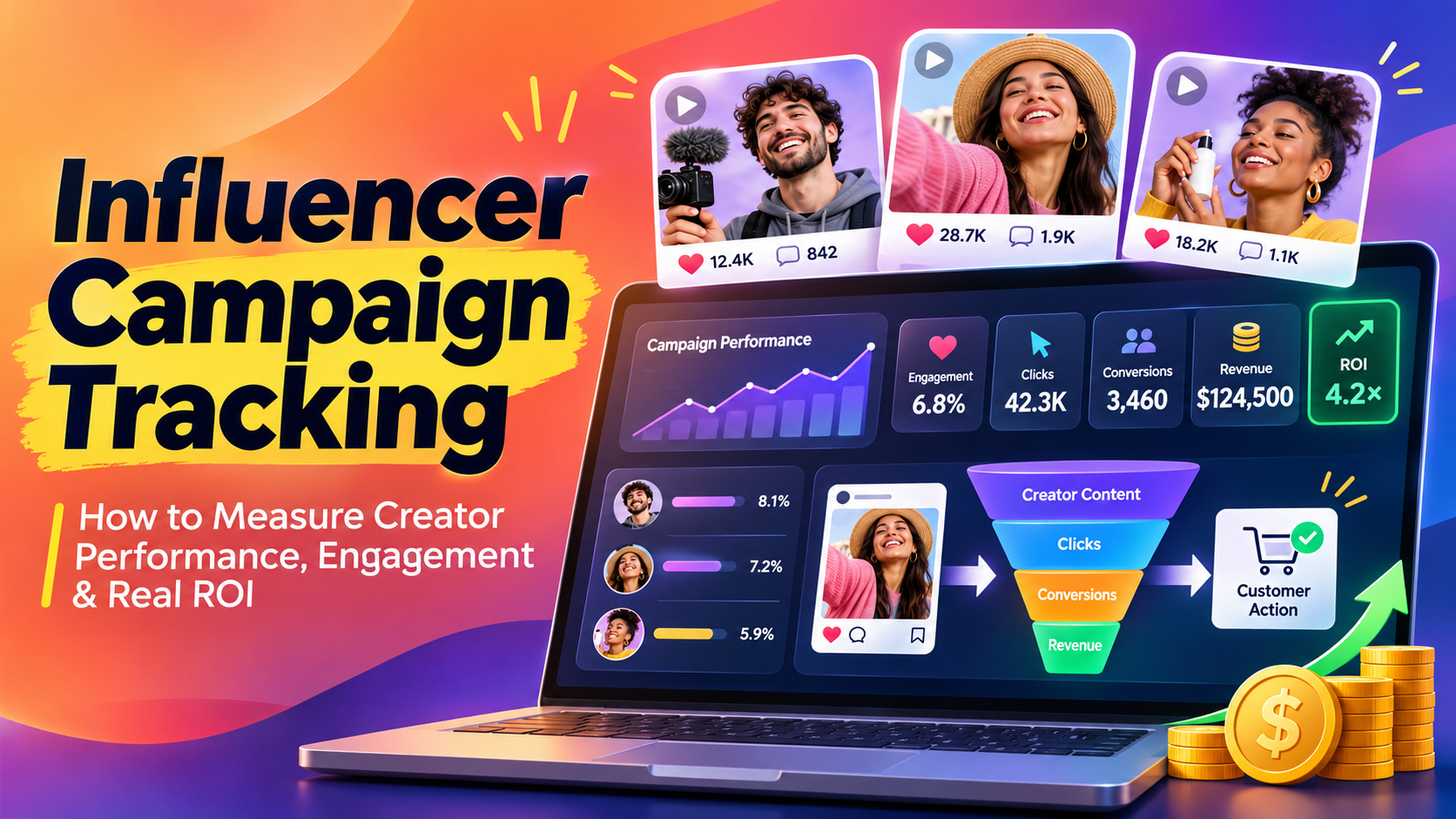
What if an influencer with 20,000 followers brings your business more customers than a creator with 500,000 followers? Would you know which partnership deserves your next marketing budget?
This is one of the biggest challenges brands face when investing in influencer marketing. A creator might receive thousands of likes, hundreds of comments, and impressive views, but those numbers do not automatically translate into website visits, enquiries, or sales. Without proper measurement, businesses can end up spending money on campaigns that look successful on social media but deliver very little actual business value.
This is where influencer campaign tracking becomes important.
Instead of judging a partnership only by its popularity, businesses can use tracking links, UTM parameters, unique discount codes, conversion events, and analytics reports to understand what happens after someone sees an influencer’s content. They can identify which creator attracts interested visitors, which promotional content generates clicks, and which campaigns contribute to actual purchases.
For example, imagine working with three Instagram creators to promote the same product. All three publish promotional Reels, but only one generates consistent website traffic and sales. Without a reliable tracking system, you might continue paying all three creators equally. With the right measurement approach, you can identify the strongest performer and make better decisions about future collaborations.
The purpose of this guide is to explain everything you need to know about measuring influencer marketing results, from choosing the right metrics to setting up tracking links, calculating return on investment, and improving future campaigns.
Whether you are a small business owner, digital marketer, agency, or growing brand, you will learn practical ways to connect creator activity with meaningful business outcomes. A consistent influencer campaign tracking strategy helps turn these measurements into actionable insights for future marketing decisions.
Key Takeaways
- Measure beyond followers: Likes, views, and comments are useful, but clicks, leads, purchases, and revenue reveal business impact.
- Give every creator a unique tracking link: This helps identify which influencer, platform, and campaign generate website visits.
- Use UTM parameters: They help distinguish traffic sources and campaign performance inside Google Analytics 4 (GA4).
- Connect clicks with conversions: Track meaningful actions such as registrations, purchases, enquiries, and subscriptions.
- Review traffic quality: Not every click represents an interested person. Analyse visitor behaviour and suspicious activity before judging performance.
Track Every Influencer Click with Confidence
Discover how Linkstrackly helps you shorten links, monitor clicks, analyse visitors, and understand campaign traffic so you can make smarter influencer marketing decisions.
1. What Is Influencer Campaign Tracking?
Influencer campaign tracking is the process of monitoring, measuring, and analysing the results generated by creators who promote a brand, product, service, or offer through their social media channels or other digital platforms.
It helps businesses understand whether their influencer partnerships are generating the outcomes they expect. A consistent influencer campaign tracking process also makes it easier to compare results across different creators and campaigns.
Effective influencer campaign tracking also helps brands connect creator activities with their broader marketing goals.
These outcomes can include:
- Brand awareness and audience reach.
- Likes, comments, shares, and saves.
- Website visits and product-page views.
- Sign-ups, enquiries, and downloads.
- Purchases and generated revenue.
- New customers and repeat purchases.
- Cost per acquisition and return on investment.
The main purpose is to connect promotional activity with measurable results.
For example, suppose a skincare brand partners with five beauty creators. Each creator shares a different promotional link in their Instagram bio or Story. The brand assigns a separate tracking link to every creator.
After the campaign begins, the marketing team can compare how many clicks each link receives, how many unique visitors arrive, and how many visitors complete a purchase.
This gives the brand a much clearer picture than simply comparing the number of likes on five posts.
An important distinction is that link tracking does not automatically measure every social media interaction. Likes, impressions, and comments generally need to be collected from the relevant social platform or creator reporting tools. Website analytics and tracking platforms measure the activity that happens after someone interacts with a promotional link.
Combining these data sources makes influencer campaign tracking more useful because it connects audience engagement with measurable website activity.
2. Why Is Tracking Influencer Marketing Campaigns Important?
Influencer marketing has become an important part of digital promotion, but choosing a popular creator does not guarantee a successful partnership.
A creator may have a large following but an audience that does not match your target customers. Another creator with a smaller community may generate more meaningful conversations, qualified traffic, and purchases.
Tracking helps you understand these differences. Influencer campaign tracking also helps brands identify which creators deliver meaningful results rather than simply attracting attention. This is why influencer campaign tracking should focus on the quality of results rather than the popularity of a creator.
2.1 Understand Which Influencers Deliver Results
When several creators promote your business, it is important to know which partnerships produce the best outcomes.
A dedicated tracking link for every creator allows you to compare their individual contributions.
For instance:
| Influencer | Link clicks | Purchases | Conversion rate |
|---|---|---|---|
| Creator A | 1,000 | 40 | 4% |
| Creator B | 1,500 | 30 | 2% |
| Creator C | 600 | 42 | 7% |
Although Creator B generates the highest number of clicks, Creator C produces the most purchases and the highest conversion rate.
This example demonstrates why businesses should not select their best-performing influencer based on traffic volume alone.
2.2 Understand Where Your Marketing Budget Goes
Influencer collaborations may involve fixed payments, free products, affiliate commissions, production expenses, or performance-based compensation.
Without proper records, it becomes difficult to understand how much each partnership actually costs. Influencer campaign tracking makes it easier to compare these expenses with the value generated by each collaboration.
Tracking allows you to compare campaign expenses with the traffic, leads, and revenue generated.
It also helps businesses avoid repeating partnerships that consistently produce poor results.
2.3 Identify Audience Behaviour
A click is only the beginning of the customer journey.
You also need to understand what happens after someone reaches your website.
Do visitors explore product pages? Do they add products to their carts? Do they leave immediately? Do they complete purchases?
These questions help marketers identify whether an influencer is attracting the right audience.
2.4 Improve Future Collaborations
Past campaign data can help you make better decisions about future partnerships.
You may discover that educational videos generate more qualified visitors than promotional images, or that certain creators perform better when promoting specific product categories.
Instead of relying on assumptions, you can use previous results to improve content formats, offers, creator selection, and campaign budgets. Over time, influencer campaign tracking can reveal which partnerships deserve greater investment.
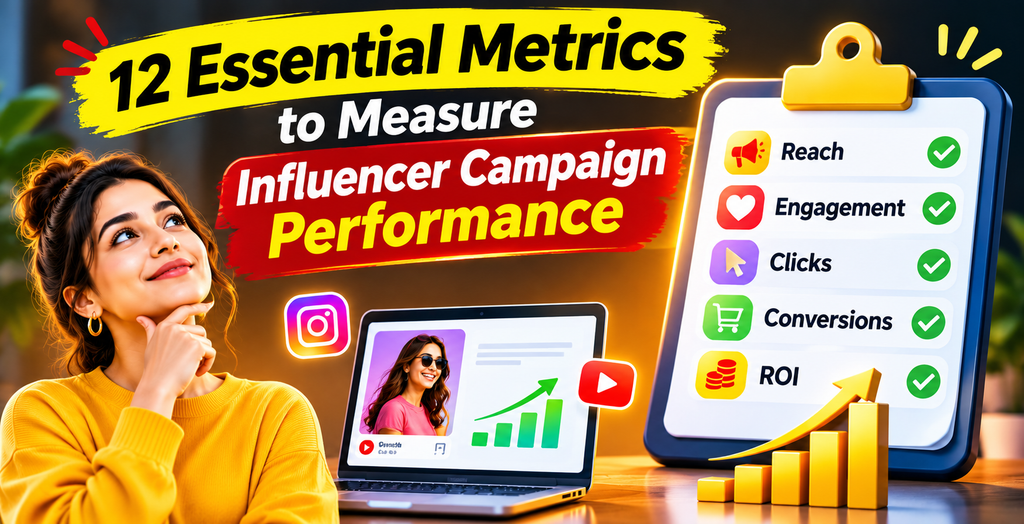
3. 12 Essential Metrics to Measure Influencer Campaign Performance
The most effective influencer campaign tracking approach combines social media engagement with website activity and business results.
You do not need to measure every possible metric for every campaign. Select the measurements that match your objective. This gives your influencer campaign tracking efforts a clear direction and keeps reports focused on relevant results. Choosing relevant metrics is an important part of building an effective influencer campaign tracking framework.
3.1 Reach
Reach refers to the number of unique accounts that have seen a particular piece of content.
It helps you understand how many individual people your influencer collaboration has potentially exposed to your brand.
Reach is particularly important for awareness campaigns.
Remember that reach is different from impressions. One person may see the same post several times, increasing impressions without increasing unique reach.
3.2 Impressions
Impressions represent the total number of times content is displayed.
For example, if an Instagram Reel receives 20,000 impressions, it means the content was displayed 20,000 times. It does not necessarily mean 20,000 different people watched it.
Compare impressions with reach to understand how frequently the audience encounters your promotional content. Including both metrics in influencer campaign tracking provides a clearer picture of content visibility.
3.3 Engagement Rate
Engagement rate measures how actively people interact with an influencer’s content.
Common interactions include:
- Likes.
- Comments.
- Shares.
- Saves.
- Other platform-specific interactions.
A commonly used engagement-rate formula is:
Engagement Rate = (Total Engagements ÷ Reach) × 100
Suppose a creator’s promotional Reel reaches 10,000 accounts and receives 800 engagements.
Engagement rate = (800 ÷ 10,000) × 100 = 8%.
The calculation method should remain consistent when comparing creators because some platforms and reporting tools use followers or impressions as the denominator instead of reach. Consistent calculations make influencer campaign tracking more reliable when evaluating multiple creators.
3.4 Link Clicks
Link clicks show how many times people click a promotional link.
This is one of the most useful metrics in influencer campaign tracking because it connects social media promotion with website traffic.
For example, if an influencer shares a product link and receives 750 clicks, you can investigate how many visitors reached your landing page through that link.
However, clicks are not necessarily equal to unique visitors. A person may click more than once, and some clicks may come from bots, automated systems, or accidental interactions. Therefore, influencer campaign tracking should examine both click volume and visitor quality.
3.5 Unique Visitors
Unique visitors help you understand how many distinct visitors reached your destination through a tracked link, according to the tracking platform’s identification method.
This metric provides additional context when comparing total clicks.
A campaign with 2,000 clicks from 1,200 visitors has a different traffic pattern from one with 2,000 clicks from 1,950 visitors.
3.6 Click-Through Rate (CTR)
Click-through rate measures the percentage of people who click a link after seeing the relevant promotional content.
CTR = (Link Clicks ÷ Impressions) × 100
For example, if an influencer’s post receives 50,000 impressions and generates 1,000 link clicks:
CTR = (1,000 ÷ 50,000) × 100 = 2%.
CTR helps you understand how effectively the content encourages people to take the next step.
3.7 Conversion Rate
Conversion rate measures the percentage of visitors who complete a desired action.
That action might be purchasing a product, filling out a form, registering for an event, or subscribing to a service.
Conversion Rate = (Conversions ÷ Visitors) × 100
Suppose an influencer sends 800 visitors to your website, and 32 complete a purchase.
Conversion rate = (32 ÷ 800) × 100 = 4%.
This metric is essential when evaluating whether influencer traffic is turning into meaningful business outcomes. Monitoring conversion rates makes influencer campaign tracking more focused on actual business results.
3.8 Number of Leads
For businesses that sell services or high-value products, leads may be more important than immediate purchases.
A lead could be someone who submits an enquiry form, requests a quotation, books a consultation, or registers for a demonstration.
Track leads separately from sales so that you can evaluate campaigns with longer customer decision cycles.
3.9 Revenue Generated
Revenue tells you how much money can be attributed to a particular influencer campaign under your chosen attribution rules.
You can use unique discount codes, tracked landing-page links, ecommerce analytics, or CRM records to connect purchases with creators.
Remember to distinguish gross revenue from profit. A campaign can generate impressive sales while still being unprofitable after expenses. Revenue analysis gives influencer campaign tracking a stronger financial perspective.
3.10 Cost Per Click (CPC)
CPC measures how much you spend for every click generated.
CPC = Total Campaign Cost ÷ Total Clicks
If you spend ₹20,000 on a collaboration and generate 2,000 clicks, your cost per click is ₹10.
CPC is helpful for comparing traffic acquisition costs, but it does not tell you whether visitors actually become customers.
3.11 Cost Per Acquisition (CPA)
CPA measures how much it costs to acquire one customer or complete one defined acquisition action.
CPA = Total Campaign Cost ÷ Number of Acquisitions
If a campaign costs ₹30,000 and generates 60 new customers, the CPA is ₹500.
Use the same definition of acquisition across all campaigns to make comparisons meaningful.
3.12 Return on Investment (ROI)
ROI helps you understand whether your influencer collaboration generates sufficient financial value compared with its total cost.
A basic revenue-based ROI formula is:
ROI = [(Attributed Revenue − Campaign Cost) ÷ Campaign Cost] × 100
Suppose a creator generates ₹1,00,000 in attributed revenue, while the total campaign cost is ₹40,000.
ROI = [(₹1,00,000 − ₹40,000) ÷ ₹40,000] × 100 = 150%.
This is a simplified revenue-based calculation. For a more accurate financial assessment, use gross profit or contribution margin instead of revenue when possible.
Also account for product costs, fulfilment, discounts, commissions, agency fees, and other relevant expenses. Including these expenses helps make influencer campaign tracking more useful for budget planning.
4. How to Track Influencer Marketing Campaigns: A Step-by-Step Process
A good tracking system does not need to be complicated. The important thing is to establish a consistent process before creators publish their content.
Here is a practical approach to influencer campaign tracking that businesses can use for Instagram, YouTube, TikTok, Facebook, blogs, and other promotional channels.
Step 1: Define Your Campaign Objective
Start by deciding what you want to achieve.
Are you trying to increase brand awareness, generate website traffic, collect leads, or sell products?
Different objectives require different metrics. Defining these priorities at the beginning makes influencer campaign tracking more organised and easier to evaluate.
For example:
| Campaign objective | Primary metrics |
|---|---|
| Brand awareness | Reach, impressions, mentions |
| Engagement | Comments, shares, saves, engagement rate |
| Website traffic | Clicks, unique visitors, CTR |
| Lead generation | Form submissions, qualified leads |
| Ecommerce sales | Purchases, revenue, conversion rate |
| Customer acquisition | New customers, CPA, ROI |
Avoid trying to judge every campaign using the same measurement criteria. A goal-based approach makes influencer campaign tracking easier to organise and evaluate.
Step 2: Select the Right Influencers
Choose creators whose audiences match your ideal customers.
Look beyond follower counts and consider:
- Audience location.
- Age and demographic information, where available.
- Content niche.
- Average engagement.
- Content quality.
- Previous brand collaborations.
- Audience relevance.
- Historical campaign results.
Ask potential partners for relevant performance screenshots or platform analytics where appropriate.
A creator with a smaller but highly relevant audience may be a better choice than someone with a much larger, less relevant following. Using historical results in influencer campaign tracking can help you identify creators with audiences that genuinely match your customers.
Step 3: Create a Unique Tracking Link for Each Influencer
This is one of the most important influencer marketing campaign tracking methods.
Do not give every creator the same promotional URL if you want to identify individual performance.
Instead, generate a separate trackable link for each creator.
For example:
yourwebsite.com/product?creator=alexyourwebsite.com/product?creator=sarahyourwebsite.com/product?creator=michael
You can also use branded short links that redirect visitors to the appropriate landing page.
Unique links make it easier to distinguish traffic generated by individual creators. This simple setup creates a reliable foundation for influencer campaign tracking across multiple partnerships.
If the same creator publishes several promotional posts, consider using different tracking links for each placement as well.
This helps you compare Instagram Stories, Reels, YouTube descriptions, and other placements without mixing their results.
Step 4: Add UTM Parameters to Your URLs
UTM parameters are additional tags added to a URL to help analytics platforms identify where traffic originates.
They are particularly useful when tracking influencer traffic in Google Analytics 4.
A sample URL could look like this:
Here is what each parameter means:
| Parameter | Purpose | Example |
|---|---|---|
| utm_source | Identifies the traffic source | |
| utm_medium | Identifies the marketing channel | influencer |
| utm_campaign | Identifies the campaign | summer_launch |
| utm_content | Identifies the creator or placement | alex_reel |
You can create separate UTM values for every influencer.
For example, one creator may use alex_reel, while another uses sarah_story.
Keep your naming conventions consistent. Using different spellings, capitalisation, or abbreviations for the same creator can fragment your reports.
Before sharing a URL, test it to ensure that it redirects to the correct destination and that the parameters remain available to your analytics setup. Proper URL organisation helps influencer campaign tracking reports remain accurate and easy to understand.
Step 5: Set Up Conversion Tracking
Clicks tell you how many people visit your website, but conversions show whether they take meaningful actions.
Set up conversion events for the actions that matter to your business.
Examples include:
- Purchase completed.
- Lead form submitted.
- Account registered.
- Newsletter subscription.
- Product added to cart.
- Demo requested.
- App downloaded.
For an ecommerce business, you may want to track product views, add-to-cart actions, checkout initiation, and completed purchases.
For a B2B company, enquiry submissions and qualified sales opportunities may be more important.
Make sure conversion events are configured correctly and avoid counting the same purchase multiple times. Accurate conversion data is essential for meaningful influencer campaign tracking and performance comparisons.
insta
Step 6: Use Unique Discount Codes Where Appropriate
Discount codes provide another way to connect purchases with influencers.
For example:
- ALEX10
- SARAH15
- MICHAEL10
When customers use these codes during checkout, your ecommerce platform can record the associated promotion.
Discount codes are especially useful when a customer sees a creator’s content but does not immediately click the promotional link.
However, codes have limitations. Customers may share them, forget to use them, or find them on coupon websites.
Therefore, combine discount codes with tracked links instead of relying on codes alone.
Step 7: Connect Your Tracking Data With Analytics
Use an analytics platform to understand what happens after visitors reach your website.
Google Analytics 4 can help you examine acquisition sources, campaign parameters, landing pages, engagement, and configured conversion events.
Your tracking platform can provide additional click-level and visitor-level insights.
If you use a CRM or ecommerce platform, connect campaign information with lead and order records wherever possible.
This creates a more complete view of the customer journey.
Step 8: Test Every Link Before Launch
A broken link can waste an entire promotional opportunity.
Before publishing, test each creator’s URL.
Check the following:
- Does the link open the correct landing page?
- Does the page work on mobile devices?
- Are UTM parameters preserved?
- Does the tracking platform record the click?
- Do conversion events fire correctly?
- Does the discount code work?
- Are redirects functioning properly?
Testing takes only a little time but can prevent avoidable reporting problems. Link testing is a small but important step in maintaining dependable influencer campaign tracking.
Step 9: Monitor Performance During the Campaign
Do not wait until the campaign ends to check the results.
Monitor link activity, visitor numbers, conversion events, and traffic quality throughout the promotion.
This is where real-time influencer campaign tracking can help marketers identify problems early.
For example, if a creator publishes a promotional Reel but the tracking link receives almost no activity, you can check whether the link was placed correctly or whether the audience is responding as expected.
However, allow sufficient time for delayed purchases and longer customer journeys before judging the final outcome.
Step 10: Prepare a Performance Report
At the end of the campaign, bring the important information together.
Your report should include:
- Influencer name.
- Social media platform.
- Content type.
- Campaign dates.
- Reach and impressions.
- Engagement rate.
- Link clicks.
- Unique visitors.
- Leads and purchases.
- Attributed revenue.
- Campaign expenditure.
- Conversion rate.
- CPA and ROI.
The final report should explain not only what happened but also what you learned and what should change next time. A well-organised influencer campaign tracking report turns campaign data into practical recommendations for your next collaboration.
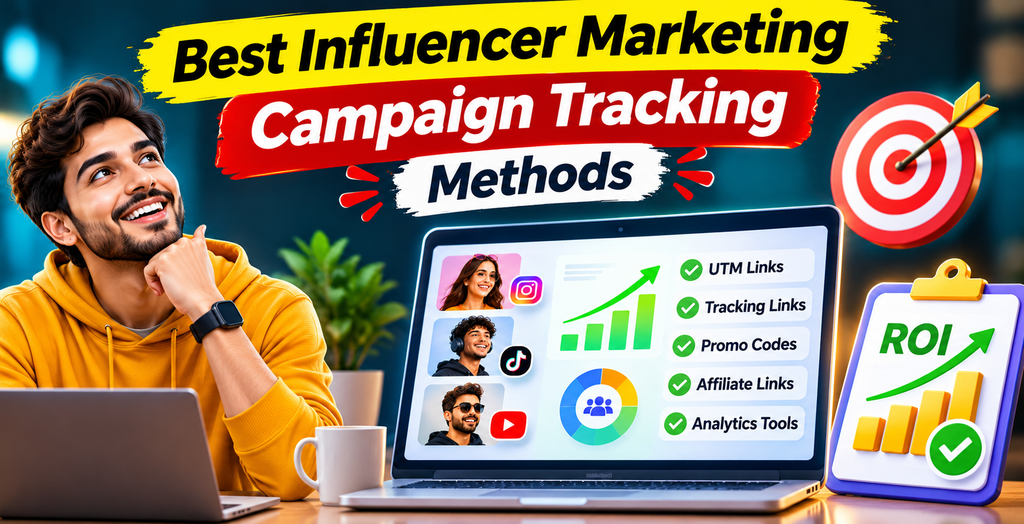
5. Best Influencer Marketing Campaign Tracking Methods
There is no single tracking method that works perfectly for every influencer partnership.
Different approaches measure different parts of the customer journey. Combining them gives marketers more reliable insights. Combining these methods can make influencer campaign tracking more comprehensive and help reduce gaps in attribution.
5.1 UTM-Based Tracking
UTM tracking is useful when you want to identify the traffic source, campaign, and creator responsible for website visits.
It works particularly well with Google Analytics 4.
For example, a brand can create individual campaign URLs for ten creators and compare the resulting traffic in its acquisition reports.
This method is relatively simple and does not require a separate discount code for every creator.
5.2 Unique Promotional Links
Unique links allow marketers to measure clicks generated by individual influencers.
A branded tracking URL can also look cleaner than a long URL containing multiple parameters.
With Linkstrackly, businesses can use branded link shortening and click analytics to organise promotional links and examine link activity, including click counts, unique visitors, and geographic information.
This makes it easier to compare traffic generated by different creator partnerships.
5.3 Discount Code Tracking
Discount codes help identify purchases associated with specific influencer promotions.
They are useful for campaigns where followers prefer remembering a code instead of clicking a link.
However, do not assume that every purchase using a code represents a completely new customer. Existing customers may use influencer codes too.
5.4 Affiliate-Based Tracking
Affiliate tracking is useful when influencers receive commissions for sales or other defined actions.
Each creator receives an affiliate link or identifier. When a visitor completes a qualifying action, the tracking system records the associated referral according to the programme’s attribution rules.
This approach can be particularly useful for ongoing collaborations because compensation can be connected to measurable outcomes.
5.5 Landing Page Tracking
You can create a dedicated landing page for a specific creator or campaign.
For example, a fitness brand might create a landing page featuring a product bundle recommended by a fitness influencer.
This provides a controlled destination for measuring visitor behaviour and campaign conversions.
It can also improve the customer experience because visitors arrive at a page that matches the content they just viewed.
5.6 Pixel and Event-Based Tracking
Where permitted and correctly configured, tracking pixels and event tags can help record actions on your website.
These may include page views, product views, registrations, add-to-cart events, and completed purchases.
Make sure your implementation respects applicable privacy requirements and consent choices.
Also remember that browser restrictions, ad blockers, consent settings, and device limitations can affect event collection.
5.7 CRM-Based Attribution
For businesses with longer sales cycles, a visitor may click an influencer link today but become a customer several weeks later.
A CRM can help connect the original marketing source with subsequent enquiries, sales opportunities, and closed deals.
This is particularly useful for B2B companies, agencies, coaching businesses, and high-value service providers.
The important thing is to preserve campaign identifiers when a visitor submits a form so that the source can be examined later.
Turn Influencer Traffic into Measurable Insights
Stop guessing which creators drive valuable traffic. Use Linkstrackly to create branded tracking links, monitor visitor activity, and compare campaign performance.
6. Real-Time Influencer Campaign Tracking: Why It Matters
Imagine that an influencer publishes a product recommendation at 6 PM.
Within the first hour, the post receives strong engagement, but your website traffic remains unusually low.
If you only check your campaign report after seven days, you may discover the problem too late.
Real-time influencer campaign tracking allows marketing teams to monitor incoming activity while a campaign is running. Effective influencer campaign tracking allows marketers to spot performance changes early and adjust their strategy before the campaign ends.
It can help answer practical questions such as:
- Is the promotional link receiving clicks?
- Which creator is sending the most traffic?
- Are visitors coming from the expected location?
- Are clicks increasing after a new post goes live?
- Is one promotional link receiving unusual traffic?
- Are visitors reaching the intended landing page?
What Should You Monitor in Real Time?
You do not need to watch every metric constantly.
Focus on the indicators that can help you take timely action.
Traffic activity: Monitor incoming clicks and visitor numbers after promotional content goes live.
Link performance: Compare individual links to identify which creators and placements generate activity.
Geographic distribution: Check whether visitors are coming from the locations you are targeting.
Conversion events: Monitor purchases, registrations, or enquiries as your tracking setup records them.
Traffic quality: Investigate unusual patterns, repeated activity, and suspicious sources before treating every click as genuine interest.
Real-time reporting is useful for detecting problems, but it should not replace final campaign analysis. Effective influencer campaign tracking helps marketers identify issues early while keeping the bigger campaign picture in view.
Some customers take hours or days to complete a purchase, and analytics data can also be delayed or adjusted.
7. Influencer Campaign Analytics Features
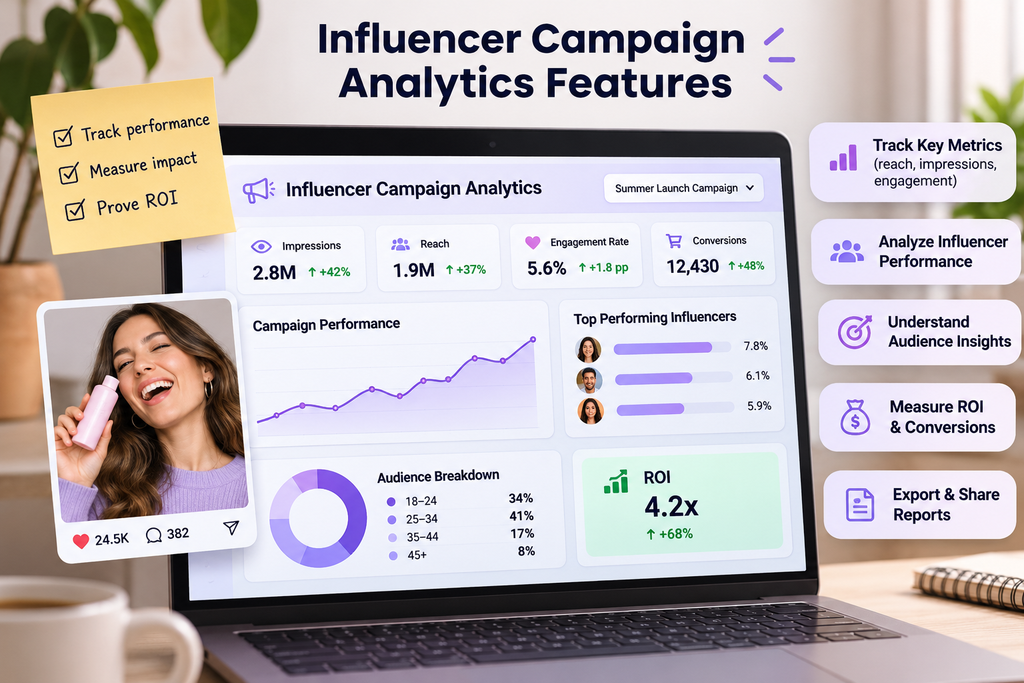
Good influencer campaign analytics features should help marketers understand multiple stages of the customer journey.
A single click report is not enough to explain whether a campaign was successful.
Ideally, you should bring together social platform reporting, link analytics, website behaviour, and conversion information. Combining these sources makes influencer campaign tracking more comprehensive and useful for decision-making.
A centralised dashboard can make influencer campaign tracking simpler by bringing important performance indicators together.
Engagement Analytics
Engagement analytics help you understand how audiences interact with creator content.
Review likes, comments, shares, saves, video views, and engagement rates.
Look at the quality of the interactions too.
For example, a Reel with 300 meaningful comments from potential customers may be more valuable than a Reel with 2,000 generic comments.
Reach and Impression Analytics
These metrics explain the visibility of your promotional content.
They are especially useful when measuring awareness campaigns.
Compare reach and impressions across creators, platforms, and content formats to understand where your promotional message receives the greatest exposure.
Click Analytics
Click analytics help you measure what happens when viewers interact with a promotional URL.
This is where influencer campaign tracking becomes closely connected to link management.
You can compare:
- Total clicks.
- Unique visitors.
- Traffic locations.
- Individual link performance.
- Campaign-level activity.
- Traffic patterns over time.
These details help identify which creator links generate the strongest website traffic.
Conversion Analytics
Conversion analytics focus on what visitors do after arriving at your website.
A campaign may produce thousands of visitors but very few purchases.
Another may generate fewer visitors but a much higher percentage of qualified leads.
Track conversions against the original campaign source wherever your analytics setup allows it.
Revenue and Attribution Analytics
Revenue reporting helps businesses understand the financial contribution of their creator partnerships.
However, attribution requires clear rules.
A customer may discover your brand through an influencer, return through a Google search, and finally purchase after clicking an email.
A last-click model may assign the purchase to email or organic search rather than the original influencer interaction.
For a better understanding, compare multiple attribution views and use your CRM or ecommerce records where appropriate.
No attribution model provides a perfect picture of every customer’s journey, but consistent measurement makes decision-making much stronger.
8. How to Measure Influencer Campaign ROI Correctly
ROI is one of the most important outcomes of influencer campaign tracking, but it is also one of the easiest metrics to misunderstand.
Many businesses calculate returns using revenue alone and forget to include the full cost of the partnership. Accurate influencer campaign tracking helps connect campaign expenses with the financial results they generate.
Let’s consider a practical example.
A fashion brand collaborates with an Instagram creator to promote a new clothing collection.
Here is the campaign information:
| Expense or result | Amount |
|---|---|
| Influencer payment | ₹25,000 |
| Product and shipping costs | ₹5,000 |
| Content production expenses | ₹3,000 |
| Other campaign expenses | ₹2,000 |
| Total campaign cost | ₹35,000 |
| Attributed revenue | ₹1,05,000 |
Using the basic revenue-based ROI calculation:
ROI = [(₹1,05,000 − ₹35,000) ÷ ₹35,000] × 100
Revenue-based ROI = 200%
This means the campaign generated ₹3 in attributed revenue for every ₹1 spent, with a 200% revenue-based return above the campaign cost.
However, this is not the same as a 200% profit margin.
Suppose the business has additional product and fulfilment costs that were not included in the campaign budget. The actual profit-based return will be lower.
For a more realistic calculation, include all relevant variable expenses and use the profit generated by the attributed sales.
How to Compare Influencer ROI
When comparing different creators, use the same calculation method for each partnership.
Consider the following:
- Total creator payment.
- Product costs.
- Shipping and fulfilment.
- Discounts offered.
- Agency or management fees.
- Tracking and production expenses.
- Attributed orders.
- Refunds and cancellations.
- Gross profit or contribution margin.
Also distinguish between new customers and returning customers. A campaign that mainly attracts existing customers may have a different business value from one that brings in new buyers.
9. Common Influencer Campaign Tracking Mistakes to Avoid
Even businesses with analytics tools can make mistakes that lead to misleading campaign reports.
Here are some common problems and how to avoid them. Strong influencer campaign tracking looks beyond likes and follower counts to identify the results that matter to the business.
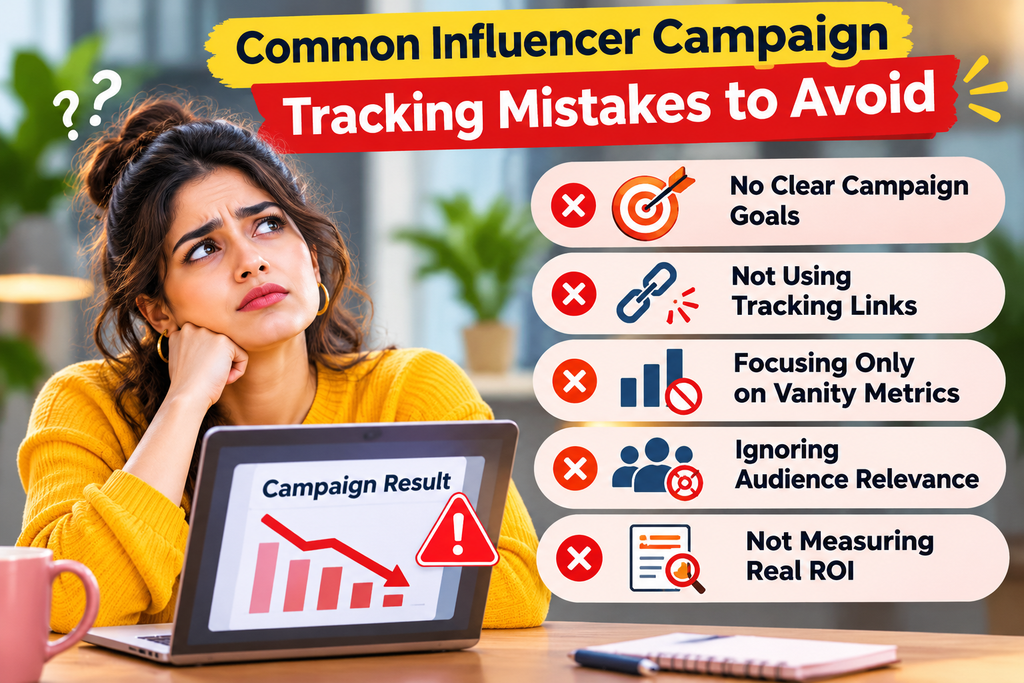
Mistake 1: Measuring Success Only Through Followers
A high follower count does not guarantee conversions. Good influencer campaign tracking looks beyond audience size to evaluate engagement, traffic quality, and actual business outcomes.
Solution: Compare audience relevance, engagement, website traffic, and actual business outcomes.
Mistake 2: Giving Every Influencer the Same Link
If multiple creators use one shared URL, it becomes difficult to identify individual traffic sources.
Solution: Create unique tracking links and campaign identifiers for each creator.
Mistake 3: Ignoring UTM Parameters
Without consistent campaign parameters, analytics reports may group influencer traffic incorrectly or fail to distinguish individual campaigns.
Solution: Use a standard UTM naming convention and test every URL before publishing.
Mistake 4: Confusing Clicks With Conversions
A large number of clicks does not mean a large number of sales.
Solution: Measure the complete journey from link click to conversion.
Mistake 5: Ignoring Invalid Traffic
Some clicks may come from automated bots, repeated requests, accidental taps, or suspicious activity.
Solution: Review traffic patterns, unique visitor data, and available fraud-detection signals before making decisions.
Mistake 6: Ignoring Attribution Delays
Customers do not always purchase immediately after seeing influencer content.
Solution: Define a reasonable reporting window and review delayed conversions.
Mistake 7: Forgetting Campaign Expenses
Looking only at influencer fees can make an unprofitable campaign appear successful.
Solution: Include all relevant costs in your ROI calculations.
Mistake 8: Not Testing Tracking Links
A broken URL or incorrect redirect can cause missing data and lost visitors.
Solution: Test every link on mobile and desktop before launch.
Mistake 9: Ignoring Privacy Requirements
Not every visitor can or should be tracked in the same way.
Solution: Respect applicable privacy laws, consent requirements, platform policies, and browser restrictions. Avoid collecting unnecessary personal information.
Mistake 10: Making Decisions Too Early
A campaign may receive a slow initial response but generate conversions later.
Solution: Monitor early performance while allowing enough time for the customer journey to develop.
10. How Linkstrackly Helps Measure Influencer Traffic and Campaign Performance
When brands work with multiple creators, managing promotional URLs and understanding the traffic they generate can become difficult.
A tracking system can make this process more organised by providing visibility into link activity and visitor behaviour.
This is where Linkstrackly can fit into an influencer marketing workflow.
Linkstrackly combines link tracking, performance marketing analytics, and click fraud protection. Its features can help marketers understand how promotional links perform and investigate the quality of incoming traffic.
It is important to understand its role: social platforms remain the source for metrics such as likes, comments, and impressions, while Linkstrackly can help analyse the website traffic generated through tracked links.
Here are some relevant features.
10.1 Branded Link Shortening
Long promotional URLs containing UTM parameters can look complicated when shared in social media bios, descriptions, or other promotional placements.
Linkstrackly provides branded link shortening, allowing businesses to create cleaner promotional links.
For influencer campaign tracking, you can organise separate links for different creators and campaign placements.
For example, a beauty brand could create individual promotional links for three creators rather than giving everyone the same destination URL.
This makes it easier to identify which link generated the incoming activity.
10.2 Detailed Click Analytics
Understanding the number of clicks is an important part of measuring creator-generated website traffic.
Linkstrackly provides click analytics that include click counts, unique visitors, and geographic data.
These insights can help marketers compare promotional links and understand where visitors are coming from.
For example, if one creator’s link generates more visitors from your target market than another’s, that information can help guide future collaborations.
10.3 Real-Time Analytics
Waiting until the end of a campaign to examine traffic can make it harder to identify problems early.
Linkstrackly describes real-time analytics for monitoring incoming traffic activity.
This can help marketing teams examine link performance while promotional content is active.
You can use this information alongside social platform engagement reports to understand how content activity relates to website traffic.
10.4 Visitor Analytics
Not every click provides the same value.
Visitor analytics can help businesses examine incoming traffic beyond a simple total-click figure.
By reviewing available visitor information and geographic patterns, marketers can better understand the traffic generated through individual creator links.
This is useful when comparing campaigns targeting different cities, regions, or customer groups.
10.5 Anti-Fraud and Suspicious Traffic Protection
Unusual traffic can distort marketing reports.
For example, a promotional link might receive repeated clicks from suspicious sources without producing meaningful engagement or conversions.
Linkstrackly offers anti-fraud capabilities designed to detect and help prevent malicious or invalid traffic.
Its listed capabilities include real-time blocking, click-threshold limitations, visitor analytics, VPN traffic exclusion, and automatic IP exclusion-list features.
These tools are particularly relevant when businesses want to examine traffic quality rather than simply celebrate a high click count.
Keep in mind that no traffic-filtering system can guarantee the identification of every invalid visit. Review suspicious patterns and interpret results carefully.
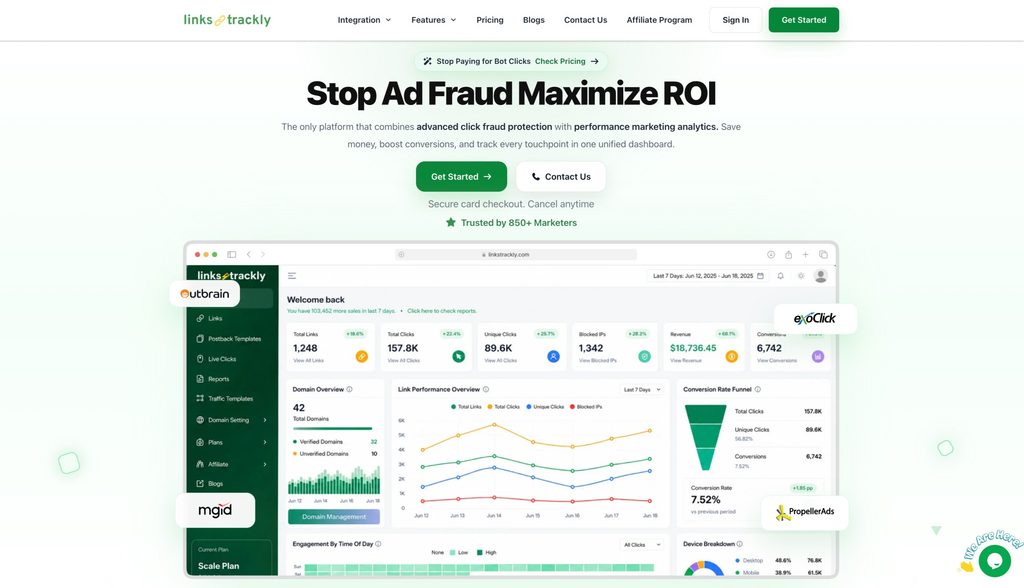
10.6 Campaign Performance and Attribution
Linkstrackly also provides performance tracking and attribution features.
Its broader analytics capabilities include end-to-end journey mapping, custom conversion events, detailed reporting, and campaign-level performance insights.
Depending on your configuration, these capabilities can help you examine more of the journey between an incoming click and a desired conversion.
For example, an online store can organise creator-specific promotional links, monitor incoming activity, and connect the resulting traffic with its configured conversion reporting.
This helps bring link performance into the wider marketing measurement process.
10.7 Detailed Reporting
When several influencers are involved, collecting data from different links can become time-consuming.
Linkstrackly offers detailed reports with table, tree, and chart views, as described on its website.
These reporting options can help teams examine campaign information in a more organised way.
Instead of relying on scattered spreadsheets and manual click counts, marketers can use tracking reports alongside social media and sales analytics.
10.8 A Practical Linkstrackly Workflow for Influencer Campaigns
Here is a simple way to incorporate Linkstrackly into your creator marketing process:
- Decide which influencers will participate in your campaign.
- Create a separate promotional URL for each creator.
- Add appropriate UTM parameters to identify the source, campaign, and content placement.
- Use Linkstrackly’s branded link functionality where appropriate.
- Share the correct link with each influencer.
- Test the links before the content goes live.
- Monitor clicks, unique visitors, and geographic traffic information.
- Review suspicious activity and traffic quality.
- Compare link performance with social media engagement reports.
- Connect website conversions and sales data to evaluate business outcomes.
This approach makes influencer campaign tracking more structured and gives marketers a clearer understanding of the traffic their creator partnerships generate.
To explore its features, visit Linkstrackly.
11. Advanced Tips to Improve Influencer Campaign Performance
Once your tracking system is working, the next step is using the information to improve future campaigns.
11.1 Compare Content Formats
Do not assume that every content format will perform equally.
Compare Reels, Stories, YouTube videos, tutorials, product reviews, and blog mentions.
You may discover that a detailed product demonstration generates fewer clicks but more purchases than a short promotional video.
11.2 Separate Influencer and Placement Data
A creator may promote your brand through multiple placements.
For example, they may publish an Instagram Reel, add a Story link, and include a link in their bio.
Use separate identifiers for each placement.
This helps you understand which content format encourages more meaningful action.
11.3 Analyse the Landing Page Experience
If visitors click but do not convert, the problem may not be the influencer.
Your landing page could be slow, difficult to navigate, poorly designed for mobile, or disconnected from the creator’s message.
Check whether:
- The landing page matches the promotion.
- Product information is clear.
- Pricing is visible.
- The page loads properly on mobile.
- Calls to action are easy to find.
- The checkout process works correctly.
11.4 Use A/B Testing
Experiment with different landing pages, headlines, offers, and calls to action.
For example, one influencer group could direct visitors to a product page, while another directs them to a dedicated campaign landing page.
Compare the resulting conversion rates while keeping other important conditions as consistent as possible.
Avoid changing too many variables at once because that makes the results harder to interpret.
11.5 Build Long-Term Creator Relationships
One campaign may not reveal the complete value of an influencer partnership.
A creator could generate repeat customers, improve brand recognition, or influence purchases that happen later.
Review performance across multiple collaborations before making long-term decisions.
Also consider audience trust, content quality, brand alignment, and customer feedback.
11.6 Review Results Regularly
Create a weekly or monthly reporting routine depending on the campaign duration.
Look for trends rather than reacting to every small change.
Over time, your reporting history can help identify reliable creators, effective content formats, and campaign strategies that consistently generate valuable outcomes. Regular influencer campaign tracking makes these insights easier to apply to future collaborations.
12. Privacy, Attribution and Measurement Limitations
Accurate reporting requires understanding what tracking technology can and cannot measure.
Modern browsers, privacy settings, cookie restrictions, consent requirements, and ad blockers can affect the availability of visitor and conversion information.
A person may see an influencer’s post on one device and purchase on another. Another customer may click a link but complete their purchase days later through a different channel.
These situations can make it difficult to connect every conversion to its original source.
For better measurement:
- Collect only the information you genuinely need.
- Follow applicable data protection and privacy laws.
- Use consent mechanisms where required.
- Keep campaign identifiers consistent.
- Test your analytics and conversion events.
- Avoid treating every click as a unique human visitor.
- Clearly define attribution windows.
- Compare analytics reports with actual sales records.
- Explain the limitations of your reporting to stakeholders.
Influencer campaign tracking should help you make better decisions, not create a false impression that every customer interaction can be identified perfectly.
The most useful reporting combines several reliable data sources while acknowledging their limitations.
Ready to Make Every Campaign Count?
Take control of your promotional links with Linkstrackly. Track campaign activity, identify suspicious clicks, and gain insights to optimise your marketing investment.
Conclusion
Influencer marketing is not just about finding popular creators and asking them to promote your products. It is about understanding whether those collaborations are helping your business achieve meaningful results.
A successful strategy requires more than checking followers, likes, and views. You need to examine website traffic, unique visitors, engagement, leads, conversions, revenue, and campaign expenses to understand the actual value of each partnership.
With a structured influencer campaign tracking process, businesses can identify their strongest creators, understand audience behaviour, reduce wasted marketing expenditure, and make more informed decisions about future collaborations.
Start with unique tracking links, organise your campaigns using UTM parameters, configure conversion events, and review your results regularly. Combine social media insights with website analytics and sales information to get a more complete picture.
Tools such as Linkstrackly can make the link management and traffic analysis side of this process easier through branded link shortening, click analytics, visitor insights, real-time reporting, and anti-fraud capabilities.
The goal is simple: stop judging influencer partnerships only by how popular they look and start understanding the business value they actually create.
When you measure the right things, every collaboration becomes an opportunity to learn, improve, and build a more effective marketing strategy.
FAQs
1. What is influencer campaign tracking?
Influencer campaign tracking is the process of measuring the performance of influencer collaborations using metrics such as reach, impressions, engagement, website clicks, leads, conversions, and revenue. It helps businesses understand which creators generate valuable results and whether their marketing investment is worthwhile. Tracking links, UTM parameters, discount codes, and analytics platforms are commonly used for this purpose.
2. How do I track influencer marketing campaigns?
To track influencer marketing campaigns, start by defining your objectives and assigning a unique tracking link to every creator. Add UTM parameters to identify the traffic source and campaign, configure website conversion events, and use unique discount codes when appropriate. Then monitor clicks, visitors, leads, and purchases through your analytics tools. Compare these results with social media engagement reports to understand overall performance.
3. What is the best way to measure influencer marketing ROI?
The best way to measure ROI is to compare the financial value generated by an influencer partnership with its total cost. Include influencer fees, product expenses, shipping, production, commissions, and other relevant costs. Use attributed revenue or, preferably, contribution profit when calculating financial returns. Also consider customer acquisition cost and the number of new customers generated.
4. Which metrics should I track in an influencer campaign?
The most useful metrics depend on your campaign objectives. Generally, you should consider reach, impressions, engagement rate, link clicks, unique visitors, click-through rate, conversion rate, leads, purchases, revenue, cost per acquisition, and ROI. For awareness campaigns, focus more on visibility and engagement. For sales campaigns, prioritise conversions, revenue, and profitability.
5. How can I track clicks from individual influencers?
The easiest approach is to create a unique promotional URL for each influencer. You can add UTM parameters to identify the creator, platform, and content placement. A link tracking platform can then help you monitor clicks, unique visitors, and other available traffic information. This makes it easier to compare individual creators without mixing their traffic data.
6. Can I track influencer campaigns using Google Analytics 4?
Yes. Google Analytics 4 can help you monitor traffic from influencer promotions when you use correctly configured UTM parameters. You can examine campaign acquisition data, landing pages, engagement, and configured conversion events. However, GA4 does not automatically provide every social media metric, such as likes and comments. You will generally need the relevant social platform’s reporting data for those measurements.
7. What is real-time influencer campaign tracking?
Real-time influencer campaign tracking means monitoring incoming campaign activity as it happens or becomes available in your reporting system. It can help marketers observe link clicks, visitor activity, traffic sources, and configured conversion events while a promotion is running. This makes it easier to identify broken links, unexpected traffic patterns, and early performance changes without waiting until the campaign ends.
8. How do I know whether an influencer is generating genuine traffic?
Look beyond the total number of clicks. Compare clicks with unique visitors, examine geographic information, review landing-page engagement, and investigate unusual traffic patterns. Check whether visitors explore relevant pages or complete meaningful actions. Traffic analytics and available fraud-detection tools can help identify suspicious activity, although no tracking system can guarantee that every invalid visit will be detected.
9. Can I track influencer campaigns without using discount codes?
Yes. Discount codes are optional. You can use unique tracking links, UTM parameters, affiliate identifiers, landing pages, and website conversion events to measure influencer-generated activity. Unique URLs are particularly useful for identifying which creator or promotional placement generated traffic. Combining several methods generally provides better attribution than relying on a single promotional code.
10. How does Linkstrackly help with influencer campaign tracking?
Linkstrackly helps businesses organise and analyse promotional link activity through features such as branded link shortening, click analytics, unique visitor information, geographic reporting, real-time analytics, and anti-fraud capabilities. Marketers can create separate tracked links for different influencers and examine the traffic those links generate. Its performance tracking and attribution capabilities can also support a broader campaign measurement workflow. Social engagement and final sales data should still be collected through the relevant social platforms, website analytics, or ecommerce systems.