
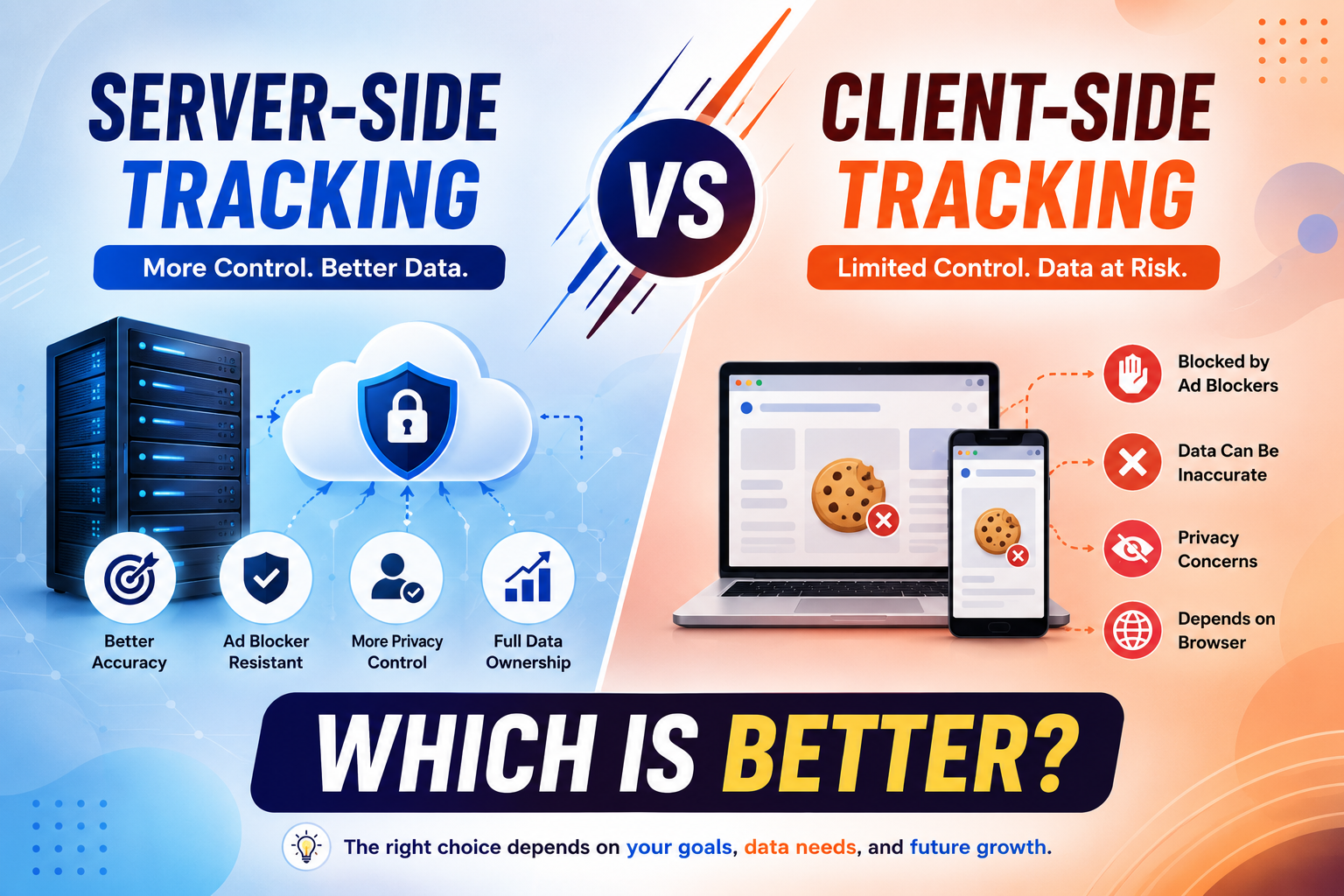
Are you certain that the data driving your business decisions is actually accurate? In an era where privacy regulations and browser restrictions are tightening, relying on traditional browser-based methods often leads to significant gaps in your analytics.
Many organizations are now undergoing a fundamental shift in how they collect digital information. Moving toward server-side tracking allows you to regain control over your data pipeline while bypassing common limitations imposed by ad blockers and privacy updates.
Understanding the nuances of server-side tracking vs client-side tracking is critical for maintaining data integrity. Choosing the right architecture ensures that your marketing efforts remain effective in a privacy-focused landscape with server-side tracking. This guide will help you determine which approach best aligns with your long-term organizational goals.
Key Takeaways
- Traditional browser-based methods are increasingly blocked by privacy tools.
- Modern architectures provide better control over the data you collect.
- Data integrity is essential for making informed business decisions.
- Privacy regulations require a more robust approach to information gathering.
- Selecting the right methodology impacts your long-term marketing success.
Still Relying on Client-Side Tracking?
Browser restrictions, ad blockers, and privacy updates can leave you with incomplete analytics and inaccurate attribution. Let our experts evaluate your current tracking setup, identify data gaps, and recommend the right server-side solution to improve accuracy, performance, and compliance.
What are the Mechanics of Client-Side Tracking
Understanding how your website monitors user activity requires a deep dive into the mechanics of client side tracking. This traditional model relies on the user’s web browser to execute scripts and transmit data directly to analytics platforms. By shifting the burden of data collection to the end-user’s device, businesses have historically gained visibility into visitor behavior without needing complex server infrastructure.
How Browser-Based Data Collection Works
When a user lands on your page, the browser downloads various JavaScript snippets embedded in your site’s code. These scripts interact with the Document Object Model (DOM) to capture specific actions, such as clicks, form submissions, or page views. Once captured, this information is sent directly from the browser to the servers of your marketing or analytics providers.
This process happens in real-time as the user navigates your site. Because the execution occurs locally, the browser must handle the heavy lifting of processing and sending these requests. While this method is relatively easy to implement, it creates a direct dependency on the user’s hardware and internet connection.
The Role of Third-Party Cookies and Pixels
For over a decade, pixels and third-party cookies have served as the backbone of digital advertising. A pixel is a tiny, transparent image file that triggers a request to a third-party server when a page loads. This request allows platforms to identify the user and associate their activity with a specific profile.
Third-party cookies complement this by storing unique identifiers across different domains. This capability has been essential for cross-site tracking and accurate marketing attribution. By placing these cookies, advertisers can follow a user’s journey from an initial ad click to a final purchase, even if the user visits multiple websites along the way.
Common Limitations of Traditional Tracking Methods
Despite its widespread use, client side tracking faces significant hurdles in the modern web environment. One major issue is network latency, as the browser must load multiple tracking scripts before the page becomes fully interactive. This can lead to slower load times, which often results in a poor user experience and higher bounce rates compared to server-side tracking.
Furthermore, the rise of privacy-focused browsers and ad-blocking software has severely impacted data accuracy. Many modern tools automatically strip out tracking scripts or block third-party cookies, leaving your analytics reports with significant gaps. Relying solely on client side tracking means your data is increasingly vulnerable to these external restrictions, making it harder to maintain a complete view of your customer’s journey.
The Evolution of Server-Side Tracking
You can now take full command of your data stream by adopting a more robust architectural approach. The industry is moving toward server-side tracking to overcome the inherent limitations of traditional browser-based methods. This shift represents a fundamental change in how your business interacts with user data.
Defining Server-Side Tracking and Its Architecture
At its core, this architecture moves the data collection process away from the user’s browser and into a dedicated server environment. Instead of relying on the client to send information directly to third-party vendors, your website sends data to your own server first. This intermediary step acts as a secure gateway for all your incoming events.
By utilizing this setup, you gain greater control over the specific data points shared with external platforms. You essentially become the gatekeeper of your own information, ensuring that only necessary data is transmitted. This architecture is the foundation for a more reliable and privacy-conscious analytics strategy through server-side tracking.
How Data Flows from Your Server to Marketing Platforms
The technical flow begins when a user interacts with your website. Rather than triggering multiple tags in the browser, your site sends a single, streamlined request to your server-side container. Your server then processes this request and distributes the relevant data to your chosen marketing platforms, such as Google Ads or Facebook.
This process significantly reduces the burden on the user’s device. Because the heavy lifting happens on your infrastructure, your website can maintain faster loading speeds while still capturing accurate insights. It is a more efficient way to manage complex data streams in real-time using server-side tracking.
Key Differences in Data Processing and Ownership
The most significant change involves the shift in data ownership. When you use server-side tracking, you have the ability to scrub, enrich, or redact data before it ever reaches a third party. This level of oversight is nearly impossible with traditional client-side methods.
The following table highlights the primary differences between these two approaches to help you evaluate your current strategy:
| Feature | Client-Side Tracking | Server-Side Tracking |
|---|---|---|
| Data Processing | User Browser | Dedicated Server |
| Data Ownership | Third-Party Controlled | First-Party Controlled |
| Security Level | Standard | Enhanced |
| Performance Impact | High (Browser Load) | Low (Server Load) |
By choosing to manage your data through a server-side environment, you are investing in the long-term health of your analytics. This transition is not just a technical upgrade; it is a strategic move toward better data governance and improved marketing attribution.
Comparing Server-Side Tracking vs Client-Side Tracking
When you evaluate server-side tracking vs client-side tracking, you are essentially deciding how your business handles user data. Each approach offers distinct advantages depending on your technical resources and marketing goals. Choosing the right path requires a clear understanding of how these systems interact with your website visitors.
Performance Impacts on Website Loading Speeds
Traditional client side tracking relies on the user’s browser to execute multiple scripts. This process often leads to significant bloat, which can slow down your page load times. When your site is forced to load dozens of third-party tags, the user experience frequently suffers.
In contrast, moving these processes to a server environment reduces the burden on the browser. By offloading heavy data collection tasks, you ensure that your website remains fast and responsive. This shift is vital for maintaining high conversion rates and improving your search engine rankings.
Data Accuracy and the Challenge of Ad Blockers
Modern ad blockers and privacy-focused browsers are designed to strip out tracking scripts before they can fire. This creates a major gap in your analytics, as you lose visibility into a large portion of your traffic. Because these scripts run on the client side, they are easily identified and blocked by common browser extensions.
Server-side implementations offer a more robust solution by sending data directly from your server to your marketing platforms. Since this communication happens in the background, it is much harder for ad blockers to intercept the data stream. Consequently, server-side tracking helps you gain a more accurate picture of your user behavior and campaign performance.
Security Considerations for Your Customer Data
When you analyze client side vs server side tracking, security remains a top priority. Managing data on your own servers gives you complete control over what information is shared with third-party vendors. You can scrub sensitive user details before they ever leave your infrastructure, which helps you stay compliant with privacy laws.
Relying on browser-based execution often means that third-party scripts have access to everything on the page. This creates potential vulnerabilities where sensitive data could be exposed or leaked. By centralizing your data flow, you create a secure perimeter around your customer information.
| Feature | Client-Side | Server-Side |
|---|---|---|
| Browser Load | High | Low |
| Ad Blocker Impact | High | Minimal |
| Data Control | Limited | Full |
| Implementation | Simple | Complex |
The Impact of Privacy Regulations on Your Tracking Strategy
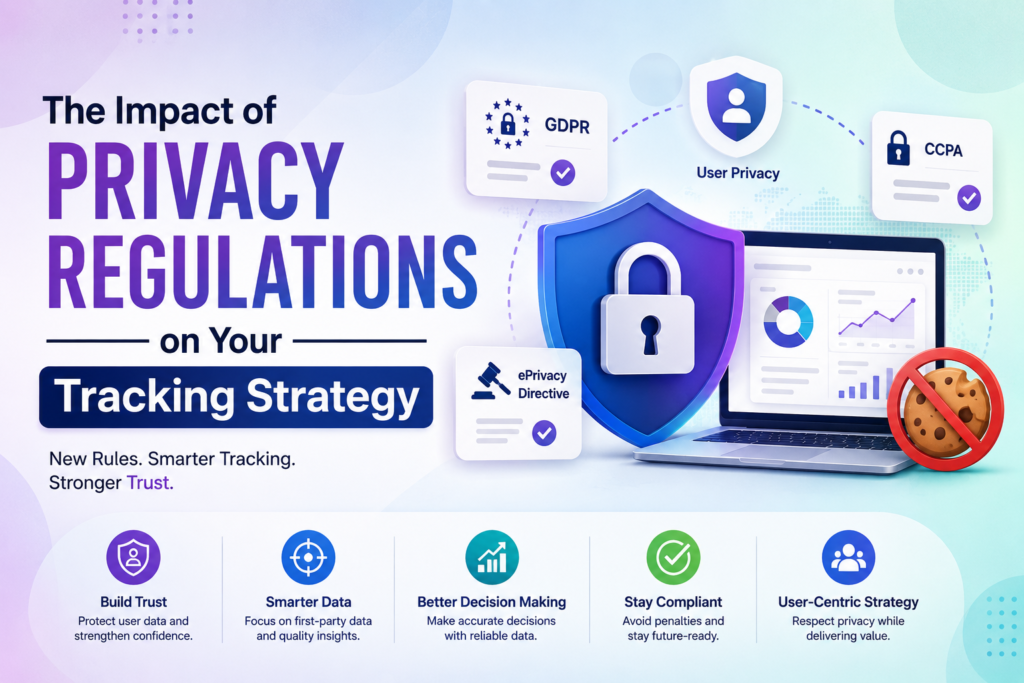
Privacy regulations are no longer just legal hurdles; they are the primary drivers of your new tracking strategy. As digital ecosystems evolve, the methods you use to gather insights must align with stricter global standards. Failing to adapt can lead to significant legal risks and a loss of trust with your audience.
Navigating GDPR and CCPA Compliance Requirements
The General Data Protection Regulation (GDPR) in Europe and the California Consumer Privacy Act (CCPA) have set a new benchmark for data handling. These frameworks demand transparency and explicit consent from users before any tracking occurs. You must ensure that your data collection practices are fully documented and easily accessible to your customers.
Compliance is not a one-time task but an ongoing commitment to data integrity. By prioritizing user consent management, you protect your business from potential fines while building a more ethical relationship with your visitors. It is essential to audit your current tools to ensure they respect these legal boundaries.
How Intelligent Tracking Prevention Affects Your Analytics
Beyond legal mandates, browser-level restrictions like Intelligent Tracking Prevention (ITP) are actively limiting traditional data collection. These technologies automatically block or shorten the lifespan of third-party cookies, which were once the backbone of digital marketing. Consequently, your analytics dashboards may show incomplete data or fragmented user journeys.
When browsers restrict tracking, your ability to measure campaign performance effectively diminishes. This creates a blind spot that makes it difficult to optimize your marketing spend. You must recognize that relying on legacy client-side methods is becoming increasingly unreliable and unsustainable in the modern web environment.
Moving Toward a First-Party Data Strategy
To maintain data continuity, you must shift your focus toward a first-party data strategy. This approach involves collecting information directly from your users through interactions on your own platforms. By owning your data, you reduce your dependence on third-party intermediaries and external tracking scripts.
A robust first-party strategy ensures that your insights remain accurate despite changing browser policies. It allows you to create personalized experiences while staying fully compliant with privacy laws. Investing in this transition to server-side tracking is the most effective way to secure your analytics for the long term.
Key Benefits of Server-Side Tracking for Your Business
Adopting server-side tracking transforms how your business handles digital data. By moving the collection process away from the user’s browser, you gain a more reliable and secure way to manage your analytics pipeline.
Enhanced Control Over Data Sent to Third Parties
One of the primary benefits of server side tracking is the ability to filter and sanitize information before it reaches external vendors. You act as the gatekeeper, ensuring that sensitive user details are stripped away before data is shared with marketing platforms.
This level of control helps you maintain strict compliance with privacy standards. You can choose exactly which events to send, preventing the accidental leakage of personally identifiable information to third-party services.
Improving Marketing Attribution Accuracy
Traditional methods often suffer from data loss due to browser restrictions and ad blockers. By implementing server-side tracking, you bypass these client-side hurdles, ensuring that your conversion data remains intact.
Server-side tracking leads to significantly higher attribution accuracy. You will have a clearer picture of the customer journey, allowing you to make data-driven decisions that optimize your marketing spend effectively.
Extending the Lifespan of Your Marketing Data
The benefits of server side tracking also extend to the longevity of your data. Because you own the server environment, you are no longer at the mercy of browser-based cookie expiration policies.
You can store and manage your first-party data in a way that serves your long-term business goals. This strategic advantage ensures that your historical insights remain valuable for future analysis and audience modeling.
Evaluating Popular Server-Side Tracking Tools
Selecting the right infrastructure is a critical step in modernizing your data collection strategy. As privacy standards evolve, businesses must adopt robust server side tracking tools to maintain visibility into user behavior while respecting data sovereignty. Choosing a platform depends largely on your technical resources, budget, and the complexity of your existing marketing stack.
Google Tag Manager Server-Side Container
The Google Tag Manager (GTM) server-side container offers a familiar interface for teams already comfortable with the standard GTM ecosystem. By moving your tagging logic to a server-side environment, you gain significant control over the data sent to third-party vendors. This setup effectively hides sensitive information from the client browser, which improves both security and page performance.
Implementing this tool allows you to consolidate your data streams into a single, managed endpoint. It is an excellent choice for organizations looking to reduce the number of scripts running on their websites. You can easily integrate this with Google Analytics 4 to ensure your reporting remains accurate despite browser-level restrictions.
Segment and Its Role in Data Infrastructure
Segment acts as a powerful customer data platform that simplifies the way you collect and route information. Instead of managing multiple individual pixels, you send your data to Segment once, and it distributes that information to your preferred marketing tools. This centralized approach minimizes the risk of data discrepancies across your various platforms.
Using Segment for your server-side needs helps you maintain a clean and consistent data layer. It is particularly useful for businesses that rely on a wide array of SaaS applications for their daily operations. By offloading the heavy lifting to their infrastructure, your engineering team can focus on building core product features rather than maintaining complex tracking pipelines.
Tealium EventStream for Enterprise Data Management
Tealium EventStream is designed for large-scale enterprises that require high levels of customization and data governance. This platform excels at handling massive volumes of events while providing real-time insights into your customer journey. It offers advanced features for data enrichment, allowing you to append valuable context to your events before they reach your destination systems.
For companies operating in highly regulated industries, Tealium provides the necessary tools to enforce strict data privacy policies. It ensures that only authorized data is shared with third-party partners, helping you stay compliant with global regulations. Investing in such a comprehensive solution is often the best path for organizations that prioritize long-term scalability and data integrity.
Technical Challenges and Implementation Hurdles
While the benefits of server-side tracking are clear, the path to implementation is often paved with technical hurdles. Transitioning away from client-side methods requires a fundamental shift in how your organization handles data pipelines. You must be prepared to invest time and resources into building a robust architecture that supports your server side tracking tools effectively.
Upgrade to Smarter, More Reliable Tracking
Whether you’re implementing Google Tag Manager Server-Side, improving GA4 data collection, or preparing for a cookieless future, our team can help you build a secure and scalable tracking infrastructure that supports long-term growth.
Infrastructure Requirements and Maintenance Costs
Moving to a server-side model means you are now responsible for the environment where your data is processed. Unlike browser-based tracking, you must provision cloud infrastructure, such as Google Cloud Platform or AWS, to host your tagging containers. This shift introduces ongoing maintenance costs that include server uptime, data egress fees, and security patching.
You will need to monitor your server load constantly to ensure that your tracking remains performant during traffic spikes. If your infrastructure is not scaled correctly, you risk losing valuable marketing data during peak shopping seasons. Proper resource allocation is essential to keep your analytics stack running smoothly.
Managing Server-Side Tagging Complexity
The complexity of managing server-side tagging often requires a dedicated technical team. You are no longer just dropping a snippet of code on a page; you are managing a backend data stream. This requires coordination between your marketing department and your engineering team to ensure that data layers are correctly mapped and sent to the server.
Collaboration is key when you implement these advanced setups. Without clear documentation and internal processes, your tracking configuration can quickly become a “black box” that is difficult to audit. You must maintain strict version control to avoid breaking your data collection during site updates.
Debugging and Troubleshooting Data Streams
Debugging in a server-side environment is significantly more challenging than inspecting browser network requests. Because the data processing happens on a remote server, you cannot simply use standard browser developer tools to see what is happening. You must rely on specialized logging and monitoring tools to trace events from the client to the server and finally to your destination platforms.
Troubleshooting often involves analyzing server logs to identify where a data packet might have been dropped or misconfigured. This level of technical depth is why many businesses choose to partner with experts when deploying server side tracking tools. Having the right diagnostic workflow in place will save you hours of frustration when data discrepancies arise.
| Challenge Category | Client-Side Tracking | Server-Side Tracking |
|---|---|---|
| Infrastructure | None (Browser-based) | Cloud Hosting Required |
| Maintenance | Low (Automatic) | High (Manual Updates) |
| Debugging | Browser DevTools | Server Logs & Monitoring |
| Technical Skill | Basic JavaScript | Advanced Engineering |
Best Practices for Transitioning to a Hybrid Tracking Model
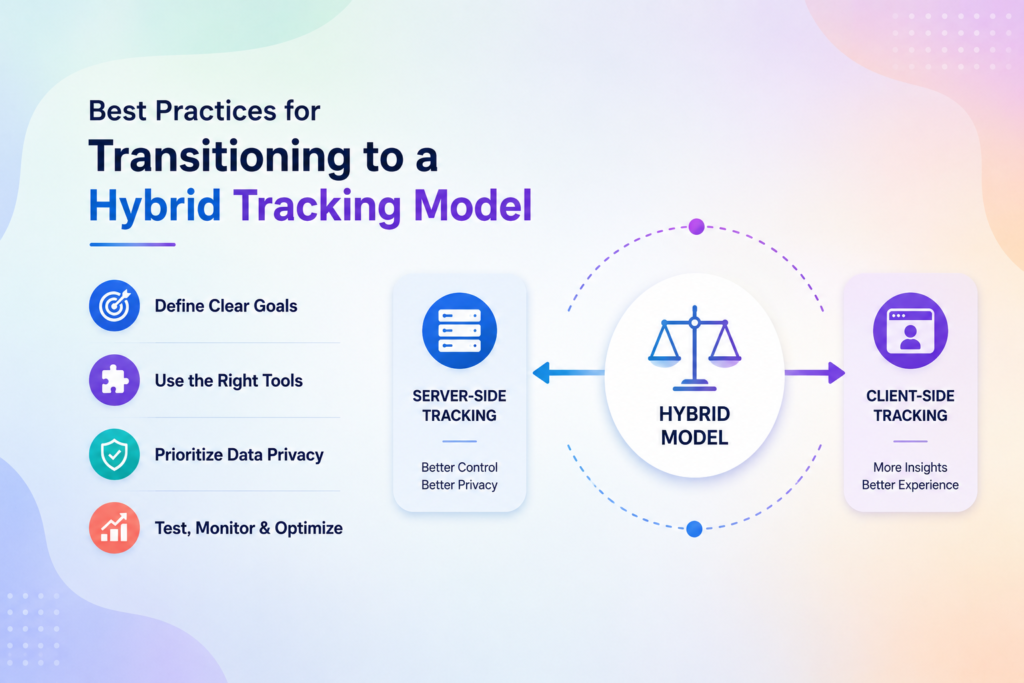
You can optimize your analytics by blending client-side and server-side methods into a cohesive hybrid model. This approach allows you to leverage the speed of browser-based triggers while securing sensitive data through server-side processing. Understanding the nuances of client side vs server side tracking is essential for building a resilient data pipeline that withstands modern privacy shifts.
Identifying Which Events to Move Server-Side
Not every interaction needs to be processed on your server. You should prioritize high-value events that involve sensitive user information or critical conversion data. By moving these specific actions to a server-side environment, you gain better control over the data sent to third-party vendors.
Focus your migration efforts on events like form submissions, login authentication, and purchase completions. These touchpoints are most vulnerable to browser-based interference, such as ad blockers or strict privacy settings. Keeping these events server-side ensures that your marketing platforms receive accurate, reliable signals.
Maintaining Data Consistency Across Platforms
A major challenge in a hybrid setup is ensuring that your data remains uniform across all analytics tools. You must establish a single source of truth to prevent discrepancies between your client-side and server-side streams. If your data points do not align, your marketing attribution will suffer from fragmentation.
Implement a standardized data layer that feeds both environments simultaneously. This consistency helps you avoid double-counting events or missing critical user journeys. Regularly audit your data streams to confirm that the information arriving at your destination platforms matches your internal records.
Testing and Validation Strategies for Your Setup
Rigorous testing is the backbone of a successful transition. Before going live, use debugging tools to trace the path of your data from the browser to the server and finally to your third-party endpoints. This validation process helps you catch server-side tracking configuration errors before they impact your business intelligence.
Consider these essential validation steps for your hybrid implementation:
- Simulate user journeys to verify that events trigger correctly in both environments.
- Use server-side logs to monitor for latency or dropped packets.
- Compare real-time reports against historical data to identify unexpected shifts in volume.
By maintaining a disciplined testing schedule, you ensure that your client side vs server side tracking integration remains stable. This proactive approach protects your data integrity and supports long-term growth for your digital marketing efforts.
Future-Proofing Your Analytics Stack
Building a resilient analytics foundation requires moving beyond legacy methods to embrace modern infrastructure. As digital privacy standards tighten, your ability to maintain accurate insights depends on how effectively you adapt your data strategy. Implementing server-side tracking is no longer just an option; it is a necessity for businesses aiming to stay competitive in a data-driven market.
The Shift Toward Server-Side First Architectures
The industry is moving away from browser-heavy data collection toward server-side first architectures. By shifting the processing load to your own servers, you gain unprecedented control over the data you collect and share. This approach reduces the reliance on client-side scripts that often slow down your website performance.
When you adopt this model, you essentially create a secure gateway for your information. This allows you to filter, enrich, and distribute data to various marketing platforms with greater precision. It ensures that your analytics remain robust even as browser environments become more restrictive.
Preparing for a World Without Third-Party Cookies
The decline of third-party cookies is forcing a major pivot toward first-party data ownership. Server-side tracking acts as a bridge in this transition, allowing you to capture high-quality signals directly from your own domain. By owning the data stream, you mitigate the risks associated with browser-based tracking limitations.
You should focus on building a direct relationship with your users to ensure data continuity. This strategy helps you maintain visibility into the customer journey without violating emerging privacy regulations. It is the most reliable way to sustain your marketing efforts in a cookieless environment.
Aligning Your Tracking Strategy with Long-Term Growth
Aligning your technical setup with long-term business goals requires a proactive mindset. You must view your analytics stack as a strategic asset rather than a simple utility. By investing in scalable infrastructure today, you avoid the costs of constant re-platforming as technology evolves.
Consider the following comparison to understand why modernizing your approach is vital for your growth:
| Feature | Legacy Client-Side | Server-Side Tracking |
|---|---|---|
| Data Ownership | Low (Third-party dependent) | High (First-party control) |
| Privacy Compliance | Difficult to manage | Easier to enforce |
| Performance Impact | High (Browser bloat) | Low (Server-side processing) |
| Data Accuracy | Vulnerable to ad blockers | Resilient and consistent |
Ultimately, your success hinges on your willingness to embrace these changes. By prioritizing data integrity and security, you ensure that your business remains agile and ready for future technological shifts.
Future-Proof Your Analytics Today
Don’t let outdated tracking methods limit your marketing performance. Build a privacy-first analytics strategy with server-side tracking to gain cleaner data, better attribution, and complete control over your customer insights.
Conclusion
Modern digital marketing demands a shift toward more robust infrastructure. Relying solely on browser-based collection methods leaves your business vulnerable to privacy shifts and technical limitations. You gain significant control by adopting a server-side approach to your analytics stack.
The primary benefits of server side tracking include improved data accuracy and better compliance with global privacy standards. You protect your customer information while ensuring that your marketing platforms receive high-quality signals. This transition creates a foundation for long-term growth in an increasingly restricted digital landscape.
Evaluate your current server-side tracking setup today to identify gaps in your data collection. Planning your migration now prevents future disruptions as third-party cookies continue to fade. You hold the power to build a resilient, first-party data strategy that serves your business needs for years to come.
Take the next step by auditing your existing tags and event streams. Your commitment to a server-side architecture ensures that your analytics remain reliable and actionable. Start your transition to realize the full benefits of server side tracking and secure your competitive edge.
FAQs
What is the fundamental difference in the client side vs server side tracking debate?
Traditional client side tracking occurs directly within the user’s web browser, where scripts like the Facebook Pixel collect data and transmit it to third-party platforms. In contrast, server-side tracking shifts this process to a dedicated cloud server that you control, such as Google Cloud or AWS. This architectural shift allows you to intercept, sanitize, and manage your data before it is ever shared with external vendors, ensuring greater security and data integrity.
How does server-side tracking vs client-side tracking affect your website’s loading speed?
When comparing server-side tracking vs client-side tracking, the impact on performance is significant. Client-side methods require the user’s browser to download and execute multiple heavy JavaScript files, which can lead to network latency and slower page loads. By moving these processes to a server, you reduce the “browser bloat,” resulting in a faster, more responsive user experience and potentially higher conversion rates for your business.
What are the primary benefits of server side tracking for your marketing data?
One of the most impactful benefits of server side tracking is the ability to bypass browser-level restrictions and ad blockers. Because the data is sent from your server rather than the browser, it is less susceptible to Apple’s Intelligent Tracking Prevention (ITP) and general ad-blocking software. This ensures more accurate marketing attribution and extends the lifespan of your cookies, allowing you to maintain a more consistent view of your customer journey.
Can server-side tracking help you comply with privacy regulations like GDPR and CCPA?
Yes, server-side tracking offers a robust solution for navigating a complex regulatory landscape. Unlike client side tracking, which can allow third-party scripts to scrape more data than intended, a server-side setup acts as a gateway. You have the power to strip away Personally Identifiable Information (PII) before it reaches vendors like Google Analytics or Meta, making it significantly easier to adhere to GDPR and CCPA compliance standards.
What are the most reliable server side tracking tools available today?
There are several industry-leading server side tracking tools designed to help you build a scalable data infrastructure. The Google Tag Manager Server-Side container is a popular choice for businesses already integrated into the Google ecosystem. For enterprise-level data management, platforms such as Segment, Tealium EventStream, and RudderStack provide advanced features for orchestrating data flows across your entire marketing and analytics stack.
Is a hybrid tracking model better than choosing just one methodology?
For many organizations, a hybrid model is the most effective way to transition. While you may want to move your most critical conversion events to a server-side environment for maximum accuracy, some specialized tools like Hotjar or Microsoft Clarity still rely on client-side execution to capture visual user interactions. A hybrid approach allows you to maintain these front-end insights while future-proofing your core analytics through server-side reliability.
What are the main challenges you might face when implementing server-side tracking?
Transitioning to server-side tracking requires a higher level of technical expertise compared to traditional methods. You will need to manage server infrastructure, account for ongoing hosting costs, and navigate more complex debugging processes. However, the investment in a server-side first architecture is often outweighed by the long-term gains in data ownership, security, and the ability to thrive in a world without third-party cookies.