
Did you know that over 60% of digital marketers struggle to accurately attribute revenue to their specific ad spend? This common gap often stems from a fundamental misunderstandinxg of how we measure user behavior online.
You must distinguish between simple engagement metrics and actual business outcomes to refine your strategy effectively. Mastering the nuances of these two methodologies is the first step toward maximizing your marketing budget. By establishing a clear baseline, you gain the power to optimize your campaigns for real impact.
Understanding the distinction between these tools allows you to stop guessing and start scaling. Data-driven decisions rely on knowing exactly which actions lead to profit. Let us explore how these metrics shape your digital success.
Key Takeaways
- Engagement metrics show interest, while outcomes show financial success.
- Distinguishing between these methods prevents wasted advertising spend.
- Proper measurement is essential for calculating your true return on investment.
- Strategic analysis helps you identify high-performing audience segments.
- Optimizing your data collection leads to more accurate performance reports.
Stop Guessing Where Your Marketing Budget Goes
Understanding the difference between click tracking and conversion tracking is only the first step. Get a complete tracking audit and discover exactly which campaigns drive revenue, not just traffic.
What is the Fundamentals of Click Tracking
Every click on your website tells a story about what your audience finds valuable. By monitoring these interactions, you gain a clear window into the preferences and pain points of your visitors.
Defining Click Tracking and Its Purpose
At its core, Click Tracking is the process of recording and analyzing every interaction a user has with your web elements. It serves as a primary indicator of initial user interest, helping you see which buttons, links, or images capture the most attention.
When you ask what is a click track, think of it as a digital footprint left by your visitors. Its main purpose is to provide actionable data that helps you refine your layout and improve the overall user experience.
How Click Tracking Works Technically
The technical magic behind this process relies on small snippets of code embedded within your site. Most platforms utilize tracking pixels or JavaScript-based event listeners to capture data in real-time.
When a user interacts with a specific element, the script triggers a signal to your analytics server. This signal records the event, the timestamp, and the specific location of the interaction, allowing for precise user behavior tracking.
Common Metrics Captured Through Click Tracking
To make sense of the data, you must focus on specific key performance indicators. These metrics provide a quantitative view of how your audience navigates your digital ecosystem.
- Click-Through Rate (CTR): The percentage of users who click a specific link compared to the total number of visitors.
- Interaction Frequency: How often a specific element is engaged with during a single session.
- Click Depth: How far down a page a user scrolls before they decide to click on an item.
By consistently monitoring these metrics, you can refine your user behavior tracking strategy. This data-driven approach ensures that your website remains optimized for both engagement and long-term growth.
The Role of Conversion Tracking in Marketing Success
While initial engagement metrics provide a glimpse into user interest, conversion tracking serves as the definitive measure of your marketing effectiveness. It shifts the focus from passive observation to active results, allowing you to see exactly how your campaigns drive business growth.
What Constitutes a Conversion
A conversion is any specific action that aligns with your primary business objectives. It represents a meaningful milestone in the customer journey rather than just a fleeting interaction.
Common examples include completing a product purchase, submitting a lead generation form, or signing up for a monthly newsletter. By defining these events clearly, you ensure that your data reflects real progress toward your goals.
The Mechanics of Conversion Attribution
Attribution models are the systems that assign credit to the various touchpoints a user encounters before taking action. Without these models, it would be impossible to understand which channels truly influence your customers.
Some models give full credit to the final click, while others distribute value across the entire path. Understanding these mechanics helps you identify which parts of your funnel are most effective at nurturing potential leads.
Why Conversion Tracking is Essential for ROI Analysis
Accurate conversion tracking is the cornerstone of calculating your return on investment. It allows you to link specific marketing expenditures directly to revenue, providing a clear picture of your financial performance.
When you know exactly which campaigns generate the highest value, you can optimize your budget with confidence. This data-driven approach ensures that your long-term business strategy remains profitable and scalable in a competitive market.
Key Differences Between Click Tracking and Conversion Tracking
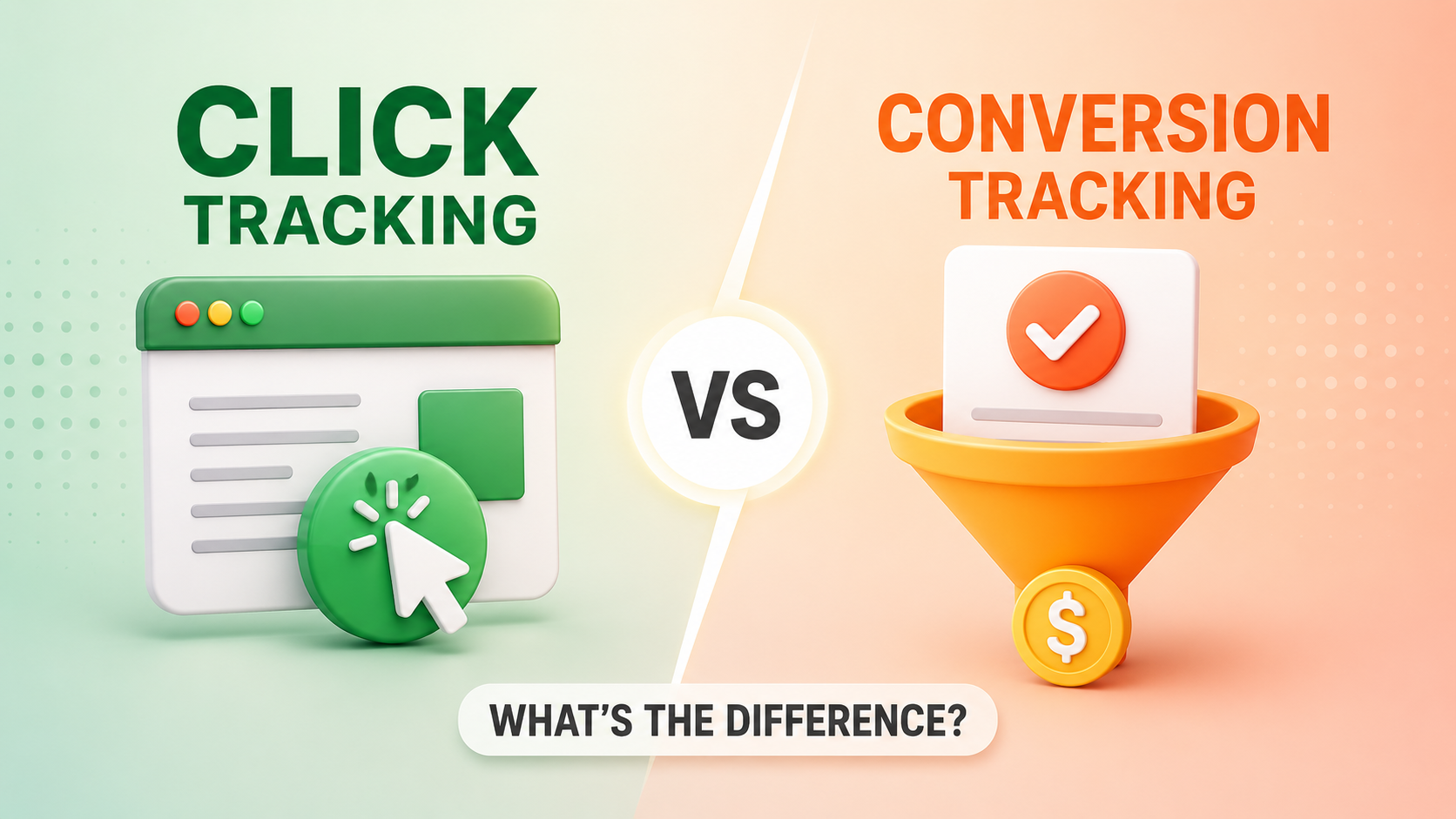
Mastering the difference between click tracking vs conversion tracking is essential for your growth. While both metrics originate from your digital campaigns, they serve entirely different purposes in your analytics dashboard. Misinterpreting these signals can lead to flawed conclusions about your marketing performance.
Are Your Clicks Turning Into Customers?
High click-through rates don’t always mean high revenue. Our analytics specialists can help you identify drop-off points, improve attribution, and increase conversions across your funnel.
Intent vs. Action: The Core Distinction
A click represents intent. When a user clicks your ad, they are signaling curiosity or interest in your offer. However, this action does not guarantee that the user will complete a purchase or sign up for your service.
“The click is the handshake, but the conversion is the contract.” — Anonymous
Conversely, conversion tracking measures the final action. This is the moment a visitor transforms into a lead or a customer. By focusing on this distinction, you ensure that you are not confusing mere traffic with actual business success.
Data Granularity and User Behavior Tracking
Effective user behavior tracking requires a blend of both metrics to provide a complete picture. Click data offers high-level insights into which headlines or visuals capture attention. It tells you where your audience is looking and what they find appealing.
In contrast, conversion data provides deep granularity regarding the final steps of the journey. It reveals which specific paths lead to revenue. You can use this information to refine your strategy and improve your overall return on investment.
| Metric Type | Primary Focus | Business Value |
|---|---|---|
| Click Tracking | User Interest | Traffic Volume |
| Conversion Tracking | Business Action | Revenue Growth |
The Relationship Between Clicks and Conversions
The relationship between these two metrics is linear and hierarchical. You generally need a high volume of clicks to generate a meaningful number of conversions. Without consistent user behavior tracking, you might struggle to identify where users drop off before they reach the final goal.
Think of clicks as the top of your funnel and conversions as the bottom. By analyzing how many clicks are required to produce a single conversion, you gain a clear understanding of your site’s efficiency. This insight allows you to optimize your landing pages for better results.
When to Prioritize Click Tracking
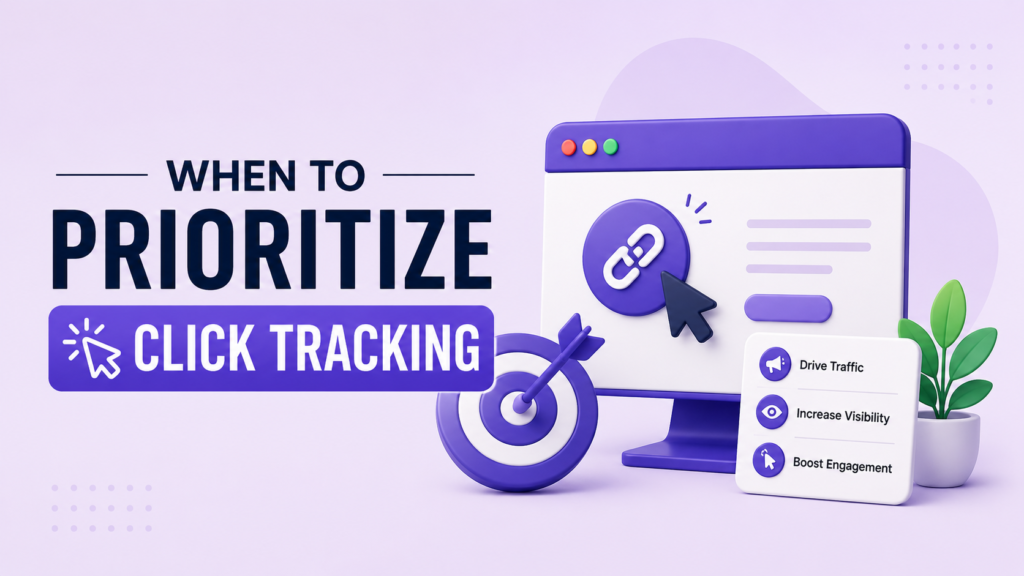
Mastering the art of monitoring clicks allows you to refine your marketing efforts at the very start of the customer journey. While conversions are the ultimate goal, Click Tracking provides the essential data needed to understand how your audience engages with your brand before they ever reach a checkout page.
Analyzing Top-of-Funnel Engagement
When you launch a new campaign, your primary objective is to capture attention. By focusing on initial engagement metrics, you can determine if your content is actually reaching the right people. If users are seeing your ads but not clicking, it is a clear signal that your targeting or value proposition needs adjustment.
This data helps you distinguish between passive viewers and active prospects. You can use these insights to build a more robust audience profile for future retargeting efforts.
Optimizing Ad Creative and Messaging
Your ad creative serves as the digital handshake between your brand and a potential customer. If your click-through rates are low, your messaging might be failing to resonate with the intended demographic. Click Tracking allows you to perform A/B testing on different headlines, images, and calls-to-action to see what drives the most interest.
By iterating based on real-time data, you ensure that your budget is spent on the most effective variations. This process of continuous improvement is vital for maintaining a competitive edge in crowded markets.
Identifying Bottlenecks in User Navigation
Sometimes, the problem is not your ad, but the destination itself. If users click your link but leave your landing page immediately, you likely have a navigation issue or a slow loading speed. Click Tracking helps you visualize where users are getting stuck or which elements on your page are being ignored.
You can identify specific friction points that prevent visitors from moving deeper into your site. Removing these barriers is crucial for ensuring that your initial outreach is as effective as possible before users reach the final conversion stage.
When to Prioritize Conversion Tracking
While clicks show interest, conversion tracking reveals the true heartbeat of your business revenue. You should shift your focus to this method when you need to prove that your marketing efforts are actually driving profit rather than just traffic. Relying solely on engagement metrics can often mask the reality of your financial performance.
Measuring Bottom-of-Funnel Performance
Bottom-of-funnel activities represent the final steps a user takes before becoming a customer. By implementing precise conversion tracking, you can identify exactly which landing pages or email sequences lead to completed purchases or form submissions. This data is vital for understanding which parts of your funnel are successfully closing deals.
Calculating Customer Acquisition Costs
To evaluate the efficiency of your marketing spend, you must calculate your Customer Acquisition Cost (CAC). This metric tells you exactly how much you spend to gain a single paying customer. When you integrate conversion tracking into your financial reporting, you gain the ability to see if your current ad spend is sustainable or if it is draining your resources.
Aligning Marketing Spend with Revenue Goals
Ultimately, your marketing budget should be a tool for growth, not a sunk cost. By prioritizing conversion tracking, you can identify and eliminate underperforming tactics that fail to contribute to your bottom line. This allows you to reallocate your budget toward high-performing channels, ensuring that every dollar spent is directly aligned with your overarching revenue goals.
Essential Click Tracking Tools for Your Tech Stack
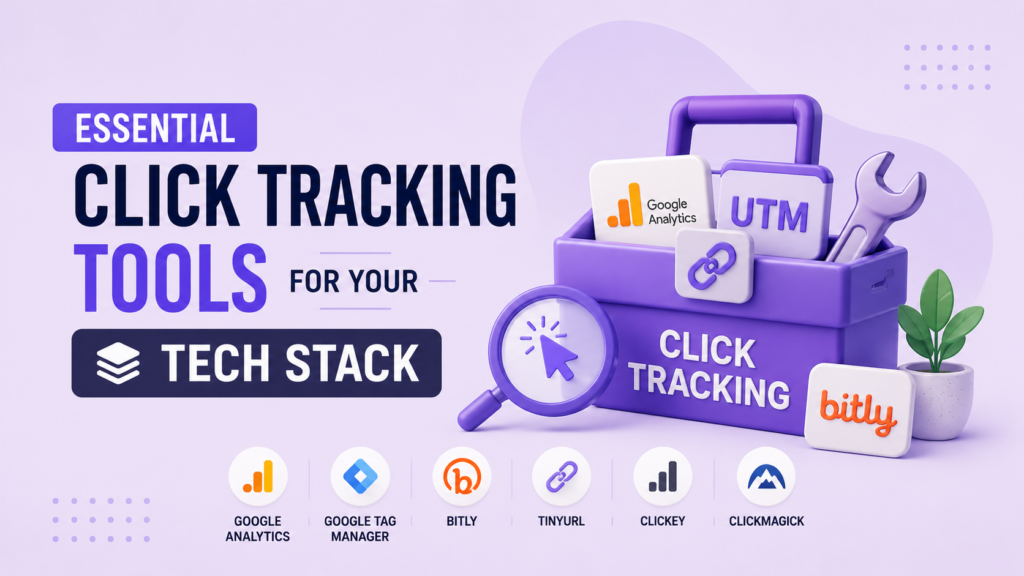
Building a robust marketing tech stack requires the right tools to monitor user interactions effectively. By integrating the correct software, you gain the ability to turn raw numbers into actionable insights that drive growth. These solutions provide the foundation for understanding how visitors navigate your digital presence.
Google Analytics 4 for Event Monitoring
Google Analytics 4 (GA4) serves as the backbone for modern Click Tracking. Unlike older versions, GA4 uses an event-based model that captures every interaction as a distinct data point. This flexibility allows you to track specific button clicks, file downloads, and video plays without complex custom coding.
You can configure these events to trigger automatically or manually based on your unique business goals. By leveraging this data, you ensure that your user behavior tracking remains accurate and comprehensive across all devices.
Heatmap Tools like Hotjar and Crazy Egg
While analytics platforms provide the “what,” heatmap tools offer the “why” behind user actions. Platforms like Hotjar and Crazy Egg allow you to visualize exactly where users click, scroll, and move their cursors. These click tracking tools are essential for identifying friction points in your user interface.
- Hotjar: Excellent for session recordings and visual heatmaps that show engagement patterns.
- Crazy Egg: Provides detailed scroll maps and A/B testing features to optimize page layouts.
- Combined Value: Using these tools helps you refine your design to improve conversion rates significantly.
UTM Parameters for Campaign Granularity
To maintain high-level visibility, you must implement UTM parameters across all your digital channels. These simple tags appended to your URLs allow you to track the specific source, medium, and campaign name for every incoming visitor. Without them, your Click Tracking efforts will lack the necessary context to determine which marketing channels perform best.
Consistent use of UTM parameters ensures that your user behavior tracking data remains clean and organized. When you standardize your naming conventions, you make it easier to compare performance across email, social media, and paid search campaigns. This level of detail is vital for making informed decisions about your future marketing spend.
Implementing Effective Conversion Tracking Systems
Establishing a robust framework for monitoring user actions is the cornerstone of modern digital marketing. When you build a solid technical foundation, you gain the clarity needed to make informed decisions about your budget. Proper conversion tracking serves as the bridge between raw website traffic and actual business growth.
Setting Up Conversion Pixels and Tags
To begin, you must deploy tracking pixels or tags directly onto your website pages. These small snippets of code act as silent observers that trigger whenever a user completes a specific action, such as a purchase or a form submission. Using a tag management system like Google Tag Manager simplifies this process by allowing you to manage all your scripts in one centralized location.
Consistency is vital when placing these tags across your site. Ensure that your triggers are set to fire only on the correct confirmation pages to avoid inflated data. By testing your tags in preview mode before publishing, you verify that the data flows correctly into your reporting dashboard.
Configuring Goal Tracking in Analytics Platforms
Once your tags are live, you need to define what success looks like within your analytics platform. You should configure specific goals that align with your primary business objectives, such as newsletter sign-ups or product checkouts. This step turns generic visitor data into meaningful insights regarding your conversion tracking performance.
Most modern platforms allow you to assign a monetary value to each goal. By doing this, you can quickly calculate the return on investment for different traffic sources. Regularly reviewing these goals ensures that your analytics setup remains relevant as your business strategy evolves over time.
Ensuring Data Accuracy and Privacy Compliance
Maintaining high data integrity requires a proactive approach to privacy regulations. You must ensure that your tracking methods comply with regional laws like GDPR or CCPA by obtaining explicit user consent. Implementing a reliable consent management platform helps you balance data collection needs with the legal rights of your visitors.
Regular audits of your tracking setup will help you identify and fix discrepancies before they impact your reporting. When you prioritize conversion tracking accuracy, you build trust in your data and avoid the pitfalls of fragmented or missing information. The following table outlines the key components of a healthy tracking environment.
| Component | Primary Function | Best Practice |
|---|---|---|
| Tracking Pixels | Capture user events | Use a Tag Manager |
| Goal Configuration | Define success metrics | Assign monetary values |
| Consent Management | Ensure legal compliance | Update privacy policies |
| Data Auditing | Verify accuracy | Monthly health checks |
Bridging the Gap: Integrating Both Methods for Holistic Insights
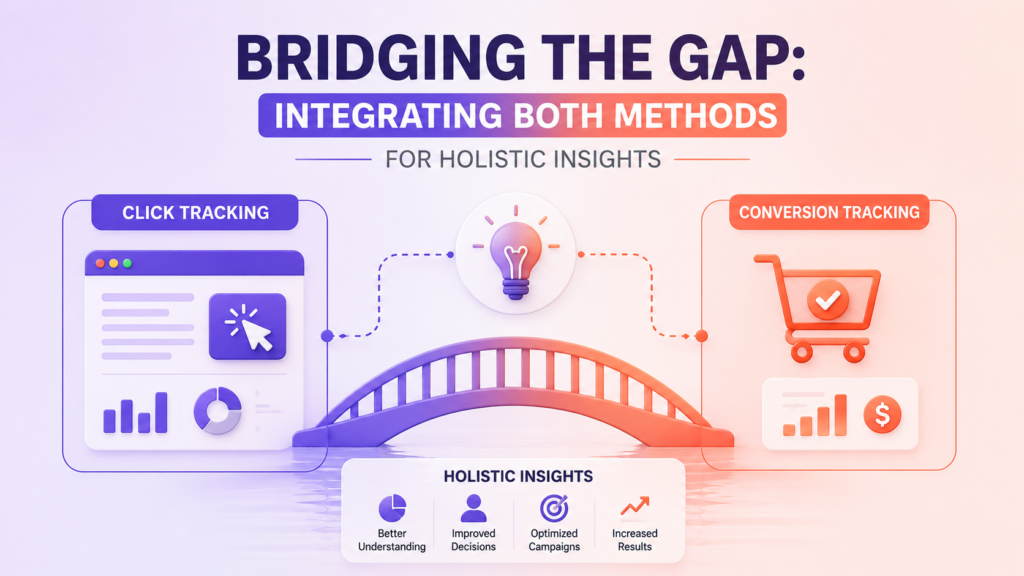
Bridging the gap between initial interest and final sales is the key to a truly sophisticated marketing strategy. When you stop viewing engagement and outcomes as separate entities, you gain a clearer picture of how your audience interacts with your brand. This holistic approach allows you to see the entire path a user takes before they finally decide to purchase.
Creating a Unified View of the Customer Journey
To build a unified view, you must map every touchpoint from the first advertisement click to the final checkout page. By combining these data sets, you can identify which specific channels drive the most valuable traffic. This visibility ensures that your marketing budget is allocated toward the paths that actually generate revenue.
Using Click Data to Improve Conversion Rates
You can leverage high-quality click tracking tools to pinpoint exactly where users lose interest on your website. If your data shows a high volume of clicks on a specific page but very few conversions, you have likely found a significant friction point. Addressing these bottlenecks through A/B testing or design improvements will directly boost your overall conversion rates.
Advanced Attribution Modeling Techniques
Moving beyond simple last-click attribution is essential for modern marketing success. Advanced models, such as data-driven or time-decay attribution, help you understand the true impact of every interaction in the funnel. By utilizing these sophisticated methods alongside your preferred click tracking tools, you can accurately measure the influence of top-of-funnel content on bottom-of-funnel results. This deeper level of analysis empowers you to make data-backed decisions that drive sustainable growth.
Ready to Track What Actually Grows Your Business?
From Google Analytics 4 setup to advanced conversion tracking and attribution modeling, we help businesses turn marketing data into measurable growth.
Conclusion
Your marketing strategy relies on a clear understanding of how users interact with your digital presence. Click tracking provides the initial pulse of your audience, while conversion tracking reveals the true impact on your bottom line.
Balancing these two metrics allows you to see the full picture of your customer journey. You gain the ability to spot early engagement trends and verify the effectiveness of your revenue goals simultaneously.
Data-driven decisions start with accurate measurement across every touchpoint. By integrating tools like Google Analytics 4 and Hotjar, you ensure that every dollar spent works toward your growth objectives.
Refining your approach requires constant testing and adjustment. Use your insights to bridge the gap between initial interest and final sales. This commitment to precision keeps your brand competitive in a crowded digital marketplace.
Start applying these tracking methods to your current campaigns today. You will build a more efficient path to success and achieve better results for your business.
FAQs
What is a click track and how does it benefit my initial marketing analysis?
A click track is a data point recorded when a user interacts with a specific link, button, or advertisement. By utilizing click tracking, you gain immediate visibility into which creative elements are successfully capturing interest. This allows you to measure top-of-funnel engagement and understand user behavior tracking before a prospect even reaches your primary landing page.
When comparing click tracking vs conversion tracking, which metric should I prioritize for ROI?
While both are essential, conversion tracking is the primary metric for calculating Return on Investment (ROI) and Customer Acquisition Cost (CAC). While click tracking shows you intent and interest, conversion data confirms that a user has completed a high-value action, such as a purchase or lead submission. For a holistic view, you should use both to see how initial engagement eventually leads to revenue.
What are the most effective click tracking tools for a modern marketing stack?
Professional marketers rely on a variety of click tracking tools to gather granular data. Google Analytics 4 (GA4) is the industry standard for event monitoring, while platforms like Hotjar and Crazy Egg offer heatmaps that visualize user behavior tracking. Additionally, implementing UTM parameters is vital for identifying exactly which campaigns are driving your traffic.
How does conversion tracking assist in optimizing my marketing budget?
Conversion tracking allows you to see exactly which ad sets and channels are producing tangible business results. By identifying low-performing campaigns that generate clicks but no sales, you can reallocate your spend toward high-converting tactics. This ensures your marketing budget is aligned with your overarching revenue goals rather than just vanity metrics.
Can I use click tracking data to improve my overall conversion rates?
Absolutely. By analyzing user behavior tracking data, you can identify friction points in your navigation or bottlenecks where users lose interest. If you notice high click-through rates on an ad but high bounce rates on the page, you can use those insights to refine your messaging and bridge the gap, eventually leading to a more effective conversion tracking setup and better sales performance.
What technical steps are required to implement a robust conversion tracking system?
To set up effective conversion tracking, you must correctly install conversion pixels and tags, often through Google Tag Manager, to capture specific user actions. You must also configure goals within your analytics platform to define what constitutes a success. Throughout this process, it is critical to ensure data accuracy and maintain compliance with privacy regulations like GDPR and CCPA.