
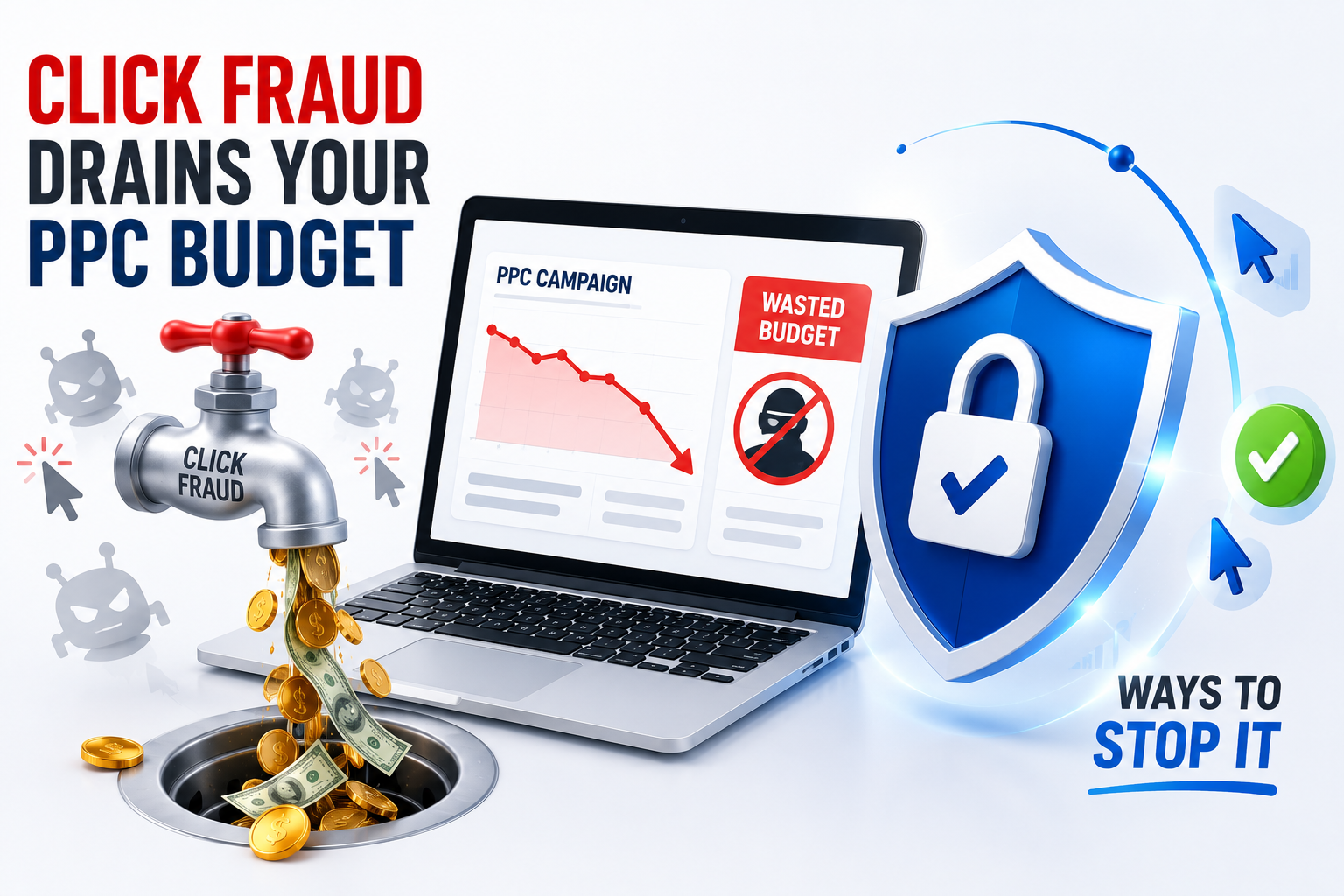
Have you ever wondered why your advertising campaigns seem to burn through cash without generating a single lead? You might be the victim of malicious digital activity designed to deplete your resources. This invisible threat click fraud targets your ppc budget, leaving your marketing efforts underfunded and ineffective.
When automated bots or competitors repeatedly interact with your ads, they create a false sense of engagement. This specific type of Click Fraud forces you to pay for traffic that will never convert into actual sales. Proactive management is essential to protect your bottom line and ensure your ppc budget is spent on real customers.
Understanding how to identify and block this click fraud is the first step toward reclaiming your marketing ROI. By taking control of your traffic sources, you can stop the waste and focus on growth.
Key Takeaways
- Malicious bots can rapidly exhaust your advertising funds.
- Unauthorized interactions prevent your ads from reaching genuine prospects.
- Monitoring traffic patterns helps identify suspicious activity early.
- Proactive defense strategies are vital for maintaining a healthy ROI.
- Securing your campaigns ensures your money reaches the right audience.
Is Click Fraud Secretly Draining Your PPC Budget?
Every fake click costs you real money. Stop wasting ad spend on bots, competitors, and invalid traffic before it destroys your ROI. Learn how to protect your campaigns and make every advertising dollar count.
What is the Mechanics of Click Fraud?
Behind every successful campaign lies a hidden battle against sophisticated digital threats designed to drain your resources. To defend your business, you must first recognize that Click Fraud is not merely a random glitch; it is a calculated effort to manipulate the digital advertising landscape for illicit gain.
Defining Ad Fraud in the Digital Ecosystem
At its core, ad fraud and click fraud represents any deliberate attempt to deceive advertisers by inflating traffic or engagement metrics. This practice thrives within the complex web of real-time bidding and automated ad exchanges that power modern marketing.
When you participate in these ecosystems, you are essentially competing in a high-speed auction. Unfortunately, online advertising fraud exploits the speed of these auctions to inject invalid traffic, ensuring that your budget is spent on non-human interactions rather than potential customers.
How Malicious Actors Exploit PPC Platforms
Bad actors utilize a variety of technical methods to compromise your marketing efforts through click fraud. They often deploy automated scripts that mimic human behavior, making it difficult for standard security filters to distinguish between a genuine lead and a malicious bot.
These attackers focus on specific vulnerabilities within PPC platforms to maximize their impact. By rotating IP addresses and using sophisticated device spoofing, they can bypass basic blocks and continue their Click Fraud activities undetected for extended periods.
Ultimately, the goal of this online advertising fraud is to force you to pay for clicks that provide zero value to your business. Understanding these mechanics is the first step in building a robust defense against the persistent threat of ad fraud.
The Financial Impact of Click Fraud on Your Business
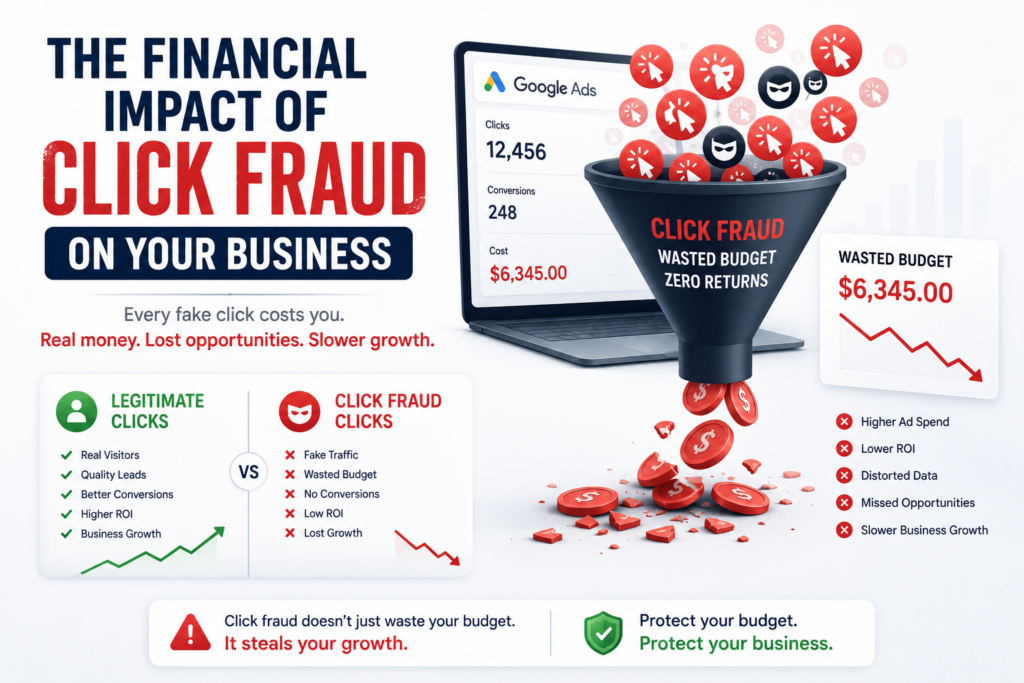
Every dollar you spend on advertising should bring you closer to a customer, but ppc fraud and click fraud often stands in the way. When your ads are targeted by click fraud actors, your marketing budget is essentially being siphoned off by non-human entities. This drain prevents your business from reaching genuine prospects who are actually interested in your services.
Calculating the Direct Loss of Ad Spend
The most immediate consequence of ppc fraud and click fraud is the rapid depletion of your daily budget. When bots or competitors click on your ads, you pay for every single interaction, yet these clicks never result in a sale or lead. This creates a significant gap between your projected return on investment and your actual financial performance.
“An investment in knowledge pays the best interest, but an investment in fraudulent clicks caused by click fraud pays nothing but debt.”
To understand your losses, consider the following breakdown of how wasted spend impacts your operations:
- Budget Exhaustion: Your daily limit is reached hours earlier than expected.
- Zero Conversion: High traffic volume fails to generate any meaningful revenue.
- Increased CPA: Your cost per acquisition rises sharply as fake clicks from click fraud inflate your metrics.
The Hidden Costs of Skewed Performance Data
Beyond the immediate loss of cash, ppc fraud and click fraud creates a distorted view of your market success. When your analytics dashboard is filled with fake traffic, your conversion rates appear artificially low. This misleading data often leads marketing teams to make poor strategic decisions, such as cutting high-performing keywords or abandoning profitable campaigns.
Relying on corrupted data forces you to optimize for the wrong audience. You might inadvertently adjust your bidding strategy based on bot behavior rather than human intent. Over time, this cycle of misinformation can cause long-term damage to your brand’s growth and competitive standing in the digital marketplace.
Identifying Common Sources of Bot Traffic
Not all traffic to your website is created equal, and some of it is designed specifically to drain your resources. To protect your marketing budget, you must understand the diverse origins of deceptive online activity related to click fraud. By pinpointing these sources, you can build a robust defense strategy against persistent threats.
Competitor Sabotage and Manual Clicking
Sometimes, the threat comes from a human source rather than a machine. Competitors may manually click on your ads to exhaust your daily budget, effectively pushing your business out of the auction. This form of ppc fraud and click fraud is often difficult to detect because the clicks appear to originate from unique, residential IP addresses.
These individuals often target your high-value keywords to maximize the click fraud-related financial damage. Because they are human, they may browse your site briefly to mimic legitimate behavior, making it harder for standard filters to flag them as malicious.
Automated Botnets and Scripted Attacks
Beyond manual efforts, automated bot traffic represents a significant portion of invalid click fraud activity. Sophisticated botnets consist of thousands of infected devices that execute scripted commands to click on ads at scale. These programs are designed to bypass basic security measures by rotating IP addresses and mimicking human browsing patterns.
Because these attacks are highly scalable, they can generate thousands of fake click fraud clicks in a matter of minutes. This type of Click Fraud is particularly dangerous because it can rapidly deplete your budget before you even realize an attack is underway.
Click Farms and Low-Quality Publisher Networks
Click farms operate as organized, industrial-scale operations where low-paid workers or automated systems click on ads continuously. These entities often partner with low-quality publisher networks that prioritize volume over genuine user engagement. By placing your ads on these shady sites, fraudsters can generate massive amounts of click fraud invalid traffic.
These networks often hide behind legitimate-looking websites to deceive advertisers. Staying vigilant about where your ads appear is essential to minimizing your exposure to these organized schemes. Proactive monitoring remains your best tool for maintaining the integrity of your advertising campaigns from click fraud.
Recognizing the Warning Signs of Fraudulent Activity
If you know what to look for, you can catch malicious actors before they drain your marketing resources. Staying ahead of digital threats requires a proactive approach to data analysis. By keeping a close watch on your campaign metrics, you can identify suspicious patterns that indicate your ads are being targeted by bots or competitors.
Analyzing Sudden Spikes in Traffic
One of the most common indicators of fraudulent activity is an unexplained surge in clicks that does not correlate with your marketing efforts. If your traffic levels jump significantly without a corresponding increase in brand awareness or seasonal demand, you should investigate immediately.
Compare your current traffic data against your historical performance benchmarks. When you notice a sudden spike that deviates from your typical daily averages, it often suggests that automated scripts are interacting with your ads. This type of click fraud activity is designed to exhaust your budget quickly.
Detecting Abnormal Conversion Rates
High click volume is only half the story; you must also monitor the quality of the traffic reaching your landing pages. A sudden drop in your conversion rate, despite a high number of clicks, is a major red flag. This often indicates that the traffic is coming from non-human sources or low-quality publisher networks.
If your ads are receiving clicks but generating zero leads or sales, your campaign may be under attack. Genuine users typically show intent through page engagement or form submissions. When that behavior vanishes, you are likely paying for fraudulent interactions that provide no value to your business.
Identifying Geographic and Device Anomalies
Fraudulent networks often operate from specific regions or use outdated device configurations to mask their identity. You should regularly audit your campaign reports to see if a disproportionate amount of traffic originates from locations where you do not conduct business. This is a clear sign of malicious intent.
Additionally, pay attention to the devices and browsers associated with your clicks. If you see a massive influx of traffic from obscure device types or older, unsupported browser versions, these are often hallmarks of automated botnets. By segmenting your data by geography and device, you can isolate these anomalies and take steps to exclude them from your future targeting.
The Role of Click Fraud in Modern Online Advertising
You might assume that major advertising platforms have solved the problem of invalid clicks, but the reality is far more complex. The digital ecosystem is currently locked in a high-stakes game of cat and mouse. As you invest in your campaigns, online advertising fraud remains a persistent threat that can undermine your growth and waste your hard-earned budget.
Still Paying for Fake Clicks Without Knowing It?
Bots, competitors, and invalid traffic could be silently draining your PPC budget every single day. Before you spend another dollar on wasted clicks, learn how to identify suspicious traffic and protect your campaigns from costly fraud.
Why PPC Platforms Struggle to Filter Sophisticated Bots
Major platforms utilize massive datasets to identify malicious activity, yet they often struggle to distinguish between genuine users and advanced bot traffic. Sophisticated bots are designed to mimic human behavior with startling accuracy. They can scroll through pages, move the mouse, and even interact with elements on your landing page.
Because these scripts operate within the parameters of normal user behavior, they often bypass standard security filters. Platforms must balance security with user experience, which creates a difficult trade-off. If they become too aggressive in blocking traffic, they risk penalizing legitimate customers who might be using VPNs or shared networks.
The Evolution of Ad Fraud Tactics
The landscape of ad fraud is not static; it is constantly shifting as attackers refine their methods. In the past, simple scripts were easy to detect because they followed predictable patterns. Today, attackers use machine learning to create dynamic, unpredictable click patterns that look identical to real human interest.
To stay ahead of these threats, you must understand the common characteristics of modern attacks:
- AI-Driven Mimicry: Bots that learn from real user data to replicate authentic browsing sessions.
- Device Spoofing: Attackers masking their identity by rotating through thousands of unique IP addresses and device fingerprints.
- Contextual Manipulation: Fraudsters placing ads on low-quality sites that appear legitimate to automated verification tools.
Staying ahead of these evolving threats requires constant vigilance and a proactive approach to your security. By recognizing that ad fraud is a sophisticated industry rather than a simple technical glitch, you can better protect your business from unnecessary losses.
Implementing Technical Click Fraud Prevention Strategies
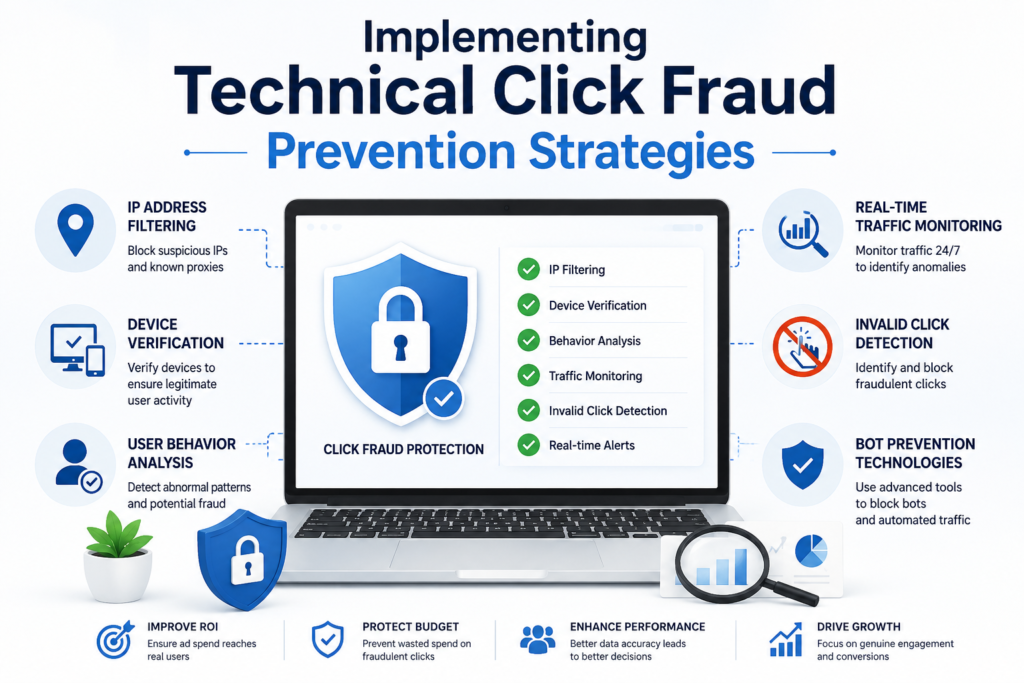
Securing your PPC campaigns involves more than just monitoring; it requires active technical intervention. By deploying specific defensive measures, you can create a hostile environment for malicious actors while ensuring your budget reaches genuine customers. These click fraud prevention tactics serve as your first line of defense against wasted ad spend.
Utilizing IP Exclusion Lists Effectively
One of the most direct ways to stop unwanted visitors is by identifying and blocking their specific network addresses. When you notice a pattern of repetitive, non-converting clicks from a single source, you should add that IP address to your exclusion list. This simple step prevents that specific device from seeing your ads again, effectively neutralizing persistent bot traffic.
Leveraging Negative Keywords to Filter Irrelevant Traffic
Your search campaigns often attract low-quality traffic through broad match queries that do not align with your business goals. By consistently reviewing your search terms report, you can identify irrelevant phrases and add them as negative keywords. This strategy ensures that your ads are not triggered by automated scripts or users searching for unrelated services, which is a vital component of click fraud prevention.
Configuring Advanced Audience Targeting Settings
Refining your audience parameters allows you to focus your budget on high-intent users who are more likely to convert. You can restrict your ads to specific geographic regions or demographic profiles where your target market resides. By narrowing your reach, you naturally reduce the surface area available for bot traffic to exploit your advertising budget.
| Strategy | Primary Benefit | Implementation Difficulty |
|---|---|---|
| IP Exclusion | Blocks known bad actors | Moderate |
| Negative Keywords | Filters irrelevant queries | Low |
| Audience Targeting | Improves lead quality | High |
Evaluating Third-Party Click Fraud Protection Software
Investing in specialized security tools is often the next logical step for businesses facing persistent ad budget drainage. While native platform settings provide a baseline, they frequently struggle to keep pace with evolving threats. Dedicated software offers the precision and speed required to maintain a healthy campaign environment.
Key Features to Look for in Security Tools
When selecting a platform for click fraud prevention, you must prioritize tools that offer real-time visibility. Effective solutions should provide automated blocking capabilities that act instantly when suspicious patterns emerge.
- Real-time traffic monitoring: Detects anomalies as they happen rather than after the budget is spent.
- Automated IP blocking: Syncs directly with your ad accounts to exclude malicious actors automatically.
- Device and behavioral fingerprinting: Identifies sophisticated bots that rotate IP addresses to bypass simple filters.
Integrating Protection Layers with Google Ads
Seamless integration is essential for any security software to function effectively. Most top-tier tools connect directly to your Google Ads account via API, allowing for automated updates to your exclusion lists.
This synchronization ensures that your Click Fraud defense remains active around the clock. By automating the exclusion process, you remove the need for manual intervention, allowing your team to focus on high-level strategy instead of constant monitoring.
Assessing the Return on Investment for Security Solutions
To determine if a tool is worth the cost, you should compare the monthly subscription fee against the potential savings. Many businesses find that the reduction in wasted spend far outweighs the price of the software.
| Metric | Without Protection | With Protection |
|---|---|---|
| Invalid Click Rate | 15% – 25% | Under 2% |
| Monthly Ad Waste | High | Minimal |
| Campaign ROI | Lower | Optimized |
Ultimately, click fraud prevention is an insurance policy for your marketing budget. By calculating your average cost-per-click and the volume of invalid traffic, you can easily justify the investment in a robust security layer to stop Click Fraud from eroding your bottom line.
Optimizing Your Campaign Settings to Minimize Exposure
Proactive management of your campaign settings is the most effective way to shield your advertising investment from malicious traffic. By tightening your configuration, you ensure that your ppc budget is spent on genuine, high-intent prospects rather than automated scripts. Small adjustments to your account settings can yield significant improvements in your overall campaign health.
Refining Geographic Targeting Parameters
Broad geographic targeting often invites unwanted attention from click farms located in regions where you do not conduct business. You should restrict your ads to specific cities, states, or zip codes where your target audience resides. This simple step prevents your ppc budget from being drained by international botnets that target broad, poorly defined locations.
- Exclude regions with historically high rates of invalid traffic.
- Focus your spend on areas with proven conversion history.
- Use radius targeting to reach local customers more effectively.
Adjusting Ad Scheduling to Avoid High-Risk Hours
Many automated attacks occur during off-peak hours when your team is not monitoring performance. If your data shows a spike in clicks at 3:00 AM with zero conversions, you should consider pausing your ads during those windows. Adjusting your schedule helps preserve your ppc budget by eliminating exposure during times when your target audience is unlikely to be active.
Consistency is key when testing these time-based restrictions. Monitor your performance metrics closely to ensure that you are not accidentally blocking legitimate traffic during early morning or late evening hours.
Limiting Ad Placements on Display Networks
The Google Display Network can be a major source of low-quality traffic if left unchecked. You should regularly review your placement reports to identify sites that generate high click volume but zero conversions. By excluding these low-quality publishers, you protect your ppc budget from being wasted on accidental clicks or fraudulent impressions.
Taking these steps allows you to maintain a cleaner, more profitable advertising environment. Always prioritize quality over quantity to maximize your return on investment.
Monitoring and Auditing Your PPC Performance Data
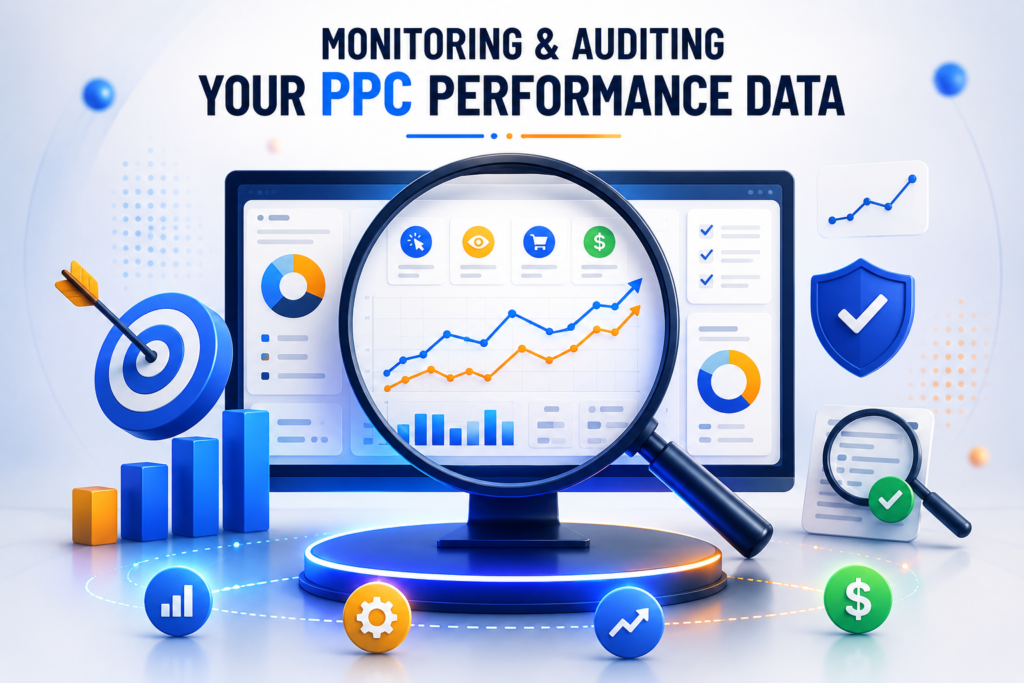
Maintaining a rigorous audit schedule is essential for identifying patterns of suspicious activity in your campaigns. By keeping a close eye on your metrics, you can catch ppc fraud before it causes significant financial damage to your business.
Establishing a Routine for Data Review
Consistency is the cornerstone of effective ad management. You should set aside time each week to perform a deep dive into your account performance to ensure that your spend is reaching real human users.
Consider focusing on these key areas during your weekly review:
- Click-through rate (CTR) spikes that occur without a corresponding increase in conversions.
- Sudden shifts in traffic volume from specific geographic regions or device types.
- High bounce rates from specific ad groups that typically perform well.
Using UTM Parameters for Granular Tracking
To truly understand where your traffic originates, you must implement robust tracking methods. Using UTM parameters allows you to append specific tags to your URLs, providing granular visibility into every click.
This data helps you isolate sources that might be contributing to ppc fraud. When you can see exactly which campaign, ad, or keyword is driving suspicious traffic, you can take immediate action to exclude those sources from your future targeting.
Communicating with Ad Platform Support Teams
Sometimes, the data you uncover requires professional intervention from the advertising platform itself. If you notice persistent, abnormal patterns that suggest malicious activity, do not hesitate to reach out to support.
When contacting support, be prepared to provide clear evidence to support your claims. Documenting your findings with screenshots, exported reports, and specific timeframes will significantly increase the likelihood of a successful investigation into potential ppc fraud.
Legal and Ethical Considerations in Ad Fraud Defense
Protecting your business from online advertising fraud involves more than just technical tools; it requires a solid legal foundation. You must balance aggressive defense tactics with the strict rules set by major advertising networks to ensure your account remains in good standing. Maintaining an ethical approach while defending your budget is vital for long-term success in click fraud prevention.
Documenting Evidence for Refund Requests
When you suspect malicious activity, your ability to secure a refund depends entirely on the quality of your data. You should maintain a detailed log of suspicious traffic patterns, including specific IP addresses, timestamps, and unusual user agent strings. This documentation serves as the primary evidence when you submit a formal dispute to an ad platform.
“Integrity is the foundation of every successful business relationship, especially when navigating the complex world of digital advertising disputes.”
Always ensure your records are organized and easy to interpret for support teams. Providing clear, actionable data significantly increases the likelihood that your request for ad fraud reimbursement will be processed efficiently. Consistency in your reporting demonstrates that you are a diligent advertiser who takes platform integrity seriously.
Understanding Platform Policies Regarding Invalid Clicks
Every major advertising network has specific definitions for what constitutes invalid traffic. You must familiarize yourself with these policies to ensure your click fraud prevention efforts align with their terms of service. Misunderstanding these rules can lead to rejected claims or, in extreme cases, account suspension.
Most platforms distinguish between accidental clicks and intentional ad fraud. By focusing your efforts on identifying patterns that violate these specific policies, you can build a stronger case for your business. Remember that transparency with platform support is often the most effective way to resolve disputes regarding invalid clicks and protect your investment in online advertising fraud defense.
Ready to Stop Click Fraud and Protect Your ROI?
The difference between profitable PPC campaigns and wasted ad spend comes down to one thing: protection. Detect suspicious traffic, block invalid clicks, and keep your budget focused on customers who actually convert.
Conclusion
Protecting your digital marketing investment requires a shift in mindset. You must view ad security click fraud prevention as a core component of your business strategy rather than a secondary task.
The landscape of online advertising changes rapidly. Malicious actors constantly refine their methods to bypass standard filters on platforms like Google Ads and Meta. Your ability to adapt determines the longevity of your campaigns and your defense against click fraud.
Combine technical safeguards with consistent data audits to maintain a healthy ecosystem. Use third-party tools to gain visibility into traffic patterns that automated systems might miss. This proactive stance keeps your budget focused on genuine customers.
Stay informed about emerging threats to keep your competitive edge sharp. Your commitment to vigilance ensures that every dollar spent contributes to real, profitable growth. Take control of your ad performance today to build a more resilient and efficient marketing operation.
FAQs
What exactly is click fraud and how does it impact my marketing efforts?
Click fraud is a malicious practice where individuals or automated scripts generate fake clicks on your digital advertisements. This activity is a major component of online advertising fraud that rapidly depletes your ppc budget, leaving your campaigns underfunded and preventing your ads from reaching genuine, high-intent customers.
How does ad fraud affect my business beyond the direct loss of ad spend?
Beyond the immediate financial drain, ad fraud creates long-term damage by providing skewed performance data. When your analytics are inflated by bot traffic, you may make poor strategic decisions based on “dirty” data, leading to ineffective optimizations and a lower overall return on investment for your brand.
Who is typically responsible for generating fraudulent clicks on my ads?
The sources of ppc fraud and click fraud vary, ranging from competitor sabotage intended to drain your resources to organized click farms and sophisticated automated botnets. These actors exploit the digital ecosystem to generate profit or gain a competitive advantage at your expense.
What are the primary warning signs that my campaigns are being targeted by bots?
You should remain vigilant for sudden, unexplained spikes in traffic that do not correlate with your promotional schedule. Other red flags include abnormally low conversion rates despite high click volume and geographic or device anomalies such as a surge in traffic from regions where you do not do business.
Why don’t major platforms like Google Ads stop all instances of online advertising fraud automatically?
While major platforms have robust security measures, ad fraud tactics are constantly evolving. Sophisticated bots are now designed to mimic human behavior, such as scrolling and hovering, making them difficult for standard algorithms to detect. This is why proactive click fraud prevention strategies are essential for every advertiser.
What technical strategies can I implement for better click fraud prevention?
You can bolster your defenses by utilizing IP exclusion lists to block known malicious sources and leveraging negative keywords to filter out irrelevant traffic. Additionally, refining your geographic targeting and adjusting your ad scheduling can help you avoid high-risk periods when bot traffic is most active.
Is it worth investing in third-party click fraud protection software?
For many businesses, the answer is yes. Third-party security tools provide real-time monitoring and automated blocking capabilities that often exceed the native features of ad platforms. When evaluating these tools, consider the potential return on investment by comparing the subscription cost to the total ppc budget you stand to save.
How can I effectively audit my PPC performance data to identify suspicious activity?
Establishing a routine data review is critical. By using UTM parameters for granular tracking, you can identify exactly where your traffic is coming from. If you notice patterns consistent with ppc fraud and click fraud, you can collect this evidence to support a formal investigation or refund request with the ad platform’s support team.
What is the process for documenting evidence to request a refund for invalid clicks?
To successfully claim a refund, you must provide detailed documentation of the suspicious activity, including timestamps, IP addresses, and behavioral anomalies. Understanding the specific policies of platforms like Google Ads regarding invalid activity will help you navigate the legal and ethical requirements for securing a reimbursement of your lost ppc budget.