
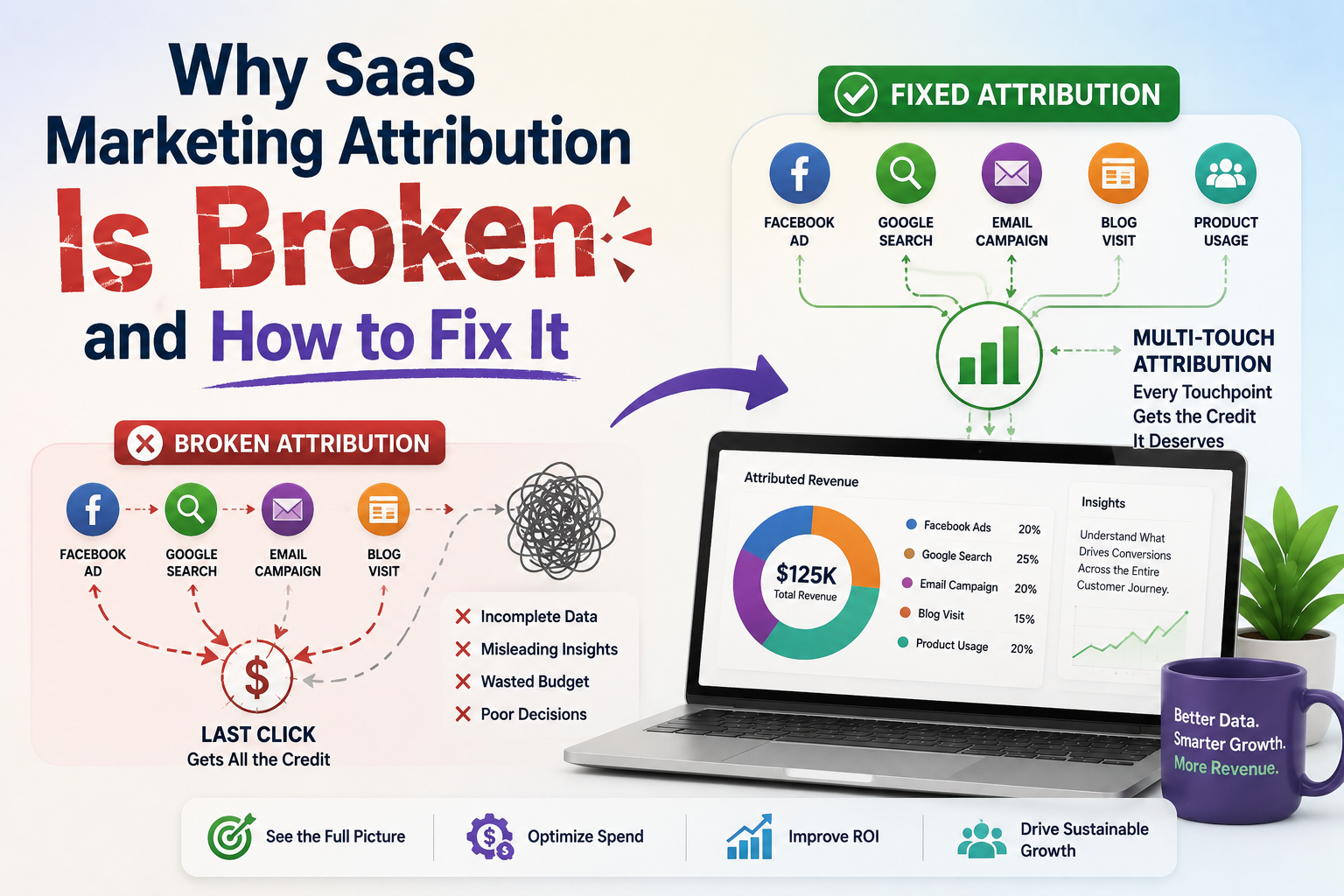
Have you ever wondered why your data seems to lie to you? Modern B2B buyers move through complex, non-linear paths that traditional tools simply cannot track. You are likely losing visibility into which efforts actually drive revenue. This is where saas marketing attribution becomes essential.
This disconnect creates a massive gap in your growth strategy. The landscape of saas marketing attribution has shifted, leaving legacy systems behind. You need a more sophisticated approach to analyze your performance effectively.
It is time to reclaim control over your data and stop guessing where your customers come from. By upgrading your analytical framework, you can finally see the true impact of your work. A stronger saas marketing attribution process makes this visibility possible.
Key Takeaways
- Traditional tracking methods fail to capture modern, non-linear buyer journeys.
- Data gaps often lead to poor decision-making and wasted budget.
- Sophisticated analysis is required to understand true performance drivers.
- Reclaiming visibility allows for more accurate revenue forecasting.
- You must evolve your strategy to stay competitive in a digital-first environment.
See Your True Attribution
Stop guessing which channels drive revenue. Explore our plans to uncover hidden touchpoints, connect your data, and start making smarter growth decisions today.
The Current State of SaaS Marketing Attribution
Bridging the gap between raw data collection and actionable business intelligence is the defining challenge for modern marketers. Many growth-focused organizations find that their current saas marketing attribution efforts fail to capture the full picture of the buyer journey. You likely see a disconnect between the tools you use and the actual revenue outcomes your team generates.
Legacy tracking systems were built for a simpler era of digital interaction. Today, the digital ecosystem is fragmented across countless platforms, devices, and channels. This complexity makes it difficult to assign credit to the specific touchpoints that truly drive conversions.
Effective saas marketing attribution remains a top priority because it directly influences your budget allocation. Without a clear view of what works, you risk wasting resources on channels that do not contribute to your bottom line. You need a system that translates raw data into clear, strategic insights.
The industry is currently shifting away from basic tracking toward more sophisticated models. By prioritizing data-driven decision making, you can finally align your marketing activities with real business growth. Mastering this process is essential for any company looking to scale in a competitive market.
Why Traditional Models Fail in the B2B SaaS Landscape
The B2B landscape has evolved, yet many organizations remain stuck with legacy measurement systems designed for a simpler era. Relying on outdated frameworks often leads to a distorted view of how your marketing efforts actually drive revenue. To succeed, you must recognize that saas marketing attribution requires a more sophisticated approach than what was standard a decade ago.
The Limitations of Last-Click Attribution
Last-click attribution is perhaps the most common culprit behind misallocated marketing budgets. This model gives 100% of the credit to the final touchpoint before a conversion, such as a demo request or a sign-up. By doing so, it completely ignores the weeks or months of research that led the prospect to that point. This limitation is one reason saas marketing attribution needs a broader perspective.
When you prioritize this model, you inadvertently undervalue your top-of-funnel awareness campaigns and content marketing efforts. These early interactions are essential for building trust and brand authority. Effective saas marketing attribution helps ensure these interactions receive appropriate consideration.
Without proper credit, high-performing educational content often appears to have zero impact on your bottom line. Better saas marketing attribution can reveal the value these interactions actually create.
The Complexity of Multi-Touch Buyer Journeys
Modern B2B buyers rarely follow a linear path to purchase. A typical prospect might engage with a white paper, attend a webinar, and visit your pricing page multiple times before ever speaking to a sales representative. This non-linear behavior makes saas marketing attribution significantly more difficult to track accurately.
Because these journeys involve multiple stakeholders and long decision-making cycles, a single-touch model is fundamentally broken. You need a system that accounts for every interaction across the entire lifecycle. This makes saas marketing attribution more useful for complex B2B decision-making. Failing to capture these touchpoints leaves you blind to which channels are truly fueling your pipeline.
The following table illustrates the key differences between traditional and modern measurement approaches:
| Feature | Last-Click Model | Multi-Touch Model |
|---|---|---|
| Data Focus | Final interaction only | Full customer journey |
| Budget Allocation | Biased toward bottom-funnel | Balanced across all stages |
| Insight Depth | Limited and misleading | Comprehensive and actionable |
| Strategic Value | Low for long sales cycles | High for complex B2B SaaS |
By moving away from simplistic metrics, you gain a clearer understanding of your saas marketing attribution strategy. This shift allows you to invest in the channels that actually nurture prospects from initial awareness to final contract signature.
The Impact of Privacy Regulations and Cookie Deprecation
Privacy regulations and the end of third-party cookies have fundamentally altered the B2B marketing playbook. As browsers tighten security, the ability to follow a prospect across the web has diminished significantly. You must now adapt your strategy to ensure that your data collection remains both effective and ethical.
How Third-Party Cookie Loss Affects Tracking
The decline of third-party cookies creates a major gap in your visibility. Previously, these small files allowed you to stitch together a user’s journey across multiple domains. Without them, your tracking infrastructure often fails to connect initial ad clicks to final conversions. This makes reliable saas marketing attribution increasingly important.
This technical limitation forces a move toward first-party data collection. First-party data can strengthen saas marketing attribution while improving data reliability. You should prioritize capturing information directly from your own website interactions. Relying on your own data ensures that you maintain a clearer picture of your audience without depending on external platforms that are increasingly restricted.
“Privacy is not just a regulatory hurdle; it is a fundamental shift in how we build trust with our customers in the digital age.”
Navigating Data Privacy Compliance in the United States
Operating within the United States requires a keen understanding of evolving state-level laws like the CCPA and CPRA. These regulations demand that you provide users with clear choices regarding their personal information. Transparency is your greatest asset when building a sustainable data strategy.
You can maintain a functional tracking system by focusing on consent-based models. By clearly communicating how you use data, you foster a sense of security that encourages users to engage with your brand. Balancing these legal requirements with your need for high-quality insights is essential for long-term growth. It also creates a stronger foundation for saas marketing attribution.
Ultimately, compliance should be viewed as a competitive advantage rather than a burden. Companies that respect user privacy often see higher levels of engagement and brand loyalty. By refining your approach now, you protect your business from future regulatory changes while keeping your marketing efforts precise.
Understanding Modern Marketing Attribution Models
Modern marketing attribution models offer a sophisticated way to view your customer’s path to purchase. By moving away from simplistic tracking, you gain the ability to see how various touchpoints influence your bottom line. Choosing the right framework is essential for aligning your strategy with actual business outcomes. The right saas marketing attribution model can make that alignment easier to achieve.

Linear and Time-Decay Models Explained
Linear attribution provides a balanced view by assigning equal credit to every interaction in the buyer journey. This model is highly effective for long sales cycles where multiple touchpoints are necessary to build trust. It can therefore support more comprehensive saas marketing attribution. It ensures that no single channel is ignored, even if it does not directly trigger the final conversion.
In contrast, the time-decay model prioritizes interactions that occur closer to the point of conversion. This approach assumes that the most recent touchpoints have the greatest impact on the final decision. For complex B2B journeys, saas marketing attribution can provide a more complete picture. It is particularly useful for teams focused on short-term lead generation and immediate pipeline velocity.
“Data is not just about counting clicks; it is about understanding the narrative of your customer’s journey.”
The Shift Toward Data-Driven Attribution
The industry is rapidly moving toward data-driven attribution to solve the limitations of rule-based systems. These advanced marketing attribution models utilize machine learning to analyze historical performance and assign credit based on actual influence. These hidden touchpoints often serve as the final nudge for a prospect before they enter your sales funnel. This method removes human bias and provides a statistically accurate view of campaign performance.
By leveraging algorithmic insights, you can optimize your budget toward the channels that truly drive revenue. This shift allows for a more dynamic understanding of how different marketing efforts interact with one another. That understanding is central to effective saas marketing attribution. The following table highlights the core differences between these common methodologies:
| Model Type | Credit Distribution | Best Use Case |
|---|---|---|
| Linear | Equal across all touchpoints | Long, complex B2B cycles |
| Time-Decay | Higher weight to recent events | Short-term lead generation |
| Data-Driven | Algorithmic weight | High-volume, complex data sets |
Ultimately, the best approach depends on your specific business goals and the complexity of your sales funnel. Implementing these modern marketing attribution models will empower your team to make decisions based on evidence rather than intuition.
The Role of Dark Social in SaaS Attribution
The digital landscape is shifting, and a significant portion of your pipeline is being built in places your tracking pixels cannot reach. While your analytics dashboard might show a gap between marketing spend and actual results, the culprit is often hidden in plain sight. This phenomenon, known as dark social, represents the untrackable interactions that drive modern B2B buying decisions. These interactions create important challenges for saas marketing attribution.
Take Control of Attribution
Ready to replace unreliable tracking with revenue-focused insights? Explore our plans, discover the right solution for your team, and start seeing the complete buyer journey.
Defining Dark Social and Its Influence on Pipeline
Dark social refers to the traffic and influence that occurs in channels where attribution software cannot track the source. This includes private Slack communities, direct messages, word-of-mouth recommendations, and niche industry podcasts. Because these interactions happen outside of traditional web browsers, they do not carry the UTM parameters or cookies that your CRM relies on.
These hidden touchpoints often serve as the final nudge for a prospect before they enter your sales funnel. Ignoring these channels leads to a distorted view of your marketing effectiveness, as you may mistakenly attribute a sale to a direct visit or a generic search query. Addressing this gap can make saas marketing attribution more accurate. In reality, the buyer may have spent weeks discussing your product in a private peer group before ever clicking your link.
Strategies for Capturing Unattributed Demand
To gain a complete picture of your marketing performance, you must move beyond purely quantitative data. One of the most effective ways to capture this demand is through self-reported attribution. By adding a simple “How did you hear about us?” field to your demo request or sign-up forms, you can gather qualitative insights directly from your prospects.
You should also focus on building a presence in the communities where your target audience spends their time. Engaging in industry-specific forums or sponsoring relevant podcasts allows you to influence the conversation where it actually happens. Consider these methods to bridge the gap:
- Implement a mandatory or optional “How did you hear about us?” field on all conversion forms.
- Analyze qualitative feedback from sales calls to identify recurring mentions of specific influencers or communities.
- Monitor brand sentiment and mentions within private industry Slack or Discord groups.
- Use “last-touch” surveys to ask new customers what specific event or conversation triggered their decision to buy.
By combining these qualitative methods with your existing data, you can finally account for the influence of dark social. This gives your saas marketing attribution strategy a more complete view of demand. This holistic approach ensures that your marketing strategy is based on the reality of the buyer journey rather than just the limitations of your tracking software.
Evaluating the Best Marketing Attribution Tools for B2B SaaS
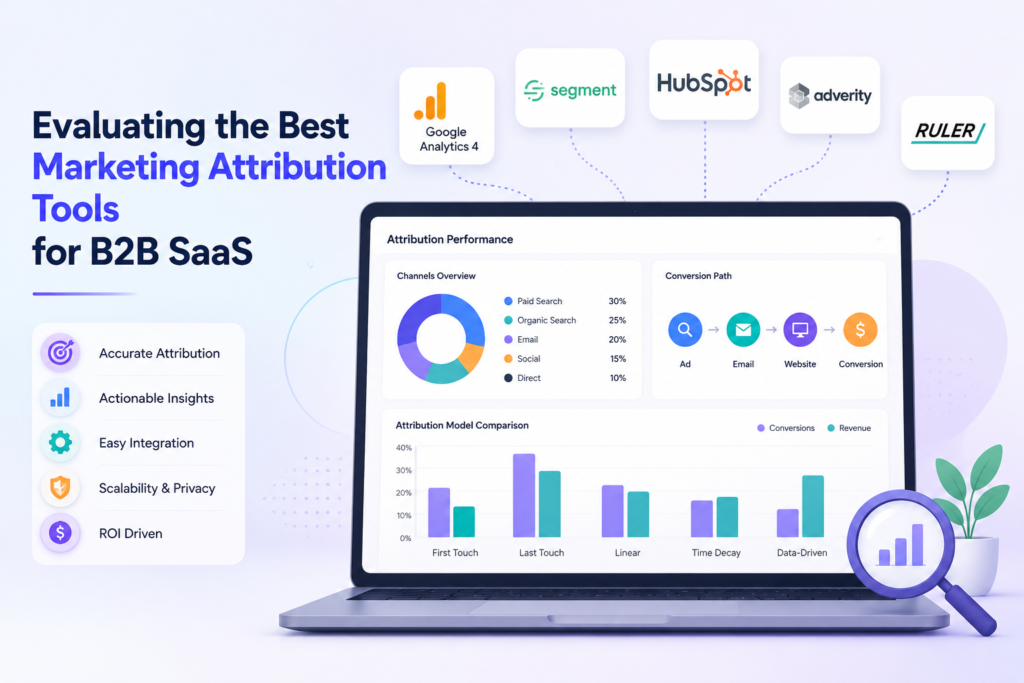
Finding the best b2b marketing attribution saas solution starts with identifying the features that drive real revenue growth. You need a system that connects your marketing efforts directly to closed-won deals. Without the right technology, your data remains fragmented and difficult to interpret.
Key Features to Look for in Attribution Software
- CRM Integration: Seamless syncing with Salesforce or HubSpot is non-negotiable for tracking the full funnel.
- Multi-Touch Attribution: The ability to assign value to multiple touchpoints across a long sales cycle.
- Ease of Use: Intuitive dashboards that allow your team to pull insights without needing a data scientist.
- Privacy Compliance: Built-in support for cookieless tracking and data privacy regulations.
Comparing Top Platforms Like Triple Whale and HockeyStack
Choosing the best marketing attribution platform for b2b saas often comes down to how a tool handles complex, non-linear buyer journeys. While many options exist, Triple Whale and HockeyStack stand out for their unique approaches to data visualization and pipeline influence.
Triple Whale excels in e-commerce and high-volume environments, while HockeyStack is often preferred for its deep B2B focus. The following table highlights how these platforms compare across critical functional areas:
| Feature | Triple Whale | HockeyStack |
|---|---|---|
| Primary Focus | E-commerce & D2C | B2B SaaS |
| Data Depth | High (Ad-centric) | High (Full-funnel) |
| Ease of Setup | Very High | Moderate |
Ultimately, the best marketing attribution tools for b2b saas are those that align with your specific reporting requirements. You should prioritize platforms that provide clear visibility into your dark social channels and long-term pipeline value. By focusing on these core areas, you can build a robust infrastructure that supports long-term growth.
Integrating CRM Data for Holistic Attribution
Your marketing data remains incomplete until it is unified with your sales pipeline. When you keep these systems separate, you lose the ability to track the full journey from a lead’s first touch to a closed deal. Integrating them strengthens saas marketing attribution across the entire funnel.
Creating a single source of truth is the most effective way to measure true revenue impact. It also provides a stronger foundation for saas marketing attribution. By merging these datasets, you gain the clarity needed to optimize your budget and focus on high-performing channels.
Connecting Salesforce and HubSpot to Marketing Data
Integrating platforms like Salesforce and HubSpot with your marketing analytics tools is a technical necessity for modern teams. This connection allows you to pass lead source information directly into your CRM, ensuring that every opportunity is tied to its original marketing touchpoint.
When you automate this data flow, you eliminate the need for manual spreadsheet updates. This real-time visibility ensures that your attribution models are always based on the most accurate and current information available. It also strengthens your saas marketing attribution reporting.
Overcoming Data Silos Between Sales and Marketing
Data silos often prevent teams from working toward the same goals. When marketing and sales teams operate on different metrics, they struggle to identify which campaigns actually drive revenue.
You can break down these barriers by establishing shared definitions for lead stages and conversion events. When both departments agree on what constitutes a qualified lead, the friction between teams begins to disappear.
Encouraging regular communication between these departments fosters a culture of accountability. By aligning your teams around the same revenue-focused data, you ensure that everyone is working toward the same growth objectives.
Implementing a Revenue-Centric Attribution Strategy
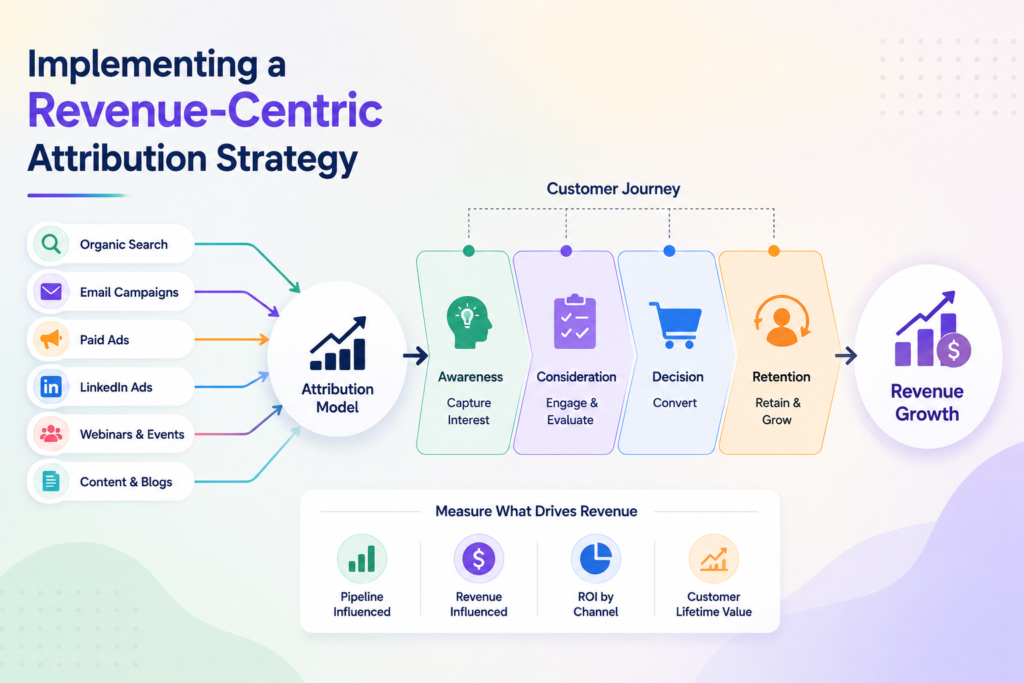
Transforming your strategy requires a fundamental move from vanity metrics to bottom-line impact. Many teams rely on surface-level data that fails to show how marketing efforts drive actual business growth. By adopting sophisticated marketing attribution models, you can finally connect your daily activities to the revenue generated by your sales team.
Moving Beyond Vanity Metrics to Pipeline Value
Vanity metrics like page views, social media likes, and email open rates often provide a false sense of success. While these numbers look good on a report, they rarely correlate with the health of your sales pipeline. You must prioritize pipeline value to understand which campaigns truly influence high-intent prospects. This revenue-focused perspective makes saas marketing attribution more actionable.
Focusing on pipeline contribution allows you to see which touchpoints actually move a lead toward a closed-won deal. When you utilize advanced marketing attribution models, you stop guessing which content works. Instead, you gain clear visibility into the specific assets that shorten your sales cycle and increase deal velocity.
Aligning Marketing Spend with Customer Lifetime Value
Allocating your budget effectively requires looking far beyond the initial acquisition cost. You should align your marketing spend with the Customer Lifetime Value (CLV) to ensure you are investing in the most profitable segments. This approach helps you identify which channels bring in high-value clients who stay with your company for years.
By integrating revenue data, you can justify your budget to executive leadership with confidence. This strategic shift ensures that every dollar spent is tied to long-term profitability rather than short-term gains. The following table highlights the difference between traditional tracking and a revenue-centric approach.
| Metric Type | Focus Area | Business Impact | Primary Goal |
|---|---|---|---|
| Vanity Metrics | Engagement | Low | Traffic Growth |
| Pipeline Metrics | Conversion | Medium | Lead Quality |
| Revenue Metrics | Profitability | High | Sustainable ROI |
| CLV Metrics | Retention | Very High | Long-term Value |
Ultimately, your choice of marketing attribution models determines how well you can scale your business. When you prioritize revenue over engagement, you build a more resilient and data-driven marketing organization.
Common Pitfalls When Setting Up Attribution Systems
You might believe that more data points equal better insights, yet this assumption is a common pitfall in modern B2B marketing. Many teams rush to implement complex tracking before they have a clear strategy. Selecting the best marketing attribution tools for b2b saas requires a focus on clarity rather than just technical volume.
Over-Engineering Your Tracking Infrastructure
It is tempting to track every single click, hover, and scroll event across your entire digital footprint. However, this approach often leads to data bloat, where your team spends more time cleaning data than actually analyzing it. This creates a state of analysis paralysis that prevents you from making timely decisions.
When you over-engineer your infrastructure, you lose sight of the high-level trends that actually drive revenue. Instead of tracking everything, focus on the touchpoints that correlate with closed-won deals. Utilizing the best marketing attribution tools for b2b saas should simplify your workflow, not add layers of unnecessary technical debt.
Ignoring Qualitative Feedback and Self-Reported Attribution
Quantitative data is powerful, but it rarely tells the full story of a buyer’s journey. Many organizations make the mistake of ignoring qualitative feedback, such as “How did you hear about us?” surveys on demo request forms. This self-reported data often reveals the influence of podcasts, word-of-mouth, or dark social channels that tracking pixels simply cannot capture.
By relying solely on automated tracking, you miss the human context behind a purchase decision. Integrating self-reported attribution into your reporting provides a holistic view of your marketing impact. It can also improve saas marketing attribution by revealing otherwise hidden influences. When you combine this human insight with the best marketing attribution tools for b2b saas, you gain a significant competitive advantage in understanding your true demand generation sources.
Best B2B Marketing Attribution SaaS Practices for Growth
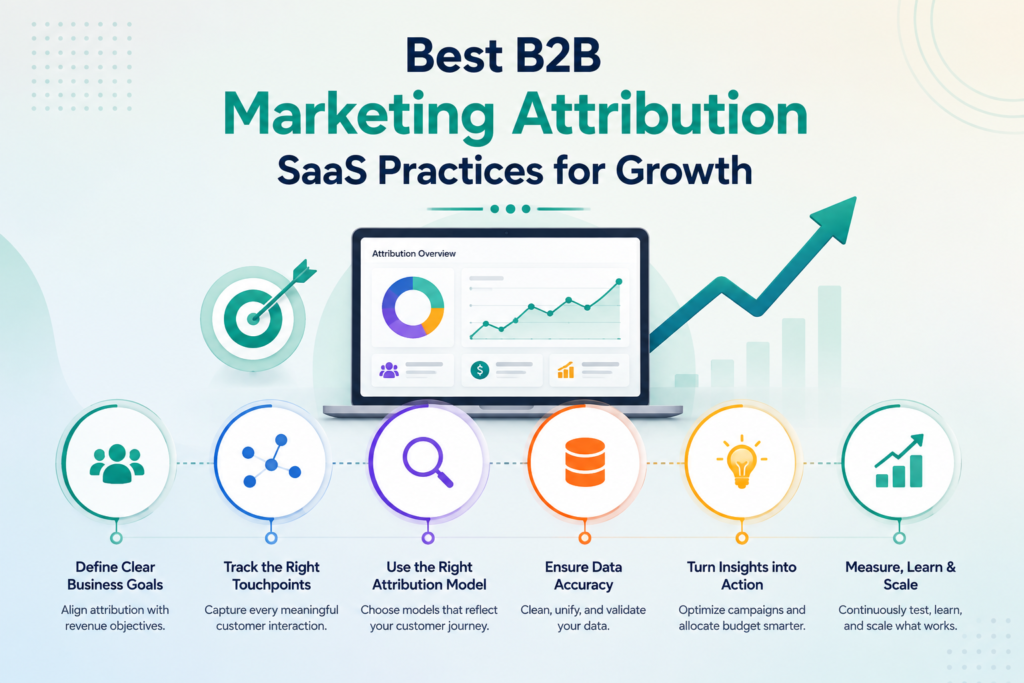
Your attribution strategy is a living system that must evolve alongside your market and your customers. Implementing the best b2b marketing attribution saas tools is only the first step toward achieving long-term revenue success. To maintain a competitive edge, you must treat your data as a dynamic asset that requires constant care and attention.
Iterative Testing and Model Refinement
Market conditions and buyer behaviors shift rapidly in the B2B landscape. You should regularly audit your attribution models to ensure they still reflect the reality of your customer journey. Continuous testing allows you to identify which touchpoints are truly driving pipeline value versus those that are merely noise.
Do not be afraid to adjust your weighting parameters as you gather more historical data. By refining your models quarterly, you ensure that your marketing spend remains aligned with high-intent activities. This iterative approach is a hallmark of the best b2b marketing attribution saas implementations.
Building a Culture of Data-Informed Decision Making
Technology alone cannot solve your growth challenges if your team relies on intuition over evidence. You must foster an environment where every marketing campaign is evaluated based on its contribution to revenue. Data-informed decision making empowers your team to pivot quickly when a strategy fails to deliver results. Strong saas marketing attribution gives your team the evidence needed to make those decisions.
Encourage your stakeholders to ask questions about the data rather than accepting vanity metrics at face value. When your team understands the “why” behind the numbers, they become more accountable for their performance. Adopting these practices will solidify your position as a data-driven organization capable of sustained, long-term growth.
Turn Data Into Revenue
Your attribution should reveal what actually works. View our plans to connect every touchpoint, eliminate blind spots, and start optimizing marketing performance today.
Conclusion
Fixing your marketing attribution requires a shift in mindset. You must move away from legacy models that fail to capture the reality of modern buyer journeys. Relying on outdated metrics limits your ability to scale effectively.
True growth stems from a data-driven approach that connects every touchpoint to actual revenue. Platforms like Triple Whale and HockeyStack provide the visibility needed to make smarter decisions. You gain the power to align your marketing spend with long-term customer value.
Accurate tracking serves as a strategic imperative for your business success. It transforms your marketing department from a cost center into a primary driver of pipeline growth. Start refining your systems today to gain a competitive edge in the market.
Share your experiences with attribution challenges in the industry. Your insights help build a community focused on better data practices. Take control of your metrics and watch your revenue grow. With saas marketing attribution, you can connect those metrics more directly to revenue.
FAQs
Why is traditional saas marketing attribution considered broken for modern B2B companies?
Traditional methods are failing because the modern B2B buyer journey is no longer linear or predictable. Legacy tracking systems struggle to connect multiple touchpoints across long sales cycles and various stakeholders, creating a significant gap between raw data and actual revenue. To fix this, you must shift toward more sophisticated saas marketing attribution strategies that account for the complexity of the digital ecosystem.
Why should you move away from last-click marketing attribution models?
Relying on last-click models is misleading for B2B SaaS because it ignores the majority of the customer journey. These marketing attribution models often undervalue crucial top-of-funnel efforts, such as whitepapers or webinars, and give undue credit to the final interaction. This leads to poor budget allocation and a failure to recognize the content that actually drives initial brand awareness.
How does the loss of third-party cookies affect your ability to track B2B prospects?
Third-party cookie deprecation significantly limits your ability to monitor individual user behavior across different websites and platforms. Navigating data privacy compliance in the United States requires you to move away from intrusive tracking and instead focus on building a robust first-party data infrastructure. This ensures you maintain visibility into your performance while respecting user privacy rights.
What is “Dark Social,” and how can you measure its influence on your pipeline?
Dark Social refers to the “hidden” interactions that occur in untrackable channels like private Slack communities, podcasts, or direct word-of-mouth. While these interactions aren’t caught by standard analytics, they heavily influence the sales pipeline. You can capture this unattributed demand by utilizing qualitative methods, such as adding a “How did you hear about us?” field to your HubSpot or Salesforce forms.
What should you look for when choosing the best marketing attribution platform for b2b saas?
The best marketing attribution platform for b2b saas should offer deep CRM integration, multi-touch capabilities, and the ability to process data-driven insights through machine learning. You should look for tools that prioritize ease of use and provide a holistic view of the journey rather than siloed metrics. Comparing best marketing attribution tools for b2b saas like Triple Whale and HockeyStack can help you identify which features align best with your growth goals.
How does integrating CRM data create a more accurate attribution report?
Connecting platforms like Salesforce and HubSpot directly to your marketing data creates a single source of truth. This integration allows you to overcome data silos between sales and marketing teams, ensuring that every touchpoint is linked to a specific revenue outcome. It is a fundamental step for any organization looking to implement the best b2b marketing attribution saas practices.
How can you align your marketing spend with Customer Lifetime Value (LTV)?
To align spend with LTV, you must move beyond vanity metrics, like clicks or impressions and focus on pipeline value. By implementing a revenue-centric attribution strategy, you can identify which specific channels and campaigns are bringing in your most profitable, long-term customers, allowing you to maximize your return on investment.
What are the most common pitfalls when setting up a new attribution system?
One of the biggest mistakes is over-engineering your tracking infrastructure, which often leads to data bloat and “analysis paralysis.” Another common pitfall is ignoring qualitative feedback. Even the best b2b marketing attribution saas solutions work better when supplemented with self-reported data and direct feedback from the sales team to fill in the gaps left by automated tracking.
What are the best b2b marketing attribution saas practices for driving long-term growth?
Growth-focused organizations should prioritize iterative testing and constant model refinement. Instead of a “set it and forget it” approach, you should build a culture of data-informed decision-making. This involves regularly reviewing your marketing attribution models to ensure they reflect current buyer behaviors and adapting your strategy to optimize for revenue rather than just lead volume. A consistent saas marketing attribution process supports this ongoing optimization.
3 thoughts on “Why SaaS Marketing Attribution Is Broken and How to Fix It”