
Have you ever wondered why your marketing campaigns seem to perform well, yet your financial returns remain stagnant? You might be falling victim to a silent thief that targets your digital resources every single day.
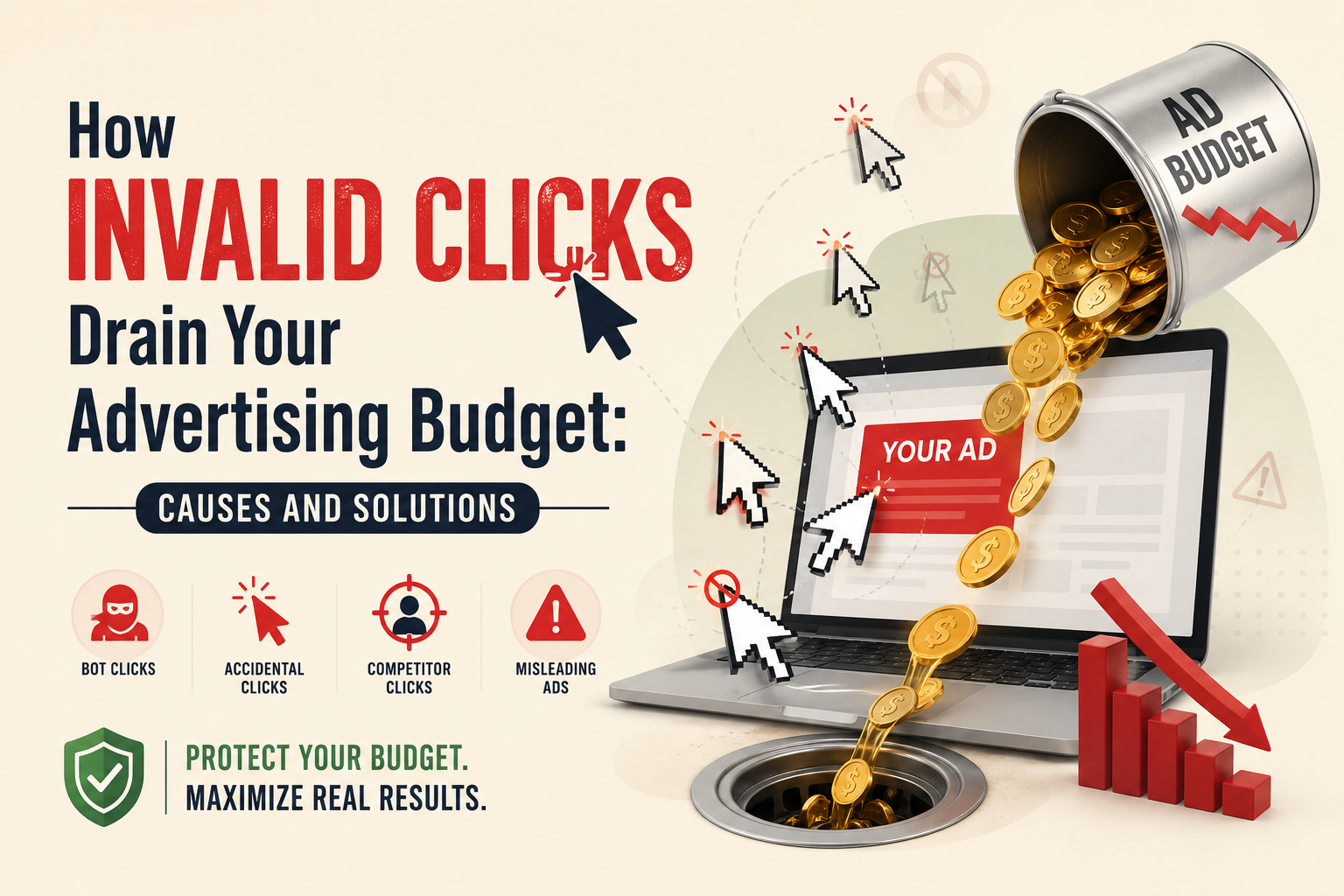
Invalid clicks represent a significant threat to your Advertising Budget. These fraudulent interactions, whether generated by malicious bots or accidental taps, drain your capital without providing any real value to your business.
Protecting your digital investment is essential for long-term growth and safeguarding your advertising budget in a competitive market. By understanding how these deceptive activities undermine your efforts, you can take proactive steps to secure your Advertising Budget and ensure every dollar works toward your success.
Key Takeaways
- Invalid clicks are fraudulent or accidental interactions that waste your marketing spend.
- Automated bots are a primary source of wasted traffic on major platforms.
- Proactive monitoring is necessary to maintain a healthy bottom line.
- Fraudulent activity directly undermines your ability to scale effectively.
- Implementing robust security measures protects your long-term financial growth.
Stop Losing Money to Invalid Clicks Every Day
Invalid clicks silently waste your advertising budget and reduce campaign performance. Detect fraudulent traffic, block suspicious activity, and ensure your ads reach genuine prospects.
What is the Impact of Invalid Clicks on Your Advertising Budget?
Invalid clicks act like a slow leak in your marketing strategy, draining your resources and advertising budget without providing any return. When you allocate funds to a campaign, you expect those dollars to reach potential customers who are genuinely interested in your products. However, fraudulent traffic often siphons away your Advertising Budget before it ever has a chance to convert.
Even small amounts of suspicious activity can accumulate over time, leading to significant financial waste. You might not notice a few stray clicks today, but these instances compound into a major loss for your ad budget over the course of a month or quarter. This silent erosion makes it difficult to scale your efforts effectively.
Monitoring your Advertising Budget is a fundamental requirement for any successful digital marketing strategy. Without constant oversight, you risk paying for engagement that never translates into revenue. By identifying these patterns early, you protect your bottom line and ensure your capital is spent on high-quality leads.
The following table illustrates how invalid traffic impacts your overall performance compared to legitimate user engagement:
| Metric | Legitimate Traffic | Invalid Traffic |
|---|---|---|
| Conversion Potential | High | Zero |
| Cost Efficiency | Optimized | Wasted Spend |
| Data Integrity | Reliable | Corrupted |
| Long-term ROI | Positive | Negative |
Ultimately, taking control of your ad budget allows you to make data-driven decisions that foster growth. When you eliminate waste, you gain the freedom to reinvest those savings into channels that actually drive profit. Staying vigilant is the best way to maintain a healthy and sustainable marketing presence.
Defining Invalid Clicks and Their Mechanics
Grasping the underlying mechanics of invalid traffic is the first step toward securing your digital assets. An invalid click occurs whenever a user or a script interacts with your advertisement without any genuine interest in your product or service. These interactions do not contribute to your business goals and often result in a direct financial loss for your advertising budget.
Distinguishing Between Accidental and Malicious Clicks
It is important to categorize these clicks based on the intent behind them. Accidental clicks often happen on mobile devices where users tap an ad by mistake while scrolling through content. These are usually harmless, though they still consume your your advertising budget if not properly filtered by the advertising platform.
In contrast, malicious clicks are intentional acts designed to harm your campaign. Competitors or bad actors may click your ads repeatedly to exhaust your daily advertising budget, effectively removing your presence from the search results. Recognizing this distinction helps you determine whether you are dealing with a technical optimization issue or a targeted security threat.
How Automated Bots Mimic Human Behavior
Modern click fraud has evolved beyond simple, repetitive scripts. Sophisticated automated bots now use advanced techniques to mimic human behavior, making them incredibly difficult to detect. These programs can simulate mouse movements, varied click patterns, and even realistic dwell times on your landing page.
By rotating through thousands of unique IP addresses, these bots bypass standard security filters that look for simple, high-frequency traffic spikes. They often utilize residential proxy networks to appear as legitimate users from specific geographic locations. Understanding these complex mechanics is essential for you to implement more robust defenses against fraudulent activity.
The Financial Consequences of Ignoring Click Fraud
Every dollar lost from your advertising budget to fraudulent clicks represents a missed opportunity for genuine growth. When you fail to address invalid traffic, you essentially hand over your hard-earned marketing spend to bad actors instead of reaching potential customers.
“The cost of doing nothing is often far greater than the cost of taking action against digital threats,” as many industry experts often remind us.
Direct Loss of Marketing Spend
The most immediate impact of ignoring click fraud is the rapid depletion of your budget. When bots or malicious scripts interact with your ads, your marketing spend and advertising budget are consumed without any chance of a return on investment.
This financial drain happens in real-time, often exhausting your daily budget before your actual target audience even sees your ads. Over time, this creates a significant gap in your profitability that is difficult to recover from.
The Ripple Effect on Campaign Performance Metrics
Beyond the immediate loss of cash, click fraud corrupts the data you rely on for future decisions. When your analytics are flooded with fake interactions, your campaign funding becomes tied to inaccurate performance metrics.
You might mistakenly believe a specific ad set is performing well because of high click-through rates, leading you to pour more money into a failing strategy. This cycle of misinformation can jeopardize your entire digital presence.
| Metric Type | Impact of Fraud | Resulting Action |
|---|---|---|
| Conversion Rate | Artificially Low | Budget Cuts |
| Cost Per Click | Inflated | Reduced Reach |
| Marketing Spend | Wasted | Lower ROI |
Ultimately, this instability in campaign funding forces you to make reactive decisions rather than proactive ones. Protecting your data integrity is essential to maintaining a healthy and profitable advertising ecosystem.
Common Sources of Invalid Traffic
Your advertising budget faces constant threats from various sources of non-human or unintentional engagement. Recognizing these origins is the first step toward building a resilient defense for your online campaigns. By understanding how these interactions occur, you can better protect your bottom line.
Competitor Sabotage and Click Farms
Some invalid traffic stems from deliberate attempts to exhaust your budget. Competitors may manually click your ads to drive up your costs, forcing you to drop out of the auction early. This malicious behavior is often amplified by click farms, which are organized groups of low-paid workers or automated systems designed to generate fake engagement at scale.
“The integrity of your advertising data is only as strong as your ability to filter out the noise of bad actors.”
Accidental Clicks on Mobile Devices
Not all invalid traffic is malicious; a significant portion is entirely accidental. On mobile devices, small screens and sensitive touch interfaces often lead to users clicking ads unintentionally while scrolling. These accidental clicks provide no value to your business, yet they still consume your budget if not properly monitored.
| Source Type | Intent Level | Impact on Budget |
|---|---|---|
| Competitor Sabotage | High | Severe |
| Mobile Misclicks | None | Moderate |
| Botnet Activity | High | Very High |
Botnets and Malicious Scripts
Sophisticated botnets represent the most technical threat to your advertising performance. These networks of infected computers run malicious scripts to mimic human behavior, making it difficult for standard filters to detect them. They can generate thousands of fake impressions and clicks in a short period, effectively draining your funds without ever reaching a real customer.
Protecting your ads requires constant vigilance against these automated threats. By identifying these common sources, you can implement targeted strategies to minimize waste and improve your overall return on investment.
Identifying Signs of Click Fraud in Your Analytics
Your analytics dashboard holds the secrets to uncovering hidden click fraud. By consistently reviewing your campaign data, you can distinguish between genuine customer interest and malicious automated activity affecting your advertising budget. Proactive monitoring is the most effective way to safeguard your marketing budget from being drained by bad actors.
Analyzing Unusual Spikes in Traffic
Sudden, unexplained surges in traffic often serve as the first red flag. If you notice a massive influx of visitors that does not correlate with a specific marketing push or seasonal trend, you should investigate immediately. Automated bots often strike in short, intense bursts to maximize damage before detection systems can react.
“Data is a precious thing and will last longer than the systems themselves.”
Check your hourly traffic reports to see if these spikes occur during off-peak hours. Genuine users in your target market typically follow predictable browsing patterns. If your traffic remains high at 3:00 AM, you are likely dealing with non-human traffic sources.
Monitoring Low Conversion Rates from High-Traffic Sources
High traffic volume is only valuable if it leads to meaningful engagement or sales. When you see a high click-through rate paired with a near-zero conversion rate, your campaign is likely being targeted by click farms. This discrepancy suggests that the visitors are not interested in your product but are simply clicking to deplete your budget.
The following table helps you compare typical performance metrics against signs of potential fraud:
| Metric | Healthy Campaign | Suspicious Activity |
|---|---|---|
| Conversion Rate | Stable/Expected | Near Zero |
| Bounce Rate | Moderate | Extremely High |
| Session Duration | Meaningful | Under 5 Seconds |
Detecting Geographic and IP Address Anomalies
You should regularly audit the geographic origins of your traffic. If you are running a local campaign in the United States but suddenly receive thousands of clicks from regions where you do not operate, you are likely under attack. Geographic mismatches are a classic indicator of botnet activity.
Furthermore, keep a close watch on your IP address logs. If a single IP address or a small range of IPs generates an abnormally high number of clicks, you must take action. Blocking these specific sources can prevent further waste and help stabilize your campaign performance over time.
Strategies for Protecting Your Advertising Budget
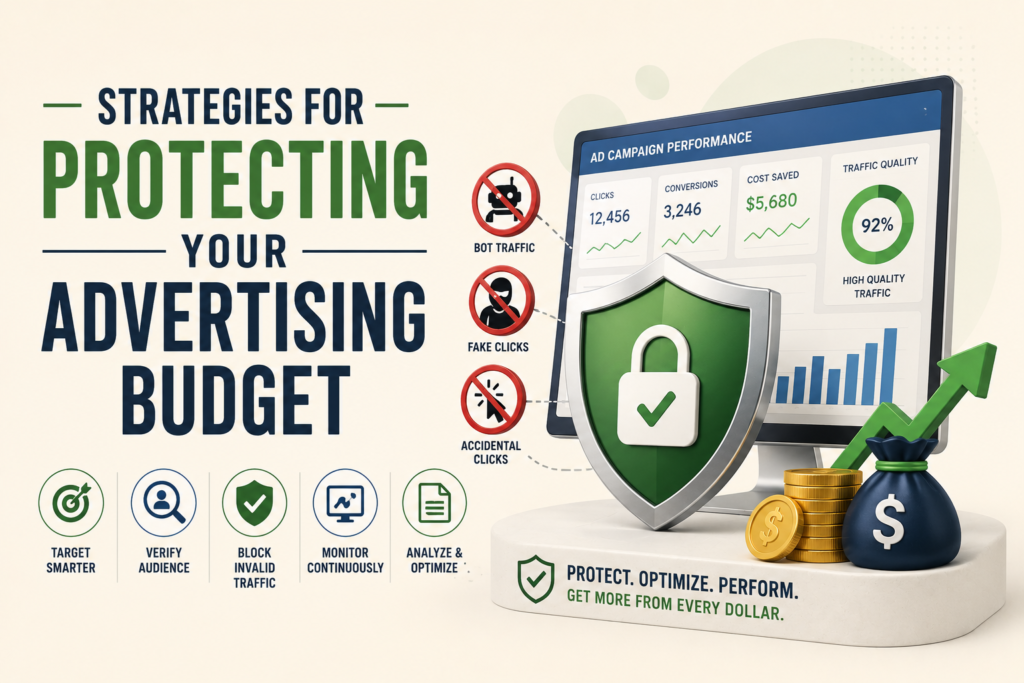
Safeguarding your digital marketing investment starts with identifying and blocking sources of invalid traffic. By taking a proactive stance, you ensure that your capital reaches genuine prospects rather than being siphoned away by bots or malicious competitors. Implementing these technical safeguards is essential for maintaining a healthy advertising budget.
Implementing IP Exclusion Lists
One of the most effective ways to stop repeat offenders is through the use of IP exclusion lists. When you identify specific IP addresses that consistently generate non-converting or suspicious clicks, you can manually exclude them from your campaigns. This targeted approach prevents those specific entities from seeing your ads again, effectively preserving your ad budget for high-quality traffic.
“An investment in knowledge pays the best interest, but an investment in security pays the best dividends for your marketing campaigns.”
Utilizing Google Ads Automated Fraud Detection
Modern advertising platforms are equipped with sophisticated systems designed to filter out invalid interactions automatically. Google Ads employs advanced machine learning to identify and remove clicks that appear fraudulent or accidental before they ever impact your advertising budget and bottom line. You should regularly review your account reports to ensure these automated systems are functioning correctly and providing the protection you expect for your advertising budget.
Setting Strict Geographic and Demographic Targeting
Refining your audience parameters serves as a powerful layer of defense against wasted spend. By limiting your ads to specific geographic regions where your business operates, you eliminate traffic from areas known for high rates of click fraud. Furthermore, strict demographic targeting ensures that your ads are only displayed to users who match your ideal customer profile, which naturally reduces the likelihood of accidental clicks and improves the overall efficiency of your ad budget.
Advanced Tools for Click Fraud Prevention
Protecting your advertising budget from sophisticated fraud requires moving beyond standard settings. While major platforms provide basic filters, they often struggle to identify complex bot patterns or coordinated attacks. Advanced security tools offer the specialized depth needed to safeguard your digital investments effectively.
See How Much Invalid Traffic Is Costing Your Business
Uncover hidden click fraud affecting your campaigns. Analyze traffic quality, identify budget leaks, and discover opportunities to improve advertising performance and profitability.
Evaluating Third-Party Fraud Protection Software
Third-party software solutions, such as ClickCease or Lunio, provide a dedicated layer of defense that native tools lack. These platforms utilize machine learning to analyze traffic patterns in real-time, identifying anomalies that might otherwise go unnoticed. By choosing a specialized provider, you gain access to granular data and automated blocking capabilities.
When evaluating these options, consider the ease of integration with your existing ad accounts. A high-quality tool should offer seamless connectivity, allowing you to automate the exclusion of malicious IP addresses without manual intervention. This proactive stance ensures that your advertising budget is spent only on genuine human interest.
Integrating Real-Time Monitoring Solutions
Real-time monitoring is the cornerstone of modern ad security. Instead of reviewing reports after your budget has been depleted, these systems provide immediate alerts when suspicious activity is detected. This allows you to pause campaigns or adjust targeting parameters before significant financial damage occurs.
Integrating these solutions creates a dynamic shield around your advertisements. By constantly scanning for botnets and click farms, these tools ensure that your conversion metrics remain accurate and reliable. The following table highlights the key differences between standard platform tools and advanced third-party solutions.
| Feature | Native Platform Tools | Third-Party Software |
|---|---|---|
| Detection Speed | Delayed/Batch Processing | Real-Time |
| Bot Identification | Basic/Known Signatures | Advanced Behavioral Analysis |
| Automation Level | Limited/Manual | Fully Automated Blocking |
| Reporting Depth | General Overview | Granular Forensic Data |
Optimizing Your Ad Budget Allocation for Better ROI
Smart ad budget allocation is the difference between wasted capital and a thriving digital campaign. When you treat your marketing spend as a finite resource, you naturally become more selective about where those dollars land. By shifting your focus toward quality over quantity, you ensure that your Advertising Budget works harder to drive actual business results.
Reallocating Funds from High-Risk Placements
Not all digital real estate is created equal. Some websites and apps are notorious for hosting low-quality traffic or bot-driven activity that drains your resources without providing value. You should regularly audit your placement reports to identify these underperforming areas.
Once you spot these high-risk zones, take immediate action to protect your Advertising Budget. Consider the following steps to tighten your control:
- Exclude specific domains that consistently show high click volume but zero conversions.
- Review mobile app categories that often suffer from accidental clicks.
- Use negative placement lists to block sites that do not align with your brand safety standards.
Focusing on High-Intent Audience Segments
Refining your ad budget allocation means prioritizing users who are most likely to complete a purchase or inquiry. Instead of casting a wide net, concentrate your resources on segments that demonstrate clear purchase signals. This strategy minimizes the impact of invalid traffic by keeping your ads in front of real, interested people.
High-intent targeting allows you to maximize your return on investment by bidding more aggressively for the right audience. You can achieve this by:
- Leveraging first-party data to reach users who have already engaged with your brand.
- Utilizing custom intent audiences based on recent search behavior.
- Applying strict demographic filters to ensure your ads reach your ideal customer profile.
By shifting your Advertising Budget toward these high-value segments, you create a more resilient campaign structure. This proactive approach ensures that your marketing efforts remain profitable even in a competitive digital landscape.
Best Practices for Auditing Your Ad Campaigns
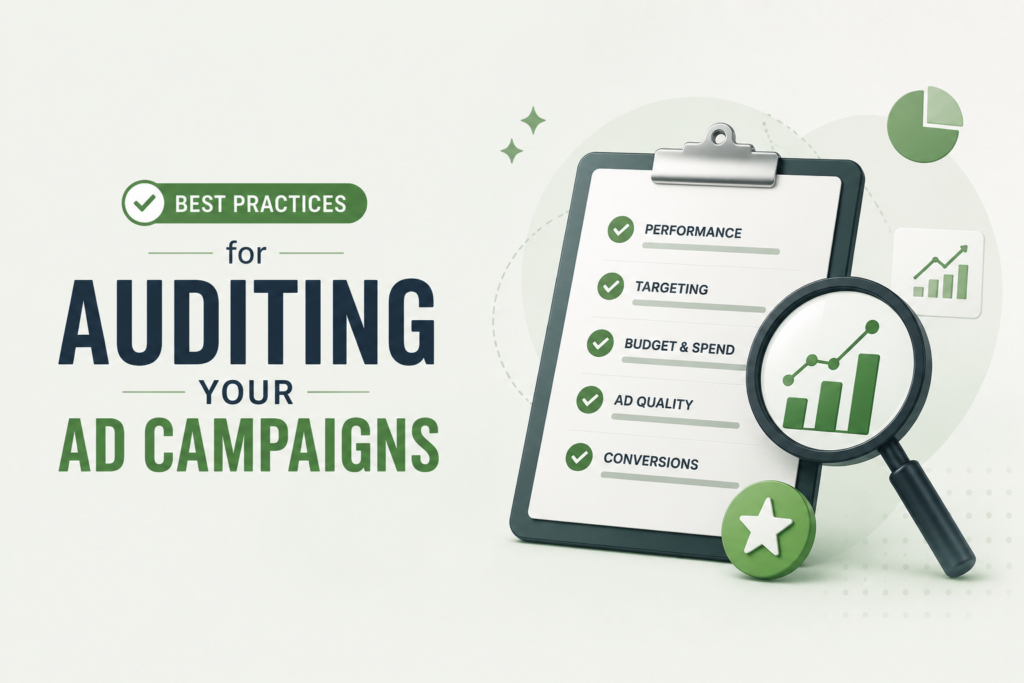
Regular audits serve as your primary defense against the silent erosion of your advertising funds. By consistently reviewing your performance data, you ensure that your marketing spend is directed toward genuine engagement rather than wasted on fraudulent activity.
Establishing a Regular Review Schedule
Consistency is the cornerstone of effective campaign management and advertising budget protection. You should establish a fixed schedule—ideally weekly or bi-weekly—to inspect your traffic patterns and conversion metrics. This routine helps you spot anomalies before they significantly impact your ad budget.
During these reviews, look for sudden shifts in click-through rates or unusual geographic traffic spikes. Proactive monitoring allows you to pause underperforming placements immediately, preventing further loss of capital.
Documenting Suspicious Activity for Refund Requests
When you identify potential fraud, immediate documentation is essential for future recovery efforts. Keep a detailed log of suspicious IP addresses, timestamps, and unusual click patterns to support your claims. This organized approach makes it much easier to request a refund for your marketing spend when dealing with advertising platforms.
Maintaining a clear paper trail demonstrates that you are a diligent advertiser. When you present concrete evidence, platforms are more likely to process your requests for ad budget adjustments efficiently.
| Audit Task | Frequency | Goal |
|---|---|---|
| Traffic Source Review | Weekly | Identify Bot Activity |
| IP Anomaly Check | Bi-Weekly | Block Malicious Actors |
| Conversion Rate Audit | Monthly | Optimize ROI |
| Refund Documentation | As Needed | Recover Lost Funds |
Communicating Fraud Issues to Advertising Platforms
When you notice suspicious activity in your account, taking immediate action is vital to protect your campaign funding. Advertising platforms have established protocols to handle reports of invalid traffic, but you must follow their specific guidelines to see results. Proactive communication ensures that your concerns are documented and addressed by the support teams.
Navigating the Google Ads Refund Process
The Google Ads platform provides a structured way to report potential click fraud. You should start by visiting the official help center to locate the Invalid Click Investigation Form. This form is the primary channel for submitting your concerns regarding suspicious traffic patterns.
Once you submit the form, the internal team reviews your account data to verify if the clicks were indeed invalid. It is important to remain patient during this period, as the investigation process can take several business days. If the platform confirms the fraud, they will credit your account, effectively restoring your campaign funding for future use.
Providing Evidence to Support Your Claims
To increase the likelihood of a successful refund, you must provide clear and actionable evidence. Generic complaints are rarely effective; instead, you should supply specific data points that highlight the anomalies you have detected. Detailed documentation acts as the foundation for your request.
The following table outlines the essential data you should compile before reaching out to support:
| Evidence Type | Description | Why It Matters |
|---|---|---|
| IP Addresses | List of suspicious IP ranges | Identifies recurring bot sources |
| Click Timestamps | Exact times of unusual spikes | Shows non-human behavior patterns |
| Conversion Data | Low conversion rates for traffic | Proves lack of genuine interest |
| Geographic Logs | Unexpected location clusters | Highlights potential click farms |
By organizing this information, you demonstrate a high level of diligence to the platform. This professional approach not only speeds up the review process but also helps secure your campaign funding against future threats. Always keep a copy of your correspondence for your own internal records.
The Future of Ad Security and Fraud Prevention
Protecting your advertising budget requires a forward-thinking approach that anticipates the next generation of digital threats. As the digital ecosystem grows more complex, the methods used by bad actors to drain your resources are also becoming more refined. You must prepare for a landscape where security is not just a reactive measure but a proactive necessity.

The Role of Artificial Intelligence in Threat Detection
Artificial Intelligence is rapidly becoming the backbone of modern ad security. By leveraging machine learning, platforms can now analyze millions of data points in real-time to identify patterns that human analysts might miss. This automated vigilance allows for the immediate flagging of suspicious activity before it impacts your bottom line.
AI systems excel at recognizing subtle anomalies in traffic behavior. Instead of relying on static rules, these intelligent models learn from historical data to predict potential threats. This shift toward predictive analytics ensures that your campaigns remain shielded from both known and emerging fraud tactics.
Adapting to Evolving Bot Sophistication
Bots are no longer simple scripts that perform repetitive tasks. Modern malicious software is designed to mimic human interaction with high precision, making it difficult to distinguish between a genuine customer and a fraudulent entity. To stay resilient, you must adopt a security posture that focuses on behavioral biometrics rather than just IP tracking.
Adapting to these changes means investing in tools that prioritize deep analysis of user intent. You should look for solutions that evaluate how a visitor interacts with your landing pages, such as mouse movements and scroll depth. By focusing on these nuanced indicators, you can effectively filter out sophisticated bots that attempt to bypass traditional security filters.
Staying ahead of these threats is an ongoing process of learning and adjustment. As bot developers refine their techniques, your security strategy must evolve in tandem. Maintaining a dynamic defense system will be the key to preserving your advertising ROI in the coming years.
Turn Every Advertising Dollar into Real Business Growth
Eliminate wasted ad spend caused by bots, competitors, and fake traffic. Improve campaign efficiency, increase conversions, and maximize your return on advertising investment.
Conclusion
Protecting your digital investments and advertising budget requires a shift from passive observation to active defense. You hold the power to safeguard your marketing budget by staying vigilant against evolving threats.
Consistent monitoring of your campaign data serves as your primary shield. Regular audits allow you to spot irregularities before they drain your resources. You should prioritize high-intent audience segments to ensure your spend reaches real customers.
Maintain open lines of communication with platforms like Google Ads. Providing clear evidence of suspicious activity helps you recover lost funds and improves your overall account standing. Your proactive stance turns a vulnerability into a competitive advantage.
Commit to these practices to keep your advertising budget protected and your advertising profitable. A secure campaign environment fosters long-term growth and stability for your business. Start refining your defense strategy today to protect your bottom line from persistent threats.
FAQs
What specifically constitutes an invalid click and how does it impact my advertising budget?
Invalid clicks refer to any interactions with your ads, such as clicks or impressions, that are not generated by a legitimate user with genuine interest. This includes accidental clicks, automated bot traffic, and malicious clicks from competitors. These activities directly drain your advertising budget by forcing you to pay for engagement that will never result in a conversion, effectively reducing the resources available for reaching your actual target audience.
How can I distinguish between accidental clicks and intentional click fraud?
Accidental clicks often occur on mobile devices due to “fat-finger” errors where a user intends to close an app but hits an ad instead. In contrast, intentional click fraud is often executed by click farms or malicious scripts designed to deplete your marketing spend. While accidental clicks are sporadic, malicious fraud typically manifests as high-frequency patterns from specific IP addresses or data centers.
What are the primary signs that my campaign funding is being wasted on fraudulent traffic?
You should monitor your Google Analytics or Meta Ads Manager for unusual spikes in traffic that don’t align with your typical peak hours. Other red flags include extremely low conversion rates from high-traffic sources, high bounce rates from specific geographic regions that you haven’t targeted, and an influx of clicks originating from known VPNs or proxy servers.
How does click fraud create a ripple effect on my overall marketing spend?
Beyond the immediate loss of campaign funding, click fraud provides you with “dirty data.” When your performance metrics are skewed by invalid traffic, your Cost Per Acquisition (CPA) and Return on Ad Spend (ROAS) figures become inaccurate. This can lead you to make poor strategic decisions, such as increasing your ad budget allocation toward a channel that appears successful but is actually being targeted by bots.
Which strategies are most effective for protecting my ad budget from malicious actors?
To safeguard your advertising budget, you should implement IP exclusion lists to block known fraudulent addresses. Additionally, refining your geographic and demographic targeting ensures your ads are only shown to users in regions where your business actually operates. Leveraging built-in tools like Google Ads Automated Fraud Detection provides an essential baseline of protection.
Should I consider third-party software to manage my ad budget allocation?
Yes, advanced tools like ClickCease, Lunio, or CHEQ offer real-time monitoring that often exceeds the native capabilities of advertising platforms. These solutions use machine learning to detect sophisticated bot behavior and can automatically block fraudulent IPs across your entire marketing spend, ensuring your ad budget is reserved for human prospects.
How can I optimize my ad budget to ensure a higher ROI?
Regularly audit your placements and reallocate campaign funding away from “high-risk” areas, such as certain mobile gaming apps or low-quality display networks, which are notorious for invalid clicks. By focusing your ad budget allocation on high-intent search terms and verified audience segments, you maximize the efficiency of every dollar spent.
What is the process for requesting a refund from Google Ads for invalid activity?
If you detect suspicious activity, you must document the evidence, including IP addresses, timestamps, and browser strings. You can then submit a formal “Invalid Click Investigation” request through the Google Ads support portal. Providing clear, data-backed evidence increases your chances of recovering your marketing spend through official credits to your account.
How is artificial intelligence shaping the future of advertising budget security?
AI and machine learning are becoming the frontline defense against evolving threats. Platforms like Microsoft Advertising and Amazon Advertising are increasingly using AI to analyze billions of data points in real-time to identify botnets that mimic human scrolling and clicking patterns. This proactive approach helps maintain the integrity of your advertising budget in an increasingly complex digital landscape.
Can invalid clicks affect my campaign targeting and optimization algorithms?
Yes. Invalid clicks distort audience and performance data, causing advertising platforms to optimize campaigns toward low-quality traffic. This reduces targeting accuracy, wastes advertising budget, lowers conversions, and negatively impacts overall campaign ROI.