
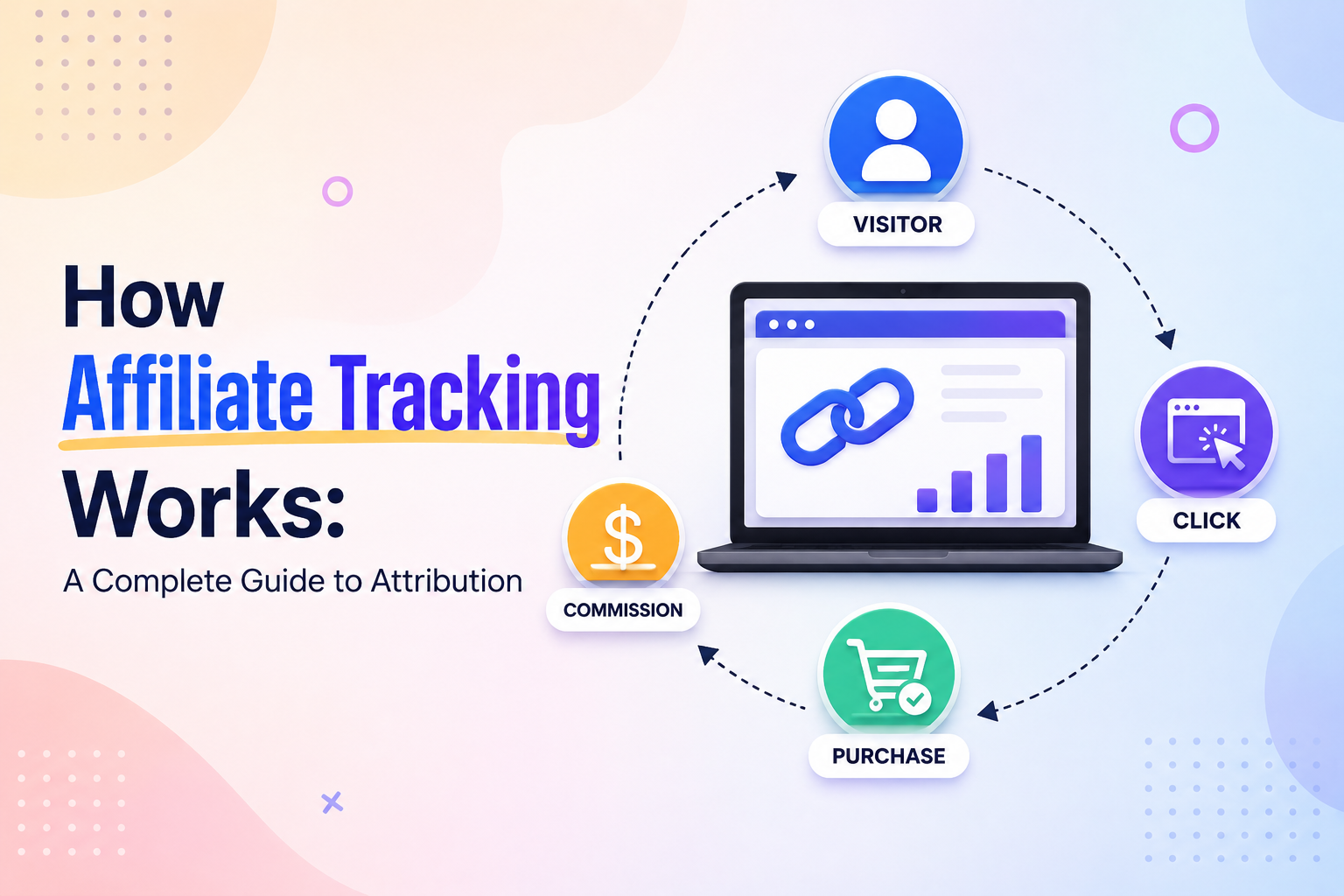
Have you ever wondered how a simple click on a website leads to a commission for a partner? In the fast-paced world of digital commerce, precise data collection is the backbone of every successful campaign.
Without a reliable system, you would have no way to verify which efforts drive your sales. This guide explores the mechanics of affiliate tracking to ensure you understand how your marketing budget translates into real growth.
We will define the core concepts of performance marketing and the vital role of attribution in your strategy. By mastering these technical methods, you can optimize your return on investment and reward your partners with confidence.
Key Takeaways
- Performance marketing relies on accurate data to function effectively.
- Proper attribution ensures that every partner receives fair credit for their sales.
- Understanding the technical side of affiliate tracking helps you prevent revenue loss.
- Strategic data analysis allows you to scale your most profitable campaigns.
- Mastering these tools is essential for maximizing your overall return on investment.
Start Tracking Smarter with LinksTrackly
Take control of your affiliate performance with LinksTrackly. Get real-time tracking, accurate attribution, and detailed insights to scale campaigns and maximize ROI effectively today.
The Fundamentals of Affiliate Tracking
Affiliate tracking serves as the essential foundation for any business looking to scale its digital presence through partnerships. By implementing a reliable system, you gain the ability to monitor every interaction that leads to a sale through affiliate tracking. This process transforms raw data into actionable insights that drive your long-term growth using affiliate tracking.
Defining Affiliate Attribution
At its core, attribution is the process of identifying which marketing touchpoint deserves credit for a specific conversion within affiliate tracking. When a customer clicks a unique link and completes a purchase, the system records the journey from the initial click to the final transaction. This identification allows you to see exactly which partners are driving value for your brand through affiliate tracking.
Without a clear method for assigning credit, you would be unable to distinguish between high-performing partners and those that do not contribute to your goals. Accurate attribution ensures that your data reflects the true behavior of your audience. It acts as the bridge between your marketing efforts and your actual revenue results.
Why Accurate Tracking Matters for Your ROI
You must prioritize precision in your data to allocate your budget effectively across various channels for affiliate tracking. When you know exactly which campaigns generate the highest return, you can shift your resources to maximize profitability. This level of transparency prevents wasted spending and helps you focus on what truly works for your business.
Upgrade Your Affiliate Tracking Accuracy
Eliminate guesswork in your affiliate marketing strategy. Use LinksTrackly to monitor clicks, optimize attribution models, and ensure every conversion is tracked with precision.
Furthermore, maintaining high data integrity is vital for building trust between you and your partners in affiliate tracking workflows. Affiliates are more likely to invest time and energy into your program when they know their efforts are being tracked fairly and accurately. Reliable reporting creates a professional environment where both parties can thrive based on verified performance metrics.
| Feature | Basic Tracking | Advanced Attribution |
|---|---|---|
| Data Accuracy | Low | High |
| Budget Allocation | Guesswork | Data-Driven |
| Partner Trust | Minimal | Strong |
| ROI Visibility | Limited | Comprehensive |
How Affiliate Links Function Technically
Affiliate link tracking serves as the essential foundation for every performance-based partnership. By understanding the underlying architecture, you gain the ability to troubleshoot issues and optimize your conversion flow effectively. These links act as the primary bridge between an affiliate’s content and your specific landing page.
The Anatomy of a Tracking URL
A standard tracking URL is far more than a simple web address. It contains unique parameters that identify the specific partner, the campaign, and the individual user click. These strings of data are appended to your destination URL, allowing your software to attribute the traffic correctly.
The structure typically includes a base URL followed by a query string. This string holds unique identifiers that the tracking platform reads the moment a user clicks. Without these specific parameters, your system would have no way to distinguish between different traffic sources or calculate commissions accurately.
Redirects vs. Direct Linking Methods
You can choose between two primary methods for routing traffic in affiliate tracking systems: server-side redirects or direct linking. A server-side redirect sends the user through a tracking domain before landing them on your site. This method is highly reliable for data capture because it logs the click before the user even reaches your server.
Direct linking, conversely, sends the user straight to your destination page with tracking parameters attached to the URL. While this provides a faster user experience, it relies heavily on your site’s ability to parse and store those parameters immediately. The following table highlights the key differences between these two approaches.
| Feature | Server-Side Redirect | Direct Linking |
|---|---|---|
| Data Accuracy | High | Moderate |
| User Experience | Slight Latency | Instant |
| Implementation | Complex | Simple |
| Affiliate link tracking | Robust | Basic |
The Role of Cookies in Attribution
Digital attribution relies on small data files known as cookies to bridge the gap between a click and a purchase. These files act as the primary mechanism for affiliate link tracking, allowing platforms to identify which partner referred a specific customer. Without this technology, verifying the origin of a sale would be nearly impossible in a browser-based environment.
First-Party vs. Third-Party Cookies
The distinction between cookie types is vital for your technical setup. First-party cookies are created by the website the user is currently visiting, making them highly reliable and less likely to be blocked by privacy filters. They are essential for maintaining a seamless user experience and accurate data collection.
In contrast, third-party cookies are set by domains other than the one the user is visiting, often used for cross-site tracking. Many modern browsers now restrict these cookies by default to enhance user privacy. Consequently, relying solely on third-party methods for your affiliate link tracking can lead to significant data loss and broken attribution chains.
Understanding Cookie Lifespan and Expiration
The lifespan of a cookie determines how long your affiliate tracking system remembers a referral. If a user clicks an affiliate link but does not purchase immediately, the cookie must persist until they return to complete the transaction. Setting an appropriate expiration date is critical for your ROI, especially in industries with long customer decision cycles.
If your cookie expires too quickly, you risk losing credit for sales that occur days or weeks after the initial click. Conversely, a longer lifespan ensures that your partners are fairly compensated for their marketing efforts. Balancing these settings helps you maintain trust with your affiliates while ensuring data integrity.
| Cookie Type | Primary Use | Privacy Status | Tracking Reliability |
|---|---|---|---|
| First-Party | Site functionality | Generally allowed | High |
| Third-Party | Cross-site ads | Heavily restricted | Low |
| Session | Temporary state | Allowed | Medium |
By optimizing your affiliate link tracking strategy, you ensure that every conversion is captured correctly. Always review your platform settings to align cookie policies with current browser standards and your specific business goals.
Common Attribution Models Explained
Every conversion tells a story, but your chosen model determines how that story is read in affiliate tracking. Selecting the right attribution framework allows you to see exactly which partners drive your revenue. Without a clear strategy, you might overlook the true value of your marketing efforts.

Last-Click Attribution
The last-click model gives 100% of the credit to the final link a customer clicked before purchasing. This is the most common method because it is simple to implement and easy to understand. However, it often ignores the earlier research phases of the buyer journey.
“Data is a precious thing and will last longer than the systems themselves.”
First-Click Attribution
In contrast, the first-click model assigns all credit to the initial interaction that introduced a user to your brand. This approach is highly effective for measuring top-of-funnel awareness campaigns. By focusing on the start of the journey, you can identify which affiliates are best at bringing in new prospects.
Multi-Touch Attribution Models
Multi-touch models provide a more nuanced view by distributing credit across several touchpoints. Instead of picking one winner, these models recognize that customers often interact with multiple affiliates before deciding to buy. Using this attribution strategy helps you understand the full impact of your partner ecosystem.
- Linear: Spreads credit equally across all interactions.
- Time Decay: Gives more weight to interactions closer to the conversion.
- Position-Based: Prioritizes the first and last clicks while sharing the rest.
Choosing the right model depends on your specific business goals and your affiliate tracking strategy. By testing different attribution methods, you can refine your strategy to better reward the partners who truly move the needle for your brand.
The Mechanics of Affiliate Tracking Software
Behind every successful partnership lies a complex system of data capture and attribution logic. Modern affiliate tracking software serves as the central nervous system for your marketing campaigns, ensuring that every interaction is accounted for with precision in affiliate tracking.
How Platforms Capture Conversion Data
When a user clicks an affiliate link, the platform initiates a sequence of events to log the activity within affiliate tracking systems. This process happens in real-time, allowing you to monitor performance metrics as they unfold through affiliate tracking dashboards. Reliability is the primary goal here, as even a millisecond of delay or a dropped signal can lead to inaccurate reporting.
Sophisticated platforms utilize unique identifiers to map clicks to specific partners. By storing these identifiers, the software can attribute a later purchase back to the original referral source. This seamless integration is what makes professional Affiliate Tracking possible in a fragmented digital environment.
Server-to-Server Postback Tracking
Server-to-server postback tracking is widely considered the gold standard for data accuracy in affiliate tracking setups. Unlike client-side methods, this approach communicates directly between your server and the tracking platform’s server. Because it bypasses the user’s browser, it is highly resistant to ad-blockers and privacy-focused browser settings.
By using a secure postback URL, your system sends a notification to the tracking software only when a verified conversion occurs. This method eliminates the risk of data loss caused by users clearing their cache or closing a window prematurely. It provides a robust foundation for any serious affiliate tracking software setup.
Pixel-Based Tracking Explained
Pixel-based tracking relies on a small snippet of code placed on your “thank you” or confirmation page. When a customer reaches this page, the pixel fires, signaling the tracking platform that a sale has taken place. While this method is easy to implement, it is increasingly vulnerable to modern privacy restrictions.
Browsers are becoming stricter about third-party cookies, which can often block these pixels from firing correctly. If you rely solely on this method, you might notice discrepancies in your reports. For long-term success, many businesses are now transitioning toward server-side solutions to ensure their Affiliate Tracking remains consistent and trustworthy.
Navigating Cross-Device Tracking Challenges
Modern consumers rarely stick to a single device when browsing for products online. You might find a customer who clicks an affiliate link on their smartphone during a morning commute but completes the purchase on a desktop computer later that evening. This behavior creates a significant gap in your attribution data, often leading to missed insights.

The Impact of Mobile Browsing on Attribution
Mobile browsing frequently breaks the traditional tracking chain because browsers on phones often operate in silos. When a user switches devices, the cookie stored on their mobile browser does not automatically transfer to their desktop environment. This fragmentation makes it difficult to link the initial click to the final conversion.
Without a unified view, your reports may incorrectly credit the wrong touchpoints or fail to recognize the value of mobile discovery. Accurate data collection is the backbone of a successful strategy, yet mobile-to-desktop shifts remain a persistent hurdle. You must account for these gaps to ensure your attribution models reflect the true customer journey.
“In a world where the average user owns three or more connected devices, relying on single-device tracking is akin to looking at a puzzle with half the pieces missing.”
Strategies for Unified User Identification
To overcome these hurdles, you should implement advanced identification strategies that look beyond simple browser cookies. One effective method involves using hashed emails or unique user IDs captured during the login process. By mapping these identifiers across devices, you can create a persistent profile that follows the user regardless of their hardware.
Cross-device tracking allows you to stitch together disparate sessions into a single, cohesive path. This approach significantly improves the precision of your attribution efforts. Consider the following comparison of common identification methods to determine which fits your business model best:
| Method | Primary Benefit | Complexity Level | Data Accuracy |
|---|---|---|---|
| Cookie-Based | Easy to implement | Low | Moderate |
| Hashed Emails | High persistence | Medium | High |
| Device Graphing | Holistic view | High | Very High |
By adopting these sophisticated techniques, you gain a clearer picture of how your marketing spend drives results. Consistency in your tracking setup ensures that every touchpoint receives the credit it deserves. Ultimately, mastering cross-device identification is vital for maintaining a competitive edge in your attribution strategy.
Best Affiliate Tracking Software Solutions
Your choice of tracking technology directly influences the accuracy and growth of your partner program. Selecting the right platform requires balancing your current operational needs with your long-term scalability goals. By focusing on the right metrics and technical capabilities, you can ensure your data remains reliable and actionable.
Key Features to Look for in Tracking Platforms
When evaluating affiliate tracking platforms, prioritize solutions that provide real-time reporting, detailed performance analytics, and reliable attribution. A robust platform should help you monitor clicks, conversions, partner performance, and campaign ROI from a single dashboard. Advanced fraud detection is equally essential to identify invalid clicks, suspicious traffic, and other activities that could impact your marketing budget.
LinksTrackly is designed to simplify affiliate tracking by combining branded link management, click tracking, conversion monitoring, and campaign analytics in one platform. Its intuitive interface makes it easy to organize affiliate campaigns, analyze partner performance, and optimize marketing efforts without unnecessary complexity. The platform also integrates smoothly with popular marketing tools, making it easier to manage your affiliate ecosystem as your business grows.
Ease of integration should also be a deciding factor. Whether you’re connecting with your e-commerce platform, CRM, payment gateways, or analytics tools, choosing software that simplifies setup and partner onboarding will lead to higher engagement and better long-term results.
Why LinksTrackly Is a Strong Choice?
For businesses looking for an all-in-one Affiliate Tracking solution, LinksTrackly offers the features needed to manage and optimize affiliate campaigns effectively. With real-time analytics, centralized link management, accurate click tracking, campaign performance reporting, and detailed conversion insights, marketers can make data-driven decisions while maintaining full visibility into their affiliate programs.
As your affiliate program expands, LinksTrackly scales alongside your business, helping you monitor multiple campaigns, identify top-performing affiliates, and optimize marketing spend through actionable performance data.
Evaluating Impact and Partnerize for Enterprise
For large enterprises with complex partnership ecosystems, Impact and Partnerize remain popular options. These platforms are designed to support high-volume affiliate programs, advanced attribution models, global partner management, and automated payouts across multiple regions and currencies.
Choosing enterprise software often comes down to factors such as partner discovery, workflow automation, compliance management, and international scalability. These solutions are well suited for organizations managing extensive affiliate networks across global markets.
Considering Post Affiliate Pro for Small Businesses
For growing businesses that require a dedicated affiliate management platform, Post Affiliate Pro provides a comprehensive feature set, including commission management, customizable tracking methods, affiliate recruitment, and automated payouts. It offers a scalable solution for companies that need more advanced affiliate management while keeping implementation relatively straightforward.
Whether you choose LinksTrackly for its streamlined tracking capabilities, an enterprise platform like Impact or Partnerize, or a specialized solution like Post Affiliate Pro, selecting the right Affiliate Tracking platform is essential for improving attribution accuracy, optimizing partner performance, and maximizing affiliate marketing ROI.
Managing Fraud and Data Integrity
Protecting your revenue starts with a vigilant approach to monitoring your affiliate link tracking data. Without proper oversight, your program remains vulnerable to bad actors who seek to exploit attribution systems for unearned commissions. By prioritizing security, you safeguard your budget and maintain the health of your entire marketing ecosystem.

Identifying Suspicious Click Patterns
You must watch for irregular activity that deviates from standard user behavior. Sudden spikes in traffic from specific geographic locations or unusual time intervals often signal the presence of automated bots. These scripts attempt to simulate human interaction to trigger false conversions.
Another common threat involves cookie stuffing, where unauthorized cookies are placed on a user’s browser without a genuine click. You should monitor your affiliate link tracking logs for high click-to-conversion ratios that seem statistically impossible. If a partner’s traffic shows zero engagement time but high conversion rates, it is time to investigate further.
Ensuring Data Accuracy in Your Reports
Maintaining clean data is vital for making informed decisions and keeping your stakeholders happy. You should perform regular audits of your conversion reports to identify discrepancies or missing attribution events. Consistent monitoring ensures that your affiliate link tracking remains reliable over the long term.
Transparency is the key to fostering strong relationships with your legitimate partners. When you provide accurate, verified data, you build lasting trust that encourages high-quality affiliates to continue promoting your brand. Use the following table to understand how to categorize and address common threats to your data integrity.
| Fraud Type | Detection Method | Impact Level |
|---|---|---|
| Bot Traffic | Analyze IP patterns | High |
| Cookie Stuffing | Check click-to-sale time | Critical |
| Click Injection | Review attribution logs | Medium |
| Data Mismatch | Cross-reference affiliate link tracking | Low |
Optimizing Your Attribution Strategy
Your strategy for measuring performance must evolve alongside your business objectives. Relying on a static framework often leads to missed opportunities and inaccurate insights. By treating your data collection as a living process, you ensure that your attribution model remains relevant in a fast-paced digital landscape.
Aligning Attribution with Marketing Goals
Effective measurement starts by connecting your technical setup to your broader business targets. If your primary goal is brand awareness, your attribution logic should prioritize top-of-funnel interactions. Conversely, if you focus on direct sales, you must ensure your tracking captures the final conversion touchpoint accurately.
You should regularly review your key performance indicators to verify that your data reflects your current priorities. When your goals shift, your tracking configuration must adapt to provide the most actionable insights. This alignment prevents you from optimizing for the wrong metrics and helps you allocate your budget more efficiently.
Testing and Refining Your Tracking Setup
Periodic audits of your tracking infrastructure are essential to maintain data integrity. You should conduct routine tests to identify potential gaps, such as broken links or misconfigured pixels, that could skew your attribution results. Proactive maintenance ensures that your reports remain reliable and trustworthy.
Refining your approach based on performance data allows you to stay ahead of changing market conditions. Continuous testing helps you uncover inefficiencies in your conversion path that might otherwise go unnoticed. By iterating on your setup, you maintain a competitive edge and maximize your overall marketing ROI.
Ultimately, the goal is to create a robust system that supports informed decision-making. When you treat attribution as an ongoing project rather than a one-time setup, you gain the clarity needed to scale your affiliate programs successfully.
Legal and Privacy Considerations
Protecting user data is not just a technical challenge but a critical legal obligation for every affiliate marketer. As you implement tracking technologies, you must ensure that your methods align with the evolving landscape of global privacy laws. Maintaining compliance is the bedrock of a sustainable and reputable brand.

GDPR and CCPA Compliance in Tracking
The General Data Protection Regulation (GDPR) in Europe and the California Consumer Privacy Act (CCPA) in the United States have fundamentally changed how businesses collect data. You are responsible for obtaining explicit user consent before placing tracking cookies on a visitor’s device. This process requires clear, accessible privacy policies that explain exactly what data you collect and how you use it.
To remain compliant, you should implement the following practices:
- Provide a clear opt-in mechanism for all tracking scripts.
- Allow users to easily access, download, or delete their personal data.
- Minimize data collection to only what is strictly necessary for attribution.
- Regularly audit your third-party tracking partners for their own compliance standards.
“Privacy is not an option, and it shouldn’t be the price we accept for just getting on the internet.”
Transparency Requirements for Affiliate Disclosure
Beyond data privacy, you must maintain full transparency with your audience regarding your affiliate relationships. The Federal Trade Commission (FTC) requires that you clearly disclose when a link is an affiliate link. This ensures that your readers understand you may receive a commission if they make a purchase through your recommendation.
Effective disclosures should be placed in a prominent location, such as at the beginning of your content or directly next to the affiliate link. Avoid burying these notices in a footer or a hard-to-find legal page. Honesty fosters long-term trust, which is far more valuable than the short-term gain of a hidden referral link.
By prioritizing these legal and ethical standards, you protect your business from potential fines and build a loyal audience that values your integrity. Always review your disclosure practices periodically to ensure they remain clear and conspicuous as your content strategy evolves.
Build a High-Performance Affiliate Program
Stop losing revenue due to poor tracking. LinksTrackly helps you manage affiliates, detect fraud, and optimize performance with complete transparency and scalable tracking tools.
Conclusion
Building a reliable tracking infrastructure requires a deep understanding of technical, strategic, and legal components. You now possess the knowledge to select the right attribution model for your specific business goals.
Platforms like Linkstrackly, Partnerize, and Post Affiliate Pro offer powerful tools to manage your data. Using these resources effectively allows you to gain clear insights into your marketing performance.
Your ability to maximize return on investment depends on your commitment to accuracy. Consistent monitoring of your affiliate links ensures that every conversion is accounted for correctly.
Refining your setup remains a vital part of long-term growth. Stay proactive by testing new methods and keeping your tracking practices aligned with current privacy standards.
Take these insights and apply them to your campaigns today. Your path to better data integrity and higher profitability starts with these foundational steps.
FAQs
What exactly is affiliate tracking and why is it necessary for my business?
Affiliate tracking is the process of managing and measuring the marketing activity of your partners to ensure they are accurately rewarded for the conversions they generate. In the digital ecosystem, precise data collection is essential because it allows you to see which partners are contributing to your growth, ensuring that your marketing budget is spent effectively to maximize your return on investment (ROI).
How does affiliate link tracking technically identify where a sale came from?
The technical architecture of affiliate link tracking relies on a unique URL anatomy that includes specific parameters and unique IDs. When a user clicks a link, the system uses either a server-side redirect or a direct linking method to bridge the gap between the affiliate’s content and your landing page, allowing the software to record the specific source of the traffic.
What is the difference between first-party and third-party cookies in the context of attribution?
First-party cookies are created by your own domain and are generally more resilient against modern privacy-focused browser updates. Third-party cookies are set by an external domain (like a tracking platform). Understanding these distinctions is vital because cookie lifespan and expiration dates directly influence your ability to credit sales that occur over longer decision cycles.
Which attribution model should I choose for my partnership program?
The choice depends on your specific goals. Last-click attribution credits the final touchpoint, while first-click attribution rewards the initial discovery. For a more nuanced view, many brands use multi-touch attribution models to value the entire customer journey. Choosing the right model helps you gain a clear understanding of how different affiliates contribute to your bottom line.
Why is S2S postback tracking preferred over pixel-based tracking?
S2S (server-to-server) postback tracking is considered the industry standard for affiliate tracking software because it communicates conversion data directly between servers. Unlike pixel-based tracking, which relies on the user’s browser, server-side solutions are more robust, secure, and capable of overcoming browser-based limitations or ad-blockers.
How do I handle tracking when a customer switches between their phone and a desktop?
Navigating cross-device challenges requires advanced strategies for unified user identification. By using methods like hashed emails and cross-device mapping, you can connect fragmented data points. This ensures that you maintain a holistic view of the customer’s path to purchase, even when mobile browsing habits would otherwise break the tracking chain.
What is the best affiliate tracking software for different business sizes?
For enterprise-level organizations, platforms like Impact and Partnerize offer sophisticated features such as automated fraud detection and deep reporting. If you are managing a small business, Post Affiliate Pro provides an accessible and robust solution to start and scale your program. You should prioritize platforms that offer ease of integration and high data integrity.
How can I protect my program from affiliate fraud and cookie stuffing?
You must use affiliate tracking software that monitors for suspicious click patterns and bot traffic. Proactive measures, such as auditing your reports for cookie stuffing (where an affiliate drops cookies without a genuine click), are essential to protect your budget. Maintaining clean data ensures a transparent and fair relationship with your honest partners.
What legal requirements should I be aware of regarding affiliate attribution?
You must ensure your tracking practices are compliant with GDPR and CCPA regulations. This involves being transparent about data collection and requiring your partners to provide clear affiliate disclosures. Staying compliant is not just a legal necessity; it is a fundamental part of maintaining a reputable and sustainable brand in a privacy-conscious market.
How can I optimize my attribution strategy over time?
Optimization is an iterative process that involves regular testing and refining of your tracking setup. By aligning your attribution strategy with your evolving marketing goals, you can identify gaps in your data collection. Analyzing performance insights allows you to adjust your approach, ensuring you maintain a competitive edge and continue to grow your affiliate marketing revenue.