
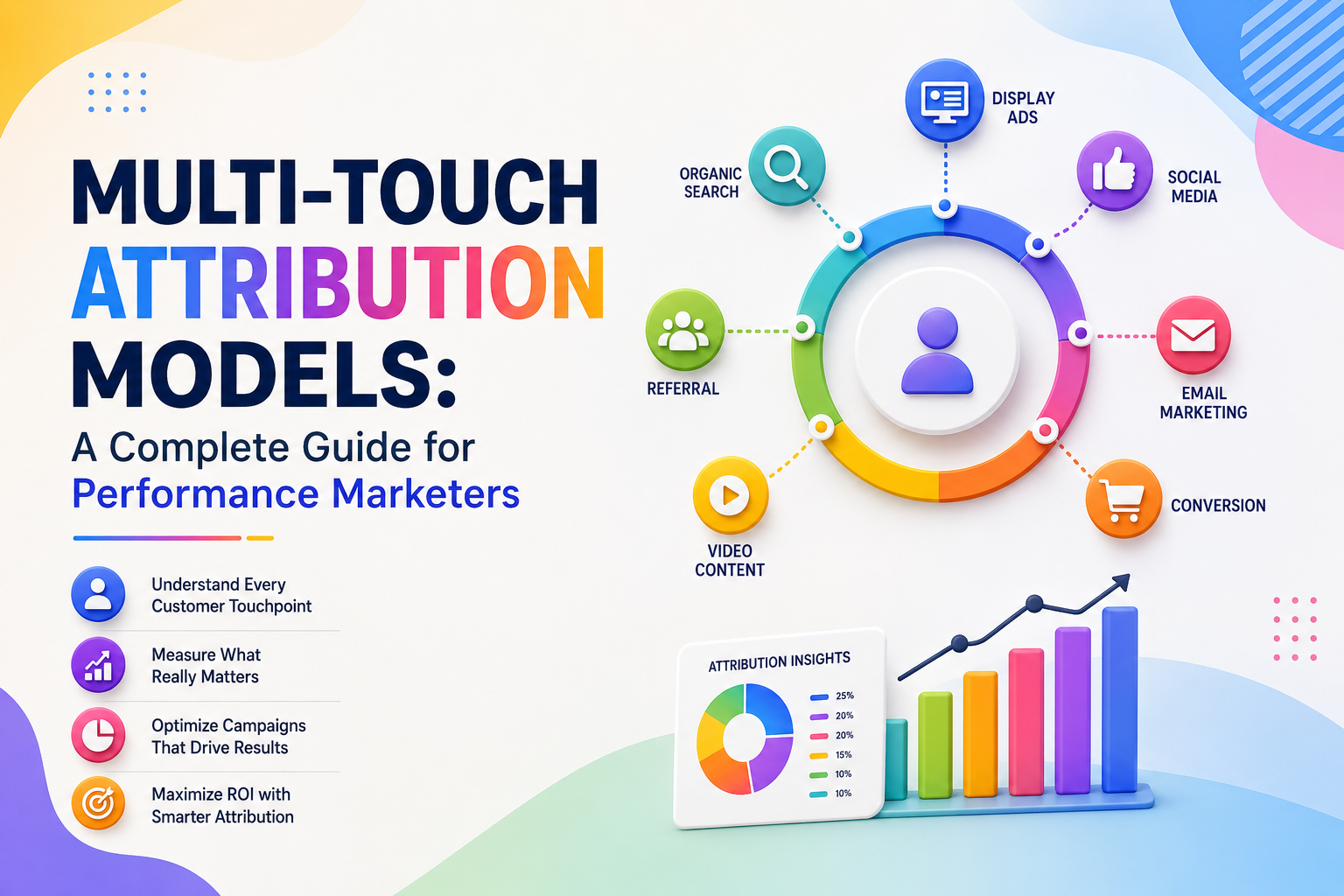
Have you ever wondered if your marketing budget is actually driving sales, multi-touch attribution models or if you are just paying for the final click? In today’s complex digital world, the path a customer takes before buying is rarely a straight line. Understanding these intricate journeys is the secret to scaling your business effectively.
Many performance marketers still rely on outdated tools that only credit the last interaction. This approach leaves massive gaps in your data and hides the true value of your top-of-funnel efforts. To gain a real competitive edge, you must look deeper into how every touchpoint contributes to the final conversion.
Adopting Multi-Touch Attribution Models allows you to see the full picture of your advertising impact. By moving beyond simplistic measurement, you can optimize your spend with confidence. These Multi-Touch Attribution Models provide the clarity that modern performance marketers need to drive long-term growth and smarter decisions.
Key Takeaways
- Recognize that customer journeys are complex and rarely linear.
- Move away from last-click measurement to avoid wasting your budget.
- Gain a competitive advantage by tracking every interaction in the funnel.
- Use data-driven insights to improve your overall return on investment.
- Empower your team to make smarter, evidence-based marketing decisions.
Unlock the Full Value of Your Marketing Data
Move beyond guesswork and start understanding what truly drives conversions across every touchpoint. With Multi-Touch Attribution Models, you can finally see which channels deserve credit and optimize your budget with confidence. Stop over-investing in last-click decisions and start scaling what actually works.
The Evolution of Marketing Measurement
Marketing measurement has undergone a radical transformation over the past decade. In the early days of the internet, tracking a sale was straightforward, often relying on a single click to determine success. Today, businesses depend on multi-touch attribution models because customer journeys involve multiple devices, platforms, and interactions.
Moving Beyond Last-Click Attribution
For years, the industry relied heavily on last-click attribution to assign credit for conversions. This model gave all the credit to the final touchpoint, ignoring everything that came before it. Modern marketers now understand that multi-touch attribution models are essential for capturing the full contribution of each interaction. It was a simple, yet deeply flawed, way to view the customer journey.
“If you only measure the final step, you miss the entire story of how your customer actually found you.”
Modern performance marketers now recognize that the path to purchase is rarely linear. Relying only on last-click methods leads to poor budget decisions. That is why multi-touch attribution models have become the standard for performance-focused teams. Moving away from this legacy model allows teams to see the full picture of their advertising impact.
Why Performance Marketers Need Granular Data
The digital ecosystem is filled with fragmented touchpoints across multiple devices and platforms. To stay competitive, performance marketers must rely on multi-touch attribution models to identify what actually drives conversions.
This level of insight allows teams to allocate budget more precisely. Without multi-touch attribution models, you are essentially making decisions in the dark. When you understand exactly which touchpoints contribute to a sale, you can allocate resources to the channels that provide the highest return. Granular data is the key to unlocking hidden growth opportunities in a crowded market.
Understanding Multi-Touch Attribution Models
Multi-Touch Attribution Models provide a sophisticated way to view the entire customer journey. Instead of focusing on a single point of contact, these models distribute credit across every interaction a potential customer has with your brand.
By analyzing these touchpoints, marketers gain a clearer picture of what truly drives conversions. This approach moves away from simplistic views and embraces the reality of modern, non-linear buying cycles.
Defining the Core Concept
At its heart, the concept of attribution is about assigning value to specific marketing efforts. Multi-Touch Attribution Models recognize that a customer might see a social media ad, read a blog post, and click an email link before finally buying a product.
Rather than giving all the credit to the final click, these models use mathematical rules to divide the conversion value. This ensures that top-of-funnel awareness campaigns receive the recognition they deserve for nurturing leads over time.
How Attribution Differs from Tracking
It is common to confuse tracking with attribution, but they serve very different purposes in your marketing stack. Tracking is the act of observing and recording user behavior, such as page views or clicks, using pixels or cookies.
Attribution, on the other hand, is the analytical process of interpreting that data to determine which actions caused a sale. Multi-touch attribution models turn raw tracking data into meaningful insights that help optimize marketing performance.
| Feature | Tracking | Attribution |
|---|---|---|
| Primary Goal | Data Collection | Value Assignment |
| Focus | Individual Actions | Customer Journey |
| Outcome | Raw Logs | Performance Insights |
| Utility | Monitoring Traffic | Budget Optimization |
Common Types of Attribution Models
Attribution models serve as the foundation for understanding performance. Multi-touch attribution models help marketers compare different ways of distributing credit across the journey.
Each model offers a different perspective, but all aim to improve decision-making and budget allocation.
Turn Insights Into Revenue Growth
Your data already holds the answers as you just need the right model to unlock them. Discover how modern attribution helps performance marketers allocate spend smarter, reduce waste, and improve ROAS across every campaign.
Linear Attribution Explained
The linear model is one of the most straightforward approaches available to marketers. It assigns equal credit to every touchpoint that a user interacts with before completing a purchase. This ensures that no single channel is ignored, regardless of its position in the funnel.
This model is particularly useful for long-term campaigns where multiple interactions are necessary to build trust. It provides a balanced view of your marketing ecosystem. However, it may not accurately reflect which specific touchpoints were the most influential in driving the final decision.
Time Decay and Position-Based Models
Time decay models operate on the principle that touchpoints closer to the conversion are more important. This approach gives higher weight to interactions that occur just before the sale. It is an excellent choice for businesses with short sales cycles where immediate engagement is critical.
Position-based models, often called U-shaped attribution, take a different approach by focusing on the start and end of the journey. These models typically assign 40% of the credit to the first interaction and 40% to the final touchpoint. The remaining 20% is distributed among the middle interactions, ensuring that nurturing efforts are still recognized.
Data-Driven Attribution and Machine Learning
Data-driven attribution represents the most advanced tier of measurement technology. Instead of relying on fixed rules, these models use machine learning algorithms to analyze your specific conversion data. They identify which touchpoints actually move the needle for your unique audience.
By evaluating thousands of paths, these systems provide a highly accurate picture of your marketing performance. This allows teams to shift their budget toward the channels that provide the highest return on investment. While these models require more data to function effectively, they offer the most precise insights for scaling successful campaigns.
The Role of Cross-Channel Attribution in Modern Campaigns
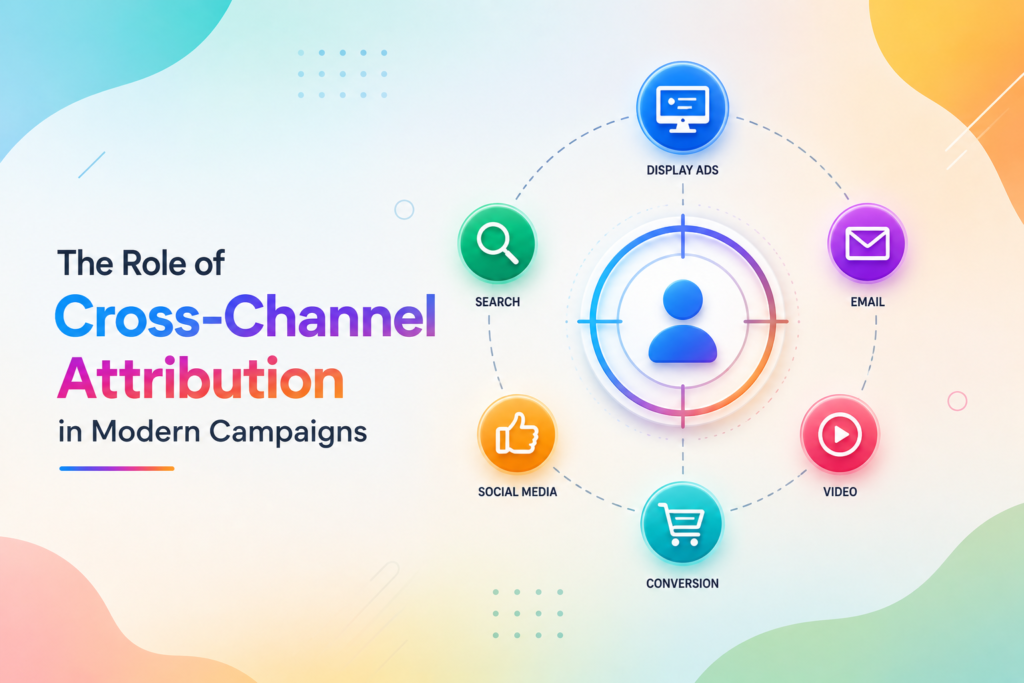
Modern marketing requires a holistic view of how customers interact with your brand across various digital touchpoints. Multi-touch attribution models help connect social media, search, email, and other channels into a unified view.
Relying on isolated metrics often leads to missed opportunities and wasted budget. Implementing cross-channel attribution allows teams to see the full picture of how different platforms work together to drive growth.
Connecting Social Media to Search Intent
Social media platforms are excellent at building brand awareness and sparking initial interest. A user might see an engaging video on Instagram, but they may not click through immediately. Later, that same user might search for your brand on Google to learn more.
Without proper tracking, you might credit the search engine for the conversion while ignoring the social ad that started the journey. Connecting these dots is essential for understanding the true value of your social media spend. By using cross-channel attribution, you can identify how social engagement fuels high-intent search behavior.
Bridging the Gap Between Offline and Online Conversions
Many businesses struggle to connect digital interactions with physical sales or in-store visits. This disconnect creates a fragmented view of marketing success that hides the true impact of your campaigns. Bridging this gap requires integrating your CRM data with your digital advertising platforms.
When you successfully link offline sales to online clicks, you gain a unified view of the customer journey. This level of visibility is the gold standard for modern performance marketing. It ensures that your cross-channel attribution strategy accounts for every touchpoint, whether it happens on a screen or in a physical store.
How to Build a Multi-Touch Attribution Model
If you want to know which marketing efforts truly drive revenue, you must master the art of how to build a multi-touch attribution model. This process is not just about technology; it is about understanding the complex path your customers take before they finally decide to buy. By moving away from simple metrics, you gain a clearer picture of your true marketing performance.
Defining Your Customer Journey Map
The first step in this journey is to visualize every interaction a potential buyer has with your brand. You should identify the initial awareness phase, the consideration stage, and the final decision point. Mapping these steps helps you see where users drop off and where they find the most value.
Without a clear map, you are essentially guessing which ads are working. Documenting every touchpoint—from social media clicks to email newsletter opens—is essential for success. This foundation allows you to assign proper credit to each channel throughout the funnel.
Selecting the Right Data Sources
Once your map is ready, you need to gather the right information to fill in the blanks. You must pull data from your website analytics, social media ad managers, and search engine marketing platforms. Consistency is key when collecting this information to ensure your reports remain accurate.
Many marketers fail because they rely on incomplete data sets. You should prioritize sources that provide granular, user-level insights rather than just aggregate totals. This level of detail is what makes learning how to build a multi-touch attribution model so valuable for long-term growth.
Integrating CRM and Ad Platform Data
The final technical hurdle involves connecting your Customer Relationship Management (CRM) system with your advertising platforms. This integration allows you to track a lead from their first ad click all the way to a closed sale. Data integrity is the most important factor here, as mismatched identifiers can lead to broken attribution chains.
Consider the following methods for managing your data flow:
| Integration Method | Data Accuracy | Technical Effort |
|---|---|---|
| Direct API Sync | High | High |
| Third-Party Middleware | Medium | Medium |
| Manual CSV Uploads | Low | Low |
By automating these connections, you reduce the risk of human error and ensure your insights are always up to date. Mastering these technical steps is the ultimate way to ensure your strategy remains effective as your business scales.
Challenges in Implementing Attribution Strategies
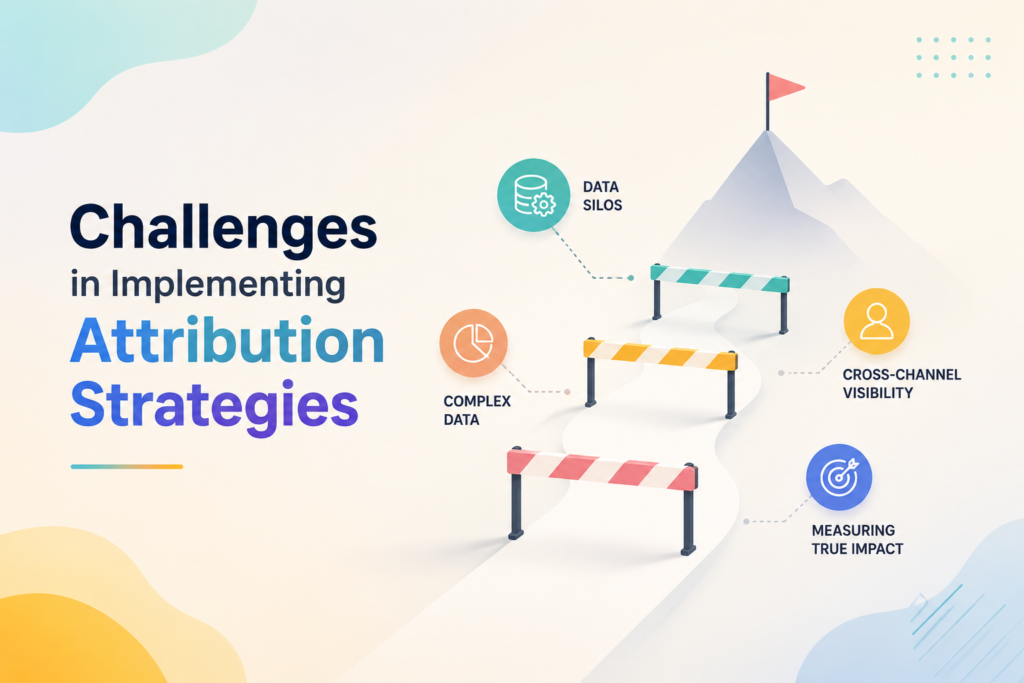
Building a resilient measurement framework starts with acknowledging the significant challenges inherent in today’s data ecosystem. While cross-channel attribution remains the gold standard for understanding performance, several technical and regulatory barriers can complicate your efforts. Adapting to these changes is essential for any brand looking to maintain a competitive edge.
Privacy Regulations and Cookie Deprecation
The digital landscape is shifting rapidly as privacy concerns take center stage. Regulations like the GDPR in Europe and the CCPA in California have fundamentally changed how companies collect user data. Furthermore, the decline of third-party cookies makes it harder to track individual user journeys across different websites.
These changes often lead to gaps in your data, making it difficult to maintain a clear picture of cross-channel attribution. To stay effective, marketers must pivot toward first-party data strategies. By prioritizing direct relationships with your audience, you can build a more sustainable and compliant measurement model.
Managing Data Silos Across Platforms
Another major hurdle is the presence of data silos within your organization. Many platforms operate as “walled gardens,” keeping their performance data isolated from other tools. This fragmentation prevents a unified view of how different touchpoints contribute to a final conversion.
Breaking down these silos requires robust integration between your CRM, ad platforms, and analytics software. When you successfully connect these disparate sources, you gain the clarity needed for accurate cross-channel attribution. This integration is the key to turning raw numbers into actionable business insights.
| Challenge Type | Primary Impact | Strategic Solution |
|---|---|---|
| Privacy Laws | Reduced tracking accuracy | First-party data collection |
| Cookie Loss | Fragmented user journeys | Server-side tracking |
| Data Silos | Incomplete reporting | Unified CRM integration |
Tools and Technologies for Attribution Success
Selecting the right technology stack is a fundamental step in mastering your marketing data. The tools you choose will dictate how accurately you can map the customer journey and optimize your ad spend. Investing in the correct infrastructure ensures that your team spends less time cleaning data and more time acting on valuable insights.
Leveraging Google Analytics 4 for Attribution
Google Analytics 4 (GA4) has transformed how businesses approach measurement by moving toward an event-based model. This platform offers native attribution features that allow marketers to compare different models, such as data-driven or last-click, within a single interface. It is an excellent starting point for teams looking to understand how various touchpoints contribute to conversions.
By utilizing GA4, you can gain a clearer picture of the user journey across devices and platforms. The platform’s ability to integrate with Google Ads provides a seamless flow of conversion data, which is essential for automated bidding strategies. For many small to mid-sized businesses, these built-in capabilities are often sufficient to drive significant performance improvements.
Enterprise Solutions for Advanced Modeling
As your marketing efforts scale, you may find that native tools no longer capture the full complexity of your data. Enterprise-level solutions, such as Adobe Analytics or specialized platforms like Neustar and AppsFlyer, offer deeper cross-channel visibility. These tools are designed to handle massive datasets and provide sophisticated modeling that goes beyond standard web analytics.
Upgrading to an enterprise solution is often necessary when you need to integrate offline sales data with digital interactions. These platforms provide advanced machine learning capabilities that help identify hidden patterns in your customer behavior. Choosing the right technology is a critical decision that directly impacts the depth and accuracy of your long-term marketing strategy.
Working with a Performance Marketing Agency
Many growing businesses eventually reach a point where internal resources struggle to keep pace with advanced marketing analytics. While your team may handle basic tracking, the shift toward sophisticated modeling often demands a higher level of technical precision. Bringing in a performance marketing agency can provide the specialized focus needed to turn raw data into actionable growth strategies.
When to Outsource Your Attribution Strategy
Recognizing the right time to seek external help is a critical step in your company’s evolution. If your internal team spends more time troubleshooting data discrepancies than actually optimizing campaigns, you are likely missing out on key opportunities. Complexity is often the primary driver for outsourcing, especially when your customer journey spans multiple platforms and offline touchpoints.
You should consider a partnership if your current reporting lacks the granularity required to justify budget shifts. A professional performance marketing agency brings the necessary infrastructure to handle complex data sets that might overwhelm a smaller, generalist team. This allows your internal staff to focus on creative strategy while experts manage the technical heavy lifting.
Evaluating Agency Expertise in Data Analytics
Selecting the right partner requires a careful review of their technical capabilities and past performance. You need an agency that does not just report on numbers but understands the nuances of consumer behavior across different channels. Use the following checklist to ensure your potential partner has the depth required for success:
- Technical Proficiency: Do they have proven experience with your specific CRM and ad platform stack?
- Analytical Depth: Can they explain their methodology for handling data gaps and privacy-compliant modeling?
- Strategic Alignment: Do their case studies demonstrate a clear ability to scale budgets based on attribution insights?
- Communication Style: Are they capable of translating complex data findings into simple, executive-level summaries?
Ultimately, the goal is to find a performance marketing agency that acts as an extension of your own team. By vetting their expertise thoroughly, you ensure that your attribution strategy remains robust, accurate, and aligned with your long-term business objectives.
Optimizing Your Budget Based on Attribution Insights
Your marketing budget is a powerful tool that becomes significantly more effective when guided by precise attribution insights. By moving away from guesswork, performance marketers can ensure that every dollar spent works toward a measurable business goal. This shift in strategy transforms your advertising spend from a simple cost center into a reliable engine for growth.

Reallocating Spend to High-Impact Touchpoints
The primary advantage of using multi-touch attribution is the ability to identify which channels truly drive conversions. Often, performance marketers discover that certain platforms receive credit for sales they did not actually influence. By reallocating budget from these underperforming areas to high-impact touchpoints, you can significantly improve your overall return on ad spend.
“Data is the compass that guides modern marketing, turning complex customer journeys into clear, actionable paths for financial success.”
Consider the following table to help visualize how to prioritize your budget based on performance metrics:
| Channel | Conversion Rate | Cost Per Acquisition | Action |
|---|---|---|---|
| Paid Search | 4.2% | $25 | Increase Budget |
| Display Ads | 0.8% | $85 | Reduce Spend |
| Social Media | 2.5% | $40 | Maintain/Optimize |
Testing and Scaling Winning Channels
Once you have identified your most effective channels, the next step is to implement a cycle of continuous testing. Performance marketers should treat every campaign as an experiment, using attribution data to refine messaging and audience targeting. This iterative approach minimizes waste and allows you to double down on the strategies that deliver the highest value.
Scaling your winning channels requires a careful balance of increased investment and ongoing monitoring. As you expand your reach, keep a close eye on your attribution models to ensure that performance remains stable. By staying agile and data-focused, you can maintain a competitive edge and drive consistent profitability for your brand.
Common Pitfalls to Avoid in Attribution Modeling
Implementing Multi-Touch Attribution Models is a complex journey that often leads teams into hidden traps. While these frameworks offer deep insights, they are not a magic solution for every marketing challenge. Success requires a careful balance between advanced technology and human oversight.
Over-Reliance on Automated Models
Many teams make the mistake of trusting automated algorithms without questioning the underlying logic. Relying solely on these systems can lead to a false sense of security regarding your campaign performance. It is vital to remember that machines lack the context of your specific business goals.
“Data is a tool, not a replacement for strategic thinking. You must always verify what the machine tells you against your own market observations.”
When you use Multi-Touch Attribution Models, ensure that your team regularly audits the data outputs. Human intuition remains necessary to interpret anomalies that automated systems might overlook. Always maintain a critical eye on how your chosen platform weighs different touchpoints.
Ignoring the Impact of Brand Awareness
A frequent error in modern measurement is focusing exclusively on direct conversions. By prioritizing only the final click, you risk undervaluing the top-of-funnel efforts that drive long-term growth. Brand awareness campaigns often serve as the foundation for future sales, even if they do not show immediate results.
If you ignore these early interactions, you may accidentally cut funding for the very channels that fill your sales pipeline. Effective Multi-Touch Attribution Models should account for the entire customer journey, including the initial discovery phase. Strategic marketers know that building brand equity is just as important as tracking the final transaction.
Ready to Fix Your Attribution Strategy?
If you’re still relying on outdated tracking methods, you’re likely missing major revenue opportunities. Upgrade your measurement approach and gain a complete view of your customer journey with advanced attribution frameworks.
Conclusion
Modern marketing requires a shift toward smarter, data-driven decision-making. Multi-touch attribution models give businesses the ability to understand the full customer journey and allocate budgets more effectively.
You now possess the knowledge to move beyond simple tracking methods. Implementing these advanced strategies allows you to allocate your budget with precision and confidence.
Success in this field demands constant testing and refinement. Use the insights gained from your attribution models to identify high-impact touchpoints across every channel.
Google Analytics 4 and other enterprise tools provide the foundation for this growth. Stay curious about your data and keep adjusting your tactics to meet changing consumer behaviors.
Your commitment to accurate measurement will drive superior results for your organization. Start applying these practices today to gain a competitive edge in your industry.
What steps will you take to improve your attribution strategy this quarter? Share your progress with your team and continue building a culture of accountability and performance.
FAQs
Why should performance marketers move away from last-click attribution?
Moving beyond last-click is essential because the modern customer journey is rarely linear. Relying only on the final interaction ignores the top-of-funnel awareness created by platforms like Meta or TikTok. By adopting multi-touch attribution models, you gain a holistic view of how every interaction from the first YouTube ad to the final Google Search, contributes to your overall ROI.
How to build multi touch attribution model frameworks for my business?
To successfully implement a framework, you must first map out your specific customer journey and identify every digital touchpoint. The process involves integrating data sources from your CRM, such as Salesforce or HubSpot, with your advertising platforms. By connecting these data points, you can ensure data integrity and see a unified path to conversion.
What is the main difference between cross-channel attribution and standard tracking?
While standard tracking pixels simply observe that a user visited a site, cross-channel attribution assigns specific value to every interaction across different platforms. It bridges the gap between silos, showing how a LinkedIn lead gen form might eventually result in a direct-traffic conversion weeks later.
Which attribution model is best for a long sales cycle?
For businesses with longer consideration periods, Time Decay or Position-Based models are often preferred. Time Decay gives more credit to interactions closer to the sale, while Position-Based (or U-Shaped) models highlight the importance of both the first touch that introduced the brand and the last touch that closed the deal.
How does Google Analytics 4 handle multi-touch attribution?
Google Analytics 4 (GA4) has made data-driven attribution its default setting. This model uses machine learning to analyze your historical data and distribute credit based on how different touchpoints actually influence conversion outcomes, rather than following a rigid, pre-set rule.
What role does a performance marketing agency play in data modeling?
A specialized performance marketing agency provides the technical expertise and advanced tools like Rockerbox or Northbeam, that internal teams might lack. They help navigate complex challenges like cookie deprecation and privacy regulations, ensuring your data remains actionable and your budget is spent efficiently.
Can multi-touch attribution account for offline conversions?
Yes, though it requires more sophisticated integration. By uploading offline conversion data (like in-store sales or phone consultations) into platforms like Google Ads or Meta Ads Manager, you can link those physical wins back to the digital ads that originally sparked interest, creating a complete picture of your marketing performance.
What are the biggest pitfalls to avoid when implementing attribution strategies?
One major mistake is an over-reliance on automated models without human context. It is also vital to avoid ignoring the impact of brand awareness campaigns. Purely conversion-focused models often undervalue the “top-of-funnel” work done on platforms like Instagram or Pinterest, which are crucial for long-term growth.
How can I optimize my budget using attribution insights?
Attribution data allows you to see which channels are truly driving value versus those that are simply “stealing” credit. By identifying these high-impact touchpoints, you can reallocate spend toward the most effective campaigns and confidently scale your winning channels to maximize your return on ad spend (ROAS).