
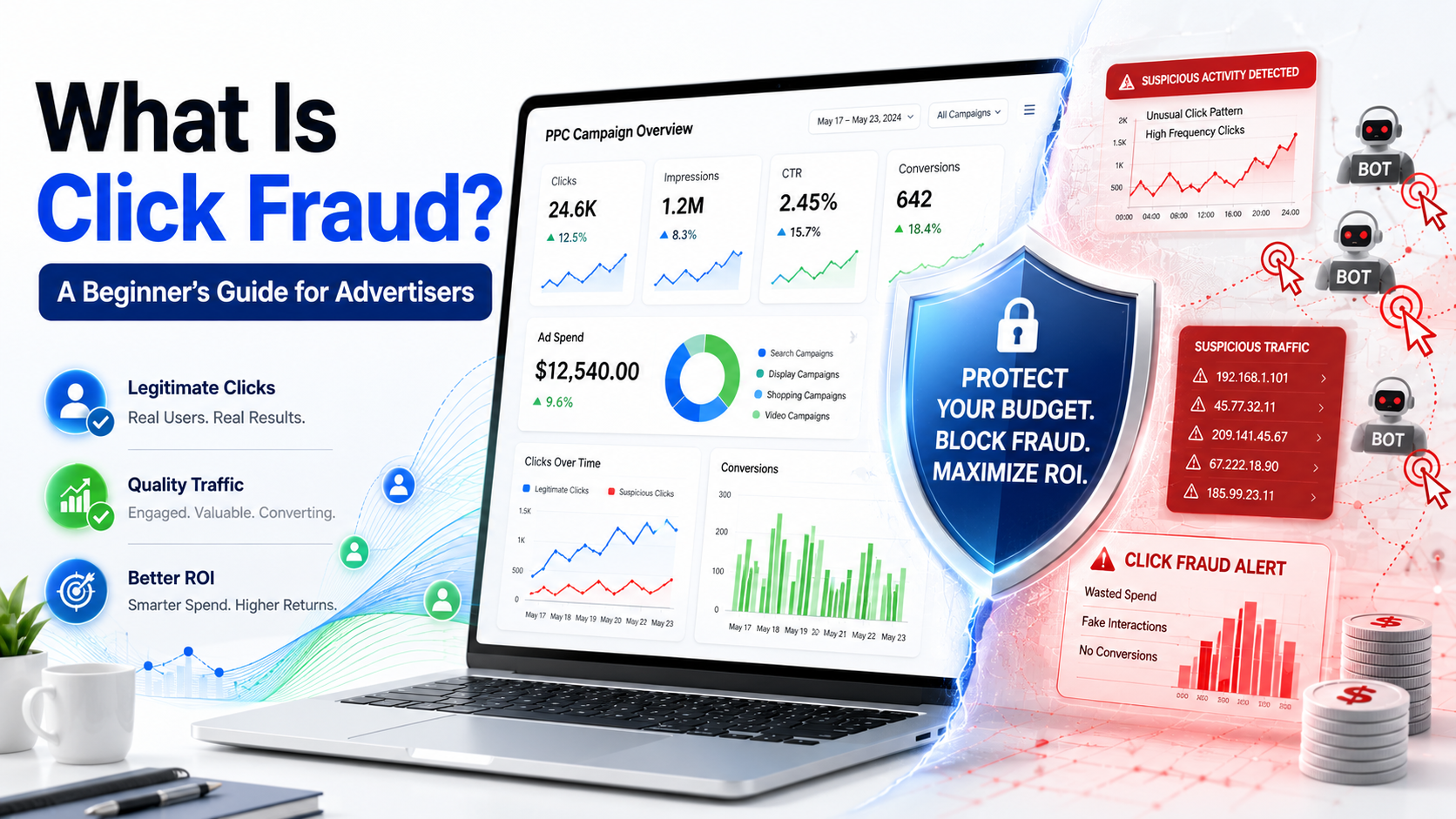
Have you ever wondered why your digital advertising budget vanishes without generating a single sale? You might be the victim of malicious activity designed to drain your resources. This deceptive practice, known as Click Fraud, represents a significant threat to your bottom line.
When automated bots or bad actors interact with your paid search ads, they create fake traffic that offers zero value. Understanding this phenomenon is essential for maintaining a healthy return on investment in modern marketing. By identifying these patterns, you can protect your campaigns from unnecessary waste.
This guide will help you navigate the complexities of digital ad security. You will learn how to spot suspicious behavior and keep your advertising efforts focused on genuine customers.
Key Takeaways
- Digital advertising waste often stems from automated bot traffic.
- Protecting your budget requires constant monitoring of campaign metrics.
- Illegitimate engagement undermines the effectiveness of your paid search efforts.
- Recognizing suspicious patterns is the first step toward better ROI.
- Modern tools can help you filter out bad actors from your audience.
Stop Wasting Your Ad Budget on Invalid Clicks
Every fake click reduces your ROI and limits campaign growth. Discover how DSP Traffic helps advertisers identify suspicious traffic, protect ad spend, and improve campaign performance.
What is Click Fraud?
To defend your business, you must first grasp the technical reality of how invalid traffic operates in the modern web ecosystem. Click Fraud represents a deliberate attempt to manipulate advertising metrics for illicit gain. Unlike organic user interest, this activity serves no genuine commercial purpose.
The Core Concept of Click Fraud
At its most basic level, this practice involves the artificial generation of clicks on pay-per-click (PPC) advertisements. These interactions are not performed by potential customers interested in your products or services. Instead, they are executed by automated scripts, bots, or individuals paid to click on ads repeatedly.
The primary goal is to exhaust your daily budget before real customers have a chance to see your message. By inflating the number of clicks, malicious actors force you to pay for traffic that will never convert into a sale. This creates a significant gap between your reported performance data and actual business growth.
Why Advertisers Are Primary Targets
Advertisers are the primary targets because digital advertising models are inherently built on a pay-per-interaction framework. Every time a user clicks your ad, you incur a cost, which creates a direct financial incentive for bad actors to exploit the system. Click Fraud allows these entities to siphon money directly from your marketing campaigns.
Furthermore, the complexity of modern ad networks makes it difficult to distinguish between a curious prospect and a malicious bot. Because you are eager to scale your reach, you often prioritize high traffic volume, which inadvertently provides more opportunities for fraud. Protecting your budget requires a proactive approach to identifying these patterns before they compromise your bottom line.
How Click Fraud Works?
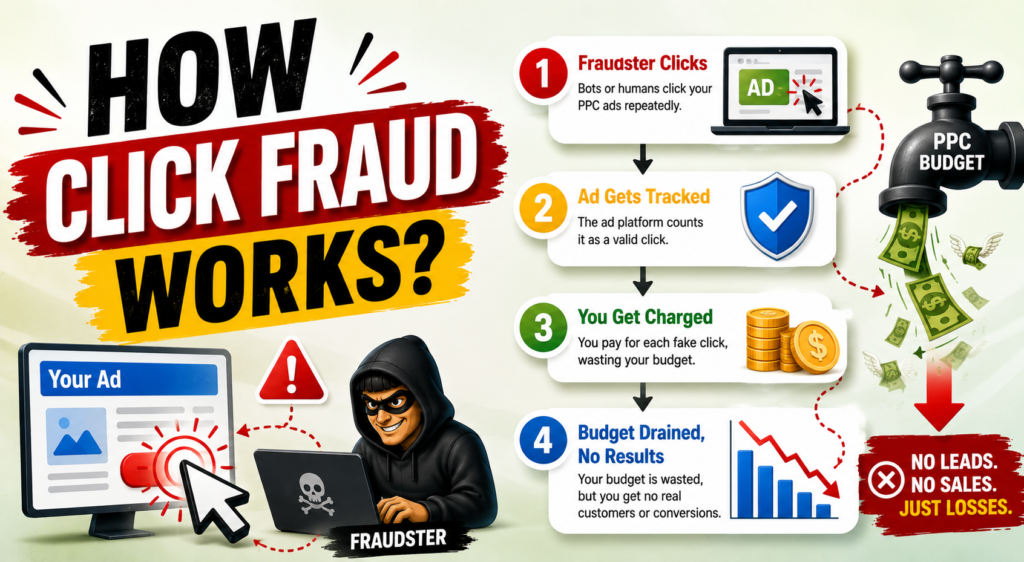
You might wonder how your hard-earned marketing budget disappears so quickly, and the answer often lies in the complex mechanics of click fraud. This deceptive practice involves generating fake interactions on your advertisements to drain your funds or skew your performance data.
The Mechanics of Automated Bots
Automated bots are the most common tools used to execute large-scale attacks. These scripts are programmed to visit websites and click on ads at specific intervals, often mimicking the behavior of real users to avoid detection.
Sophisticated botnets can rotate IP addresses and use different device fingerprints to appear as unique visitors. By doing this, they bypass basic security filters that look for repetitive patterns from a single source.
Manual Click Farms and Human-Driven Fraud
While bots handle the volume, manual click farms rely on human labor to perform fraudulent actions. In these operations, low-cost workers are paid to click on ads throughout the day.
Because these clicks are performed by real people on real devices, they are incredibly difficult for standard analytics tools to identify. These farms often follow strict protocols to ensure their activity looks authentic, such as:
- Browsing multiple pages before clicking an ad.
- Varying the time spent on each landing page.
- Using different geographic locations to match your target audience.
The Role of Malicious Publishers
Sometimes, the threat comes from within the advertising network itself. Some publishers intentionally inflate their own traffic numbers to increase their advertising revenue, a practice known as publisher-driven click fraud.
These malicious actors may use hidden iframes or deceptive ad placements to trick users into clicking. By artificially boosting their click-through rates, they force advertisers to pay for low-quality traffic that never results in a genuine sale or lead.
The Impact of Click Fraud on Your Advertising Budget
Click fraud acts as a hidden tax on your advertising efforts, eroding your profitability from the inside. When your ads are served to non-human entities, you are essentially paying for traffic that will never convert into a sale or lead. This silent drain can quickly spiral out of control if left unchecked.
Direct Financial Losses
The most immediate consequence of Click Fraud is the rapid depletion of your daily budget. Every time a bot or a malicious actor clicks your ad, your account is charged as if a genuine customer had engaged with your content. Over time, these small, unauthorized charges accumulate into significant financial losses that could have been invested in legitimate growth strategies.
Every dollar wasted on invalid traffic is a dollar taken away from your actual revenue-generating campaigns. By failing to monitor these clicks, you are effectively subsidizing the operations of cybercriminals. This direct hit to your bottom line often goes unnoticed until your monthly reports reveal a massive discrepancy between spend and actual results.
Distorted Performance Metrics and Data Integrity
Beyond the immediate loss of capital, fraudulent activity severely compromises the quality of your marketing data. When your analytics platform records thousands of fake clicks, your conversion rates, bounce rates, and cost-per-acquisition metrics become entirely unreliable. You are essentially making business decisions based on a distorted reality.
This data pollution makes it nearly impossible to identify which keywords or ad sets are actually performing well. If you cannot trust your numbers, you cannot optimize your campaigns effectively. The following table illustrates how invalid traffic masks the true health of your digital advertising efforts:
| Metric | Healthy Campaign | Fraud-Impacted Campaign |
|---|---|---|
| Conversion Rate | High (e.g., 5%) | Extremely Low (e.g., 0.1%) |
| Bounce Rate | Moderate | Near 100% |
| Cost Per Lead | Stable | Inflated and Volatile |
| Traffic Quality | High Intent | Automated/Bot-Driven |
The Long-Term Effect on Campaign Optimization
Modern advertising platforms rely heavily on machine learning and automated bidding strategies to maximize your return on investment. These algorithms learn from the data you provide, including every click and conversion event. When your data is tainted by Click Fraud, the system learns the wrong patterns.
The algorithm may begin to prioritize low-quality traffic sources that mimic the behavior of bots, thinking they are your ideal customers. This creates a vicious cycle where your campaign performance continues to decline despite your efforts to scale. Eventually, your automated bidding strategies may fail entirely, leading to wasted spend and a long-term loss of competitive advantage in your market.
Not Sure How Much Click Fraud Is Costing You?
Bot traffic, click farms, and invalid clicks can silently drain thousands from your campaigns. Let our experts help you uncover hidden waste and improve advertising efficiency.
Common Types of Click Fraud
Not all invalid traffic is created equal, and recognizing the different methods used to drain your budget is a critical skill for any advertiser. By understanding the specific tactics employed by bad actors, you can better defend your campaigns against Click Fraud.
Competitor Click Fraud
This occurs when a direct rival clicks on your advertisements with the sole intention of exhausting your daily budget. By depleting your funds early in the day, they ensure your ads stop appearing, effectively removing you from the search results. This malicious practice is a common way for competitors to gain an unfair advantage in a crowded market.
Publisher-Driven Fraud
Sometimes, the threat comes from the very websites hosting your ads. A publisher might click on the advertisements displayed on their own site to artificially inflate their revenue. This form of Click Fraud undermines the integrity of the advertising network and wastes your hard-earned marketing dollars.
Botnet Attacks and Sophisticated Scripts
Large-scale attacks often rely on networks of infected computers known as botnets. These automated systems use sophisticated scripts to mimic human behavior, making it incredibly difficult for basic security filters to detect them. Because these bots can rotate IP addresses and simulate realistic browsing patterns, they represent a significant threat to your campaign performance.
Accidental vs. Intentional Clicks
It is important to distinguish between genuine user errors and deliberate attacks. An accidental click happens when a user taps an ad by mistake, often on a mobile device, and immediately navigates away. In contrast, intentional clicks are part of a coordinated effort to sabotage your business. While accidental clicks are a natural part of digital advertising, you must remain vigilant against the calculated, repetitive patterns that define true fraud.
Identifying Signs of Click Fraud in Your Campaigns
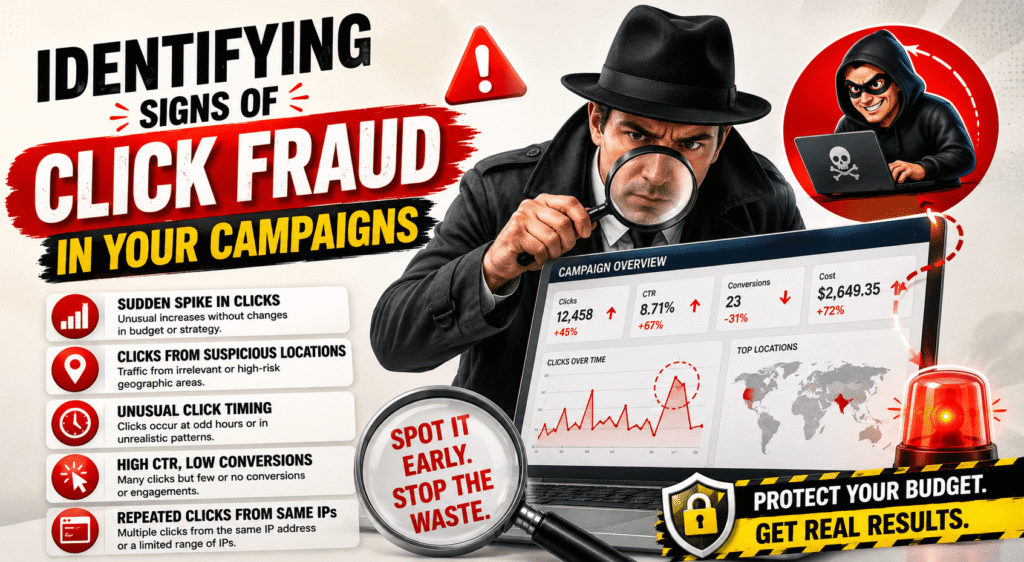
You can safeguard your marketing investment by learning how to spot the subtle red flags of fraudulent activity. Implementing consistent Click fraud detection practices allows you to maintain control over your digital spend and protect your bottom line from malicious actors.
Analyzing Unusual Spikes in Traffic
One of the most common indicators of trouble is a sudden, unexplained surge in clicks. While viral content or seasonal trends can cause traffic spikes, unnatural patterns often suggest automated bot activity.
Effective Click fraud monitoring involves comparing current traffic levels against historical benchmarks. If your click volume jumps significantly without a corresponding increase in impressions or brand awareness efforts, you should investigate the source immediately.
Monitoring High Bounce Rates and Low Conversion
When users click your ads but leave your landing page instantly, it often signals that the traffic is not genuine. High bounce rates combined with a complete lack of conversions are classic signs that your ads are being targeted by bots or click farms.
You should prioritize Click fraud detection by tracking these metrics closely:
- Average session duration dropping below five seconds.
- Conversion rates falling significantly below your industry average.
- A high volume of traffic arriving from non-converting devices or browsers.
Detecting Geographic and IP Address Anomalies
Fraudulent traffic often originates from specific regions that do not align with your target audience. If you notice a high concentration of clicks from countries or cities where you do not run ads, this is a major red flag.
Consistent Click fraud monitoring requires you to review your IP address logs for repetitive patterns. Look for multiple clicks coming from the same IP address within a very short timeframe, as this is rarely the behavior of a real customer.
Reviewing Referral Source Discrepancies
Sometimes, the issue lies in where your traffic is coming from. If you see a large portion of your clicks originating from unknown or suspicious referral domains, your ads might be placed on low-quality publisher sites.
Always verify that your traffic sources match your campaign settings. By performing regular Click fraud detection audits on your referral reports, you can identify and exclude problematic publishers before they drain your budget further.
The Role of Click Fraud Detection Software
Modern digital marketing demands a sophisticated approach to traffic verification. As threats become more complex, relying on manual oversight is no longer enough to protect your bottom line. Click fraud software acts as a digital shield, ensuring that your hard-earned budget reaches genuine potential customers rather than malicious bots.
How Detection Algorithms Identify Malicious Patterns
Advanced click fraud detection systems utilize machine learning to analyze vast amounts of data in milliseconds. These algorithms look for specific behavioral markers that distinguish human users from automated scripts. For instance, they identify irregular click intervals, suspicious mouse movements, and non-human navigation paths that indicate a bot is at work.
By establishing a baseline of normal user behavior, these tools quickly flag anomalies. This proactive identification allows you to filter out bad traffic before it drains your resources. You gain the peace of mind that your analytics reflect actual interest in your products or services.
Real-Time Monitoring Capabilities
Speed is essential when dealing with digital threats. Effective click fraud tools provide constant, real-time monitoring of every incoming click. Instead of reviewing reports days later, you receive immediate protection that stops fraudulent activity as it happens.
This instantaneous response prevents wasted spend on invalid clicks. By blocking malicious IP addresses in real time, you ensure that your campaigns remain optimized for high-quality engagement. This level of vigilance is critical for maintaining a healthy return on investment.
Integrating Detection Tools with Google Ads and Meta
Seamless integration is a hallmark of top-tier security platforms. You can easily connect your chosen software directly to your Google Ads and Meta accounts via secure APIs. This connection allows the system to automatically update your exclusion lists without requiring manual intervention.
The following table highlights the key differences between manual oversight and automated software solutions:
| Feature | Manual Oversight | Automated Software |
|---|---|---|
| Response Time | Delayed (Days/Weeks) | Instant (Real-Time) |
| Accuracy | Subject to Human Error | High (Algorithmic) |
| Scalability | Limited | High |
| Effort Required | High | Low |
By automating these processes, you free up your team to focus on creative strategy rather than data cleaning. Integrating these tools creates a robust defense layer that evolves alongside the tactics used by fraudsters. Consistency in your security posture is the best way to safeguard your advertising future.
Essential Click Fraud Prevention Strategies
Building a robust defense against invalid traffic starts with these essential manual configurations. While many businesses rely on advanced click fraud software to handle threats, taking direct control of your campaign settings provides a vital layer of security. Effective click fraud prevention requires a combination of automated technology and smart, manual oversight to protect your bottom line.
Implementing IP Exclusions
One of the most direct ways to stop repeat offenders is by blocking specific IP addresses. If you notice a single IP address generating a high volume of clicks without any conversions, you should exclude it immediately. This simple action prevents that specific user or bot from seeing your ads again, effectively neutralizing their impact on your budget.
Refining Audience Targeting Parameters
Narrowing your audience ensures that your ads reach only the most relevant, high-intent users. By tightening your geographic, demographic, and interest-based targeting, you naturally reduce the surface area for malicious activity. Even when using click fraud software, precise targeting remains a fundamental best practice for maintaining high-quality traffic.
Utilizing Negative Keyword Lists
Irrelevant search queries often attract low-quality traffic that is prone to accidental or malicious clicks. By maintaining a comprehensive list of negative keywords, you prevent your ads from appearing for searches that do not align with your business goals. Many professional click fraud tools allow you to automate the identification of these keywords, but manual review is still highly recommended for accuracy.
Setting Strict Daily Budget Caps
Establishing a firm daily budget acts as a safety net for your advertising accounts. If a sudden surge of invalid traffic occurs, a strict cap ensures that your financial losses remain contained. This strategy provides peace of mind, allowing you to investigate anomalies without the fear of your entire monthly budget being drained in a single day.
Evaluating Click Fraud Solutions for Your Business
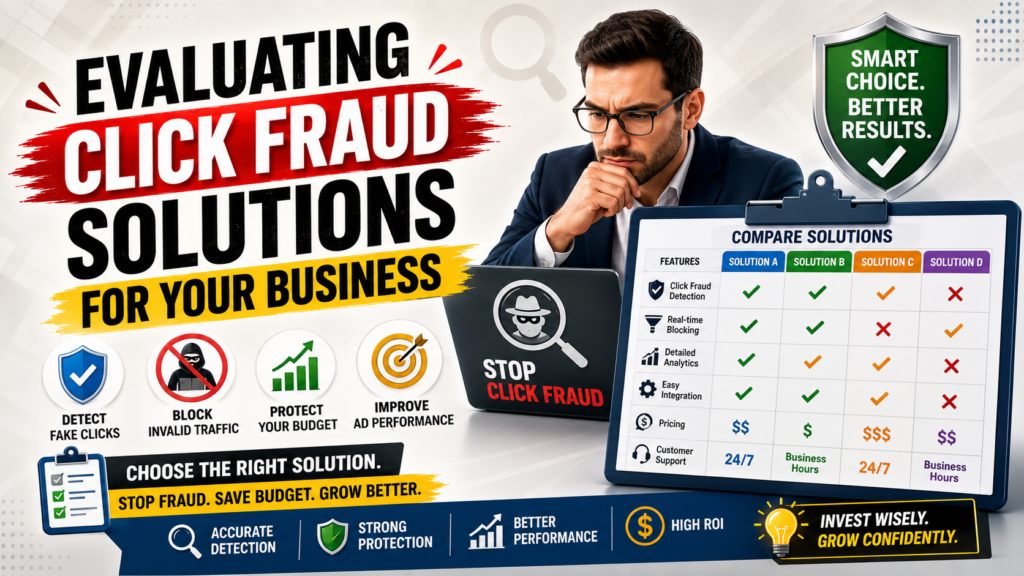
Choosing the right click fraud software is a critical step in protecting your bottom line. As digital advertising becomes more complex, you need a robust defense to ensure your budget reaches real customers. A thoughtful evaluation process helps you identify tools that align with your specific operational goals.
Key Features to Look for in Security Platforms
When you research click fraud solutions, prioritize platforms that offer real-time monitoring and automated blocking. Effective tools should provide granular data, allowing you to see exactly where your traffic originates. Look for systems that offer customizable rules, as this ensures your click fraud prevention strategy remains flexible enough to handle unique industry threats.
“Security is not a one-time setup but a continuous process of monitoring and adaptation to keep your advertising ecosystem clean.”
Scalability for Growing Advertising Budgets
Your chosen platform must grow alongside your business. As you scale your ad spend, the volume of incoming traffic will naturally increase, requiring a system that handles high data loads without performance lag. Reliable click fraud software will maintain its accuracy even during peak campaign periods, ensuring that your protection remains consistent as your reach expands.
Ease of Integration with Existing Marketing Stacks
A seamless workflow is essential for maintaining efficiency. You should select click fraud solutions that integrate easily with your current CRM, analytics tools, and ad platforms like Google Ads or Meta. Proper integration allows for automated data syncing, which simplifies your click fraud prevention efforts and saves your team valuable time.
| Feature Category | Essential Requirement | Business Benefit |
|---|---|---|
| Detection Speed | Real-time analysis | Prevents wasted spend instantly |
| Scalability | Cloud-based architecture | Supports high-traffic growth |
| Integration | API-first design | Connects with existing CRM |
| Reporting | Customizable dashboards | Clear ROI visibility |
By focusing on these core areas, you can implement a click fraud prevention strategy that is both effective and sustainable. Investing in the right click fraud software today will safeguard your future marketing investments against unnecessary losses.
Leveraging Click Fraud Monitoring Tools
Maximizing the effectiveness of your security suite requires a proactive approach to data management. Simply installing click fraud tools is not enough to guarantee the safety of your campaigns. You must actively engage with the features provided to ensure your click fraud prevention efforts remain effective over time.
Automated Reporting and Alert Systems
Modern click fraud monitoring platforms offer automated reporting that saves you valuable time. Instead of manually checking your dashboard, you can configure the system to send instant alerts when suspicious activity occurs. Real-time notifications allow you to pause compromised campaigns before they drain your budget.
These reports provide a clear summary of invalid traffic sources and blocked IP addresses. By reviewing these summaries weekly, you can identify patterns that might otherwise go unnoticed. Consistent oversight ensures that your automated defenses are functioning as intended.
Historical Data Analysis for Trend Identification
Beyond immediate alerts, your software stores vast amounts of historical data. Analyzing this information helps you spot long-term trends in how malicious actors target your business. You might discover that specific times of day or particular geographic regions see higher rates of invalid clicks.
Using this data allows you to refine your overall advertising strategy. You can adjust your bidding schedules or exclude specific regions that consistently show poor traffic quality. Historical analysis transforms raw logs into a strategic roadmap for future growth.
Customizing Thresholds for Fraud Sensitivity
Finding the right balance between security and traffic volume is essential for any advertiser. Most platforms allow you to customize sensitivity thresholds to match your specific risk tolerance. If your settings are too strict, you might accidentally block legitimate potential customers.
Conversely, setting thresholds too low may allow sophisticated bots to slip through your defenses. We recommend starting with standard settings and gradually adjusting them based on your performance data. Fine-tuning these parameters ensures that your click fraud prevention strategy remains both aggressive and accurate.
Legal and Ethical Considerations
Protecting your ad spend involves more than just technical tools. It requires a firm grasp of the legal and ethical boundaries of the industry. Effective click fraud detection serves as your first line of defense, but you must also understand the regulatory framework governing invalid traffic to manage your business risks properly.

Understanding Platform Policies on Invalid Traffic
Major advertising networks like Google and Meta maintain strict policies regarding invalid traffic. They define this as any activity that does not come from a genuine user with a sincere interest in your ad. These platforms invest heavily in automated systems to filter out bot activity before you are even charged.
You should review the specific terms of service for every platform where you run campaigns. Familiarizing yourself with these policies helps you understand what the network considers acceptable versus prohibited behavior. Compliance with these guidelines is essential for maintaining your account standing.
When to Report Fraud to Advertising Networks
If you notice a sudden, unexplained surge in costs or traffic, it may be time to contact support. You should gather evidence from your click fraud detection software before reaching out to the network. Providing clear, data-backed reports increases the likelihood that the platform will investigate your claims.
Reporting is most effective when you can demonstrate a clear pattern of malicious intent. Do not wait until your budget is depleted to raise concerns. Proactive communication with your account representative can often lead to faster resolution and potential credit for invalid clicks.
The Limitations of Legal Recourse Against Competitors
Many advertisers wonder if they can sue competitors for driving up their costs through fraudulent clicks. In practice, legal action is rarely a viable solution for most businesses. Proving that a specific competitor is responsible for the clicks requires a level of forensic evidence that is difficult to obtain.
The cost of litigation often far exceeds the financial losses caused by the fraud itself. Instead of pursuing court cases, focus your energy on robust click fraud detection and prevention strategies. Protecting your bottom line through technical vigilance is almost always more efficient than seeking damages in a legal setting.
Future Trends in Ad Fraud
Artificial intelligence is fundamentally altering the way fraudulent traffic is generated and executed. As technology advances, malicious actors are leveraging sophisticated tools to bypass traditional security filters. You must recognize that the digital advertising environment is becoming more complex every day.
The Rise of AI-Powered Fraud Techniques
Modern fraud is no longer limited to simple scripts or basic botnets. Today, attackers use generative AI to create human-like browsing patterns that are incredibly difficult to distinguish from real users. These systems can mimic mouse movements, scroll speeds, and even complex conversion paths.
By constantly learning from your site’s behavior, these AI-driven bots adapt in real-time to avoid detection. This evolution makes it harder for standard filters to block invalid traffic effectively. Staying vigilant is no longer optional; it is a core requirement for any successful campaign.
Evolving Defense Mechanisms in Digital Advertising
To counter these threats, the industry is shifting toward more advanced predictive analytics. Modern systems now utilize machine learning to identify anomalies before they impact your bottom line. Consistent click fraud monitoring is essential to spot these subtle shifts in traffic quality.
These defense mechanisms analyze thousands of data points simultaneously to flag suspicious activity. By focusing on behavioral patterns rather than just IP addresses, these tools provide a much higher level of protection. This proactive stance ensures that your budget remains focused on genuine potential customers.
Preparing Your Strategy for a Changing Landscape
Adapting to this future requires a commitment to robust click fraud solutions that grow alongside your business. You should prioritize platforms that offer real-time updates and automated reporting. This allows you to pivot your strategy quickly when new threats emerge.
Building a resilient advertising strategy means treating security as a continuous priority rather than a one-time setup. By integrating advanced detection tools and staying informed about emerging trends, you can protect your investment. Preparation is your greatest asset in the ongoing battle against digital ad fraud.
Ready to Protect Every Advertising Dollar?
Click fraud can distort data, waste budget, and reduce campaign profitability. DSP Traffic helps businesses monitor traffic quality, identify fraudulent activity, and maximize advertising performance.
Conclusion
Digital advertising success relies on your ability to maintain a clean and efficient funnel. You must treat your budget as a finite resource that requires constant oversight to prevent waste from invalid traffic.
Proactive management remains your best defense against evolving threats. By utilizing advanced detection software and refining your targeting parameters, you secure your bottom line against malicious actors.
Platforms like Google Ads and Meta provide powerful tools, but you hold the responsibility for your campaign health. Regular audits of your traffic sources and IP exclusions keep your data accurate and your performance metrics reliable.
Stay curious about new security trends as automated threats grow more complex. Your commitment to vigilance ensures that every dollar spent reaches real potential customers. Take control of your advertising environment today to build a sustainable and profitable path forward.
FAQs
What exactly is click fraud and how does it impact my marketing ROI?
A: Click fraud is the practice of intentionally clicking on pay-per-click (PPC) advertisements with no intent of making a purchase. This malicious activity is designed to deplete your advertising budget or generate illicit revenue for publishers. For advertisers on platforms like Google Ads, it directly reduces your return on investment (ROI) by forcing you to pay for “junk” traffic that will never convert, effectively wasting your hard-earned marketing spend.
How can I identify signs of invalid traffic in my current campaigns?
You can identify potential click fraud by monitoring your analytics for unusual spikes in traffic that do not result in a corresponding increase in conversions. Other red flags include abnormally high bounce rates from specific geographic regions or seeing multiple clicks originating from the same IP address within a short timeframe. Regularly reviewing your referral source reports in Google Analytics can help you spot these anomalies before they cause significant financial damage.
What is the difference between automated botnets and manual click farms?
Botnets use sophisticated scripts to automate the clicking process across thousands of infected devices, making them high-volume threats. In contrast, manual click farms employ real people to click on ads, which makes their behavior appear more human and harder to detect using basic filters. Both methods require professional click fraud detection tools to identify and block effectively, as they are designed to bypass standard security measures.
Why should I invest in specialized click fraud software?
Investing in click fraud software like ClickCease or Lunio provides an automated layer of security that manual monitoring simply cannot match. These platforms use advanced algorithms to analyze visitor behavior in real-time, identifying malicious patterns and automatically blacklisting fraudulent IPs. By integrating these tools with your Meta or Google Ads accounts, you ensure that your budget is spent on genuine, high-intent users rather than bots.
What are the most effective click fraud prevention strategies I can use right now?
Beyond using software, your click fraud prevention strategy should include manual tactics such as implementing IP exclusions and refining your geographic targeting to exclude regions known for high fraud rates. You should also utilize negative keyword lists to filter out low-quality traffic and set strict daily budget caps to limit your exposure during a coordinated attack. These steps help ensure your ads are displayed to your most relevant audience.
How do click fraud solutions handle sophisticated AI-powered attacks?
Modern click fraud solutions leverage machine learning to stay ahead of AI-powered fraud. As bots become better at mimicking human movements such as scrolling and realistic mouse patterns, security platforms evolve by analyzing device fingerprinting and behavioral biometrics. These click fraud tools identify discrepancies that are invisible to the naked eye, providing a necessary shield against the next generation of digital threats.
Is it possible to get a refund from advertising networks for fraudulent clicks?
Yes, platforms like Google Ads and Microsoft Advertising have systems in place to detect and credit you for what they deem “invalid clicks.” However, their internal systems often miss more sophisticated forms of fraud. By using click fraud monitoring data, you can provide detailed evidence of suspicious activity to the networks, which significantly increases your chances of receiving a manual credit or refund for lost funds.
How does fraudulent traffic distort my campaign data and optimization?
When your campaigns are flooded with fake clicks, your performance metrics become heavily skewed. This “dirty data” leads you to believe certain keywords or placements are performing better than they actually are. More importantly, it breaks the automated bidding algorithms used by modern platforms; if the algorithm thinks fraudulent clicks are valuable, it will optimize for more of them, creating a cycle of wasted spend and declining performance.
What features are essential when evaluating click fraud tools for a growing business?
When selecting click fraud tools, you must prioritize scalability and real-time reporting. As your advertising budget grows, the tool must be able to process higher volumes of data without lag. Look for features such as automated alert systems, easy integration with your existing marketing stack (like HubSpot or Salesforce), and the ability to customize sensitivity thresholds to balance security with your specific traffic needs.