
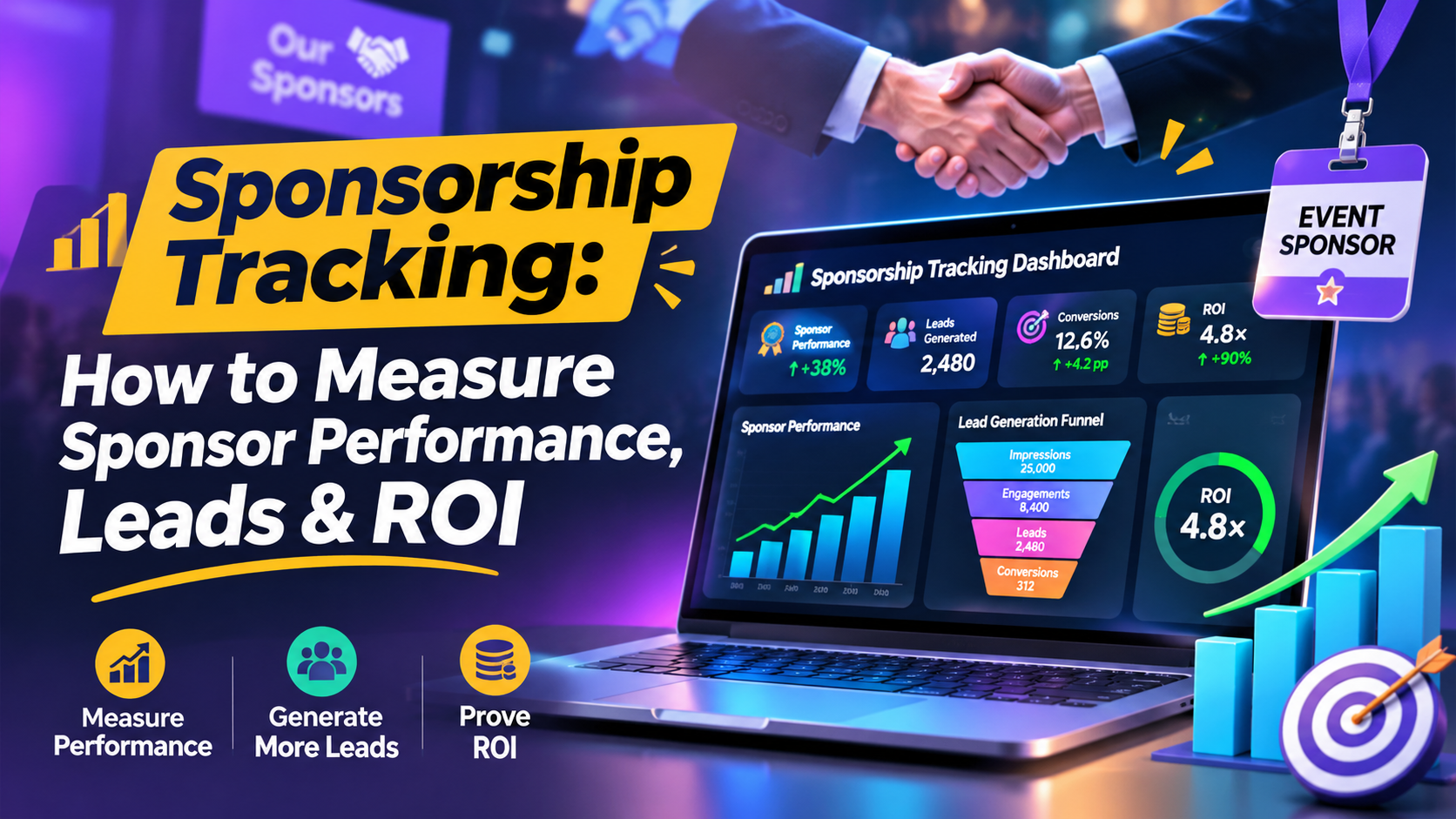
Have you ever invested thousands of dollars in a sponsorship deal, displayed a brand logo across an event, sponsored a popular creator, or promoted a business through a partner, only to wonder whether the investment actually brought you any customers?
You are not alone. Many businesses spend considerable money on sponsorships because they offer brand exposure, audience access, and opportunities to build trust. However, when someone asks how many people clicked the sponsor’s link, visited the website, signed up for an offer, or eventually became paying customers, the answers are not always clear.
That is where Sponsorship tracking becomes important.
A sponsorship should not be judged only by how many people attended an event, how many followers a creator has, or how prominently a company logo appeared. Those numbers can be useful, but they do not tell the complete story. Businesses also need to understand what happened after people noticed the sponsorship.
Did visitors click the promotional link? Did they explore the website? Did they submit a form? Did they purchase a product? And most importantly, was the result worth the money spent?
With the right measurement process, businesses can move beyond assumptions and understand which sponsorship activities are delivering meaningful results.
Whether you are a brand sponsoring an industry event, a business partnering with an influencer, an association managing multiple sponsors, or a publisher offering promotional placements, this guide will help you understand how to measure performance, monitor leads, calculate return on investment, and improve future partnerships.
Key Takeaways
- Measure more than visibility: Track clicks, unique visitors, referral traffic, leads, conversions, and revenue instead of relying only on impressions.
- Give every sponsor a separate tracking link: Unique URLs make it easier to identify which sponsor, placement, or promotional activity generates traffic.
- Use UTM parameters: They help distinguish sponsorship traffic by campaign, source, medium, and placement in compatible analytics platforms.
- Calculate actual returns: Compare sponsorship costs with attributable revenue and other clearly defined business outcomes.
- Choose the right tracking tools: Linkstrackly can help monitor tracked-link clicks, unique visitors, geographic data, and campaign performance.
1. What Is Sponsorship Tracking?
Sponsorship tracking is the process of monitoring, measuring, and analyzing the results generated by a sponsorship partnership or promotional agreement.
In simple language, it helps businesses understand what they receive in return for sponsoring something.
Imagine a software company sponsors a digital marketing conference. In exchange for its investment, the company receives a logo placement, a speaking opportunity, a booth, social media mentions, and a promotional link on the event website.
The company might receive thousands of impressions during the conference. However, impressions alone cannot tell whether potential customers visited its website or showed interest in its software.
By using trackable URLs, campaign parameters, analytics tools, and conversion measurement, the company can understand how people interacted with its promotional activities.
For example:
- How many people clicked the sponsor’s website link?
- How many visitors came from the event website?
- Which promotional placement generated the most traffic?
- How many visitors registered for a product demonstration?
- How many leads eventually became customers?
- How much revenue could be attributed to the sponsorship?
This information turns sponsorship reporting into something more useful than a collection of photographs, attendance figures, and estimated impressions.
Sponsorship tracking can be used across several types of partnerships, including:
Event sponsorships: Businesses sponsoring conferences, trade shows, webinars, exhibitions, sporting events, and community gatherings.
Influencer sponsorships: Brands paying creators to mention products, publish sponsored content, or share promotional links.
Podcast sponsorships: Companies purchasing advertising slots, branded mentions, or promotional placements in podcast episodes.
Content sponsorships: Businesses supporting newsletters, blogs, educational resources, videos, and online publications.
Sports sponsorships: Brands supporting teams, athletes, tournaments, and sporting organizations.
Association sponsorships: Companies partnering with professional associations, industry groups, and membership organizations.
The measurement process may differ depending on the partnership, but the central objective remains the same: understand what the sponsorship achieved and identify opportunities to improve its performance.
2. Why Is Sponsorship Tracking Important for Businesses?
A sponsorship agreement is an investment. Like any other marketing investment, it should have a clear objective and a way to evaluate its results.
Without a measurement process, businesses may continue renewing partnerships simply because they seem popular or offer attractive visibility.
That can become expensive.
Here are the main reasons why measuring sponsorship performance matters.
2.1 Understand Whether Your Investment Is Working
A sponsorship package might promise a large audience, multiple promotional placements, and access to potential customers. However, the actual results may be different from expectations.
For instance, a company might spend $5,000 sponsoring a business event. The event generates 1,500 visits to the company’s website, but only 15 people request a product demonstration.
That information helps the company understand whether the sponsorship is generating enough interest to justify further investment.
The objective is not necessarily to generate immediate sales. Some partnerships are designed to build awareness or reach a specific audience. The important thing is to evaluate performance against the original objective.
2.2 Identify Your Best-Performing Sponsors and Placements
Not every sponsorship placement performs equally.
A promotional link in an event registration email might generate more visits than a logo displayed on a general event page.
Similarly, a creator’s product demonstration could attract more qualified visitors than a short promotional mention.
When each placement has its own tracking link, you can compare its performance rather than treating the entire sponsorship as one activity.
This is one of the most practical benefits of Sponsorship tracking: it helps identify where your audience is actually responding.
2.3 Make Better Decisions About Future Partnerships
Historical performance is valuable when negotiating future sponsorship agreements.
Suppose you sponsored three industry newsletters. One generated 800 visitors, another generated 350, and the third generated 120.
The figures do not automatically mean that the first newsletter is the best partnership. You should also examine audience relevance, lead quality, conversions, and sponsorship cost.
However, these insights provide a stronger starting point for deciding where to invest next.
2.4 Build Trust With Sponsors
Sponsorship agreements work best when both parties understand expectations.
Brands want to know what they are paying for. Sponsors and event organizers want to demonstrate that they delivered the agreed promotional value.
Transparent reports showing clicks, traffic sources, engagement, and agreed deliverables help make these conversations more productive.
2.5 Discover Problems Early
Imagine that a sponsor’s promotional link receives 500 clicks in the first week but suddenly stops receiving traffic.
If nobody monitors the campaign, the problem might remain unnoticed until the final report.
Regular monitoring can help identify broken links, unexpected traffic changes, underperforming placements, and suspicious activity before they become larger issues.
3. What Sponsorship Metrics Should You Track?
Before setting up any measurement system, decide what success looks like.
A common mistake is collecting every available number without understanding what each one means.
A better approach is to select metrics that match your sponsorship objectives.
Here are the most useful performance indicators.
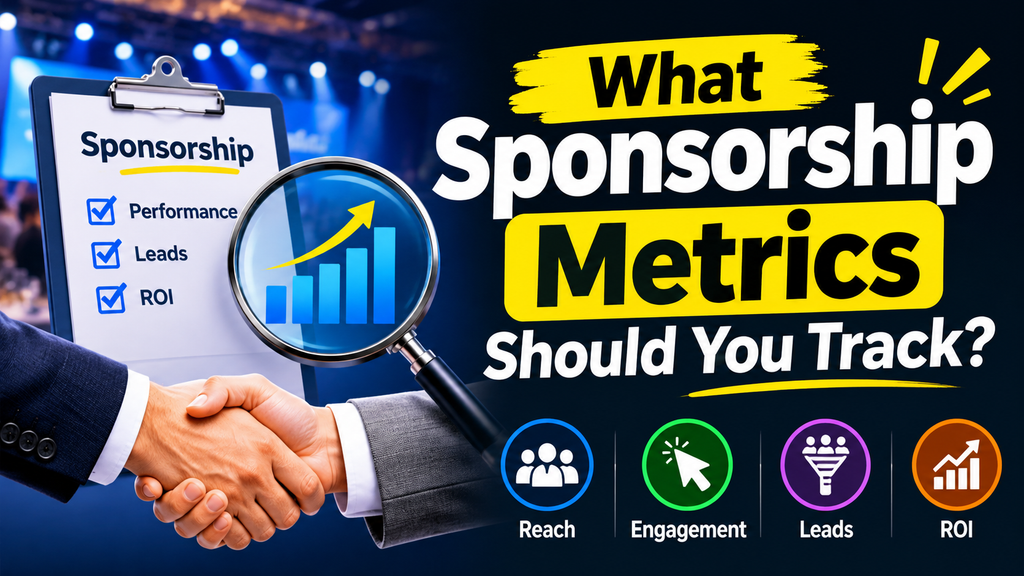
3.1 Impressions and Reach
Impressions measure how many times sponsored content or promotional material was displayed.
Reach generally refers to the number of distinct people who were exposed to the content, although the exact measurement depends on the platform.
These metrics are useful for evaluating visibility.
For example, if a sponsored newsletter is delivered to 20,000 subscribers, its distribution gives you an idea of its potential audience.
However, delivery does not mean that everyone opened the email, noticed the sponsorship, or visited the sponsor’s website.
Use impressions and reach as awareness indicators rather than proof of business results.
3.2 Sponsor Link Clicks
Clicks show how many times people interacted with a promotional link.
This is particularly useful when a sponsor receives a website link on an event page, social media post, newsletter, or creator profile.
Suppose an event organizer shares a sponsor’s promotional link across three channels:
- Event website: 450 clicks
- Email newsletter: 300 clicks
- Social media: 250 clicks
The total is 1,000 recorded clicks.
You can compare these placements to understand which one encouraged more visitors to take action.
A click does not necessarily represent a unique person. The same individual may click more than once, and automated traffic may also contribute to recorded activity.
That is why click counts should be interpreted alongside unique visitor data and traffic quality.
3.3 Unique Visitors
Unique visitor measurements help estimate how many distinct visitors interacted with a tracked link during the reporting period.
For example, if a promotional link records 1,000 clicks but 720 unique visitors, the difference suggests that some visitors clicked more than once.
The exact method used to identify unique visitors depends on the tracking technology, browser settings, and privacy restrictions.
This metric helps provide more context than click totals alone.
3.4 Referral Traffic
Referral traffic tells you how visitors arrived at your website.
For sponsorship campaigns, useful sources might include:
- Event websites
- Partner blogs
- Sponsored newsletters
- Creator profiles
- Podcast show notes
- Association websites
- Affiliate and referral placements
UTM parameters and analytics platforms can help categorize this traffic.
By comparing referral sources, you can identify which partnerships are bringing visitors to your website.
3.5 Leads Generated
A lead is someone who expresses interest in your business, product, or service.
Depending on your business model, a lead might:
- Complete a contact form
- Request a product demonstration
- Download a resource
- Register for a webinar
- Subscribe to a newsletter
- Request a quotation
- Book a consultation
For many B2B sponsorship campaigns, leads are more valuable than clicks because they indicate a stronger level of interest.
However, not all leads have equal value. A qualified lead who matches your target customer profile may be more useful than several unrelated form submissions.
3.6 Conversion Rate
Conversion rate measures the percentage of visitors who complete a defined action.
For example, if 500 visitors arrive through a sponsorship link and 25 complete a registration form, the conversion rate is:
Conversion rate = (Conversions ÷ Visitors) × 100
Conversion rate = (25 ÷ 500) × 100 = 5%
This gives you a simple way to evaluate how effectively sponsorship traffic turns into meaningful actions.
Make sure you use a consistent denominator. Depending on your reporting method, that could be sessions, visitors, or unique landing-page visitors.
3.7 Revenue Generated
Revenue is one of the most important metrics for sponsorships designed to generate direct sales.
You can measure it through:
- Purchases made through tracked referral links
- Sales associated with promotional codes
- Leads connected to closed deals in a CRM
- Revenue recorded against campaign identifiers
- Confirmed transactions attributed through an agreed attribution model
Be careful not to assume that every purchase following a sponsorship interaction was caused by that sponsorship.
Customers often interact with multiple marketing channels before purchasing.
3.8 Audience Engagement
Engagement helps you understand whether people are interacting with sponsored content.
Depending on the platform, engagement can include comments, shares, video views, downloads, event participation, and email interactions.
For example, a creator might generate fewer website clicks than another creator but receive significantly more meaningful audience discussion.
This can matter when the sponsorship objective is education, community building, or brand awareness.
3.9 Cost Per Lead and Cost Per Acquisition
Cost per lead (CPL) measures how much you spend to generate one lead.
CPL = Total Sponsorship Cost ÷ Number of Leads
If a sponsorship costs $3,000 and generates 60 leads:
CPL = $3,000 ÷ 60 = $50
Cost per acquisition (CPA) measures the cost of acquiring a customer.
CPA = Total Sponsorship Cost ÷ Number of Acquired Customers
If the same sponsorship generates 10 customers:
CPA = $3,000 ÷ 10 = $300
These metrics help compare sponsorship investments with other marketing channels.
3.10 Sponsorship ROI
Return on investment measures the financial return relative to the investment.
For direct revenue measurement, a commonly used formula is:
ROI = [(Attributable Revenue − Sponsorship Cost) ÷ Sponsorship Cost] × 100
For example:
- Sponsorship cost: $4,000
- Attributable revenue: $10,000
- Net return: $6,000
ROI = [($10,000 − $4,000) ÷ $4,000] × 100
ROI = 150%
This example assumes that the $10,000 is revenue attributed to the sponsorship and that the calculation includes the costs specified in the example. If you want profit-based ROI, include the relevant delivery costs and gross margin rather than treating all revenue as profit.
4. How to Track Sponsorship Campaigns Step by Step
Now that you understand the important metrics, let’s look at how to build a practical measurement process.
You do not need a complicated marketing department or an expensive analytics setup to begin. A clear campaign structure, consistent naming, and suitable tracking tools can make a substantial difference.
Step 1: Define Your Sponsorship Objectives
Start by identifying what you expect from the partnership.
Different sponsorships have different purposes.
For example:
| Sponsorship objective | Metrics to monitor |
|---|---|
| Brand awareness | Reach, impressions, branded searches |
| Website traffic | Clicks, unique visitors, referral sessions |
| Lead generation | Form submissions, qualified leads |
| Product sales | Purchases, revenue, conversion rate |
| Community engagement | Comments, shares, participation |
| Event registrations | Registration clicks and completed registrations |
Do not try to measure every possible metric.
If your main objective is lead generation, prioritize qualified leads, conversion rate, and cost per lead.
If your goal is awareness, impressions, reach, branded search activity, and audience engagement may be more appropriate.
A clearly defined objective makes Sponsorship tracking easier because you know which numbers actually matter.
Step 2: Create a Separate Tracking Link for Each Sponsor
One of the easiest ways to organize sponsorship traffic is to create a unique URL for each sponsor or promotional placement.
Suppose your company sponsors a technology conference and receives three placements:
- A link on the official event website.
- A link in the event’s email newsletter.
- A link in a social media announcement.
Instead of using the same destination URL everywhere, create separate tracked links.
Example:
example.com/event-sponsorexample.com/newsletter-sponsorexample.com/social-sponsor
These are illustrative URLs, not actual Linkstrackly links.
The advantage is straightforward: you can distinguish the traffic generated by each placement.
If you reuse one identical URL everywhere without additional source information, it becomes harder to identify which placement generated the visit.
Step 3: Add UTM Parameters
UTM parameters are small pieces of information added to a URL to help analytics platforms identify the source of website traffic.
A typical URL might look like this:
Here is what the parameters mean:
utm_source: Identifies where the traffic originated.utm_medium: Identifies the marketing channel.utm_campaign: Identifies the campaign.utm_content: Can distinguish individual placements or creative variations.utm_term: Commonly used to identify paid search keywords, although it can serve other controlled classification purposes.
For example, you could use:
utm_source=marketing_association
utm_medium=sponsorship
utm_campaign=annual_conference
utm_content=homepage_banner
The parameters should be consistent across all campaigns.
Avoid changing capitalization, abbreviations, or naming conventions randomly. Analytics platforms may treat different values as separate sources.
Remember that UTM parameters identify campaign information. They do not independently prove that a visitor converted or became a customer.
Step 4: Use Branded and Trackable URLs
Long promotional URLs can look confusing, particularly when shared in printed materials, presentations, event programs, and social media posts.
A branded tracking link can provide a cleaner experience while helping the marketing team monitor link activity.
For example, instead of displaying a long URL containing multiple tracking parameters, you could share a shorter branded link that redirects visitors to the intended destination.
This is useful for:
- Event sponsor pages
- Podcast descriptions
- Sponsored newsletters
- Creator promotions
- Printed promotional materials
- QR code destinations
With a suitable link tracking platform, you can organize these links and review their performance.
This is where Linkstrackly becomes relevant.
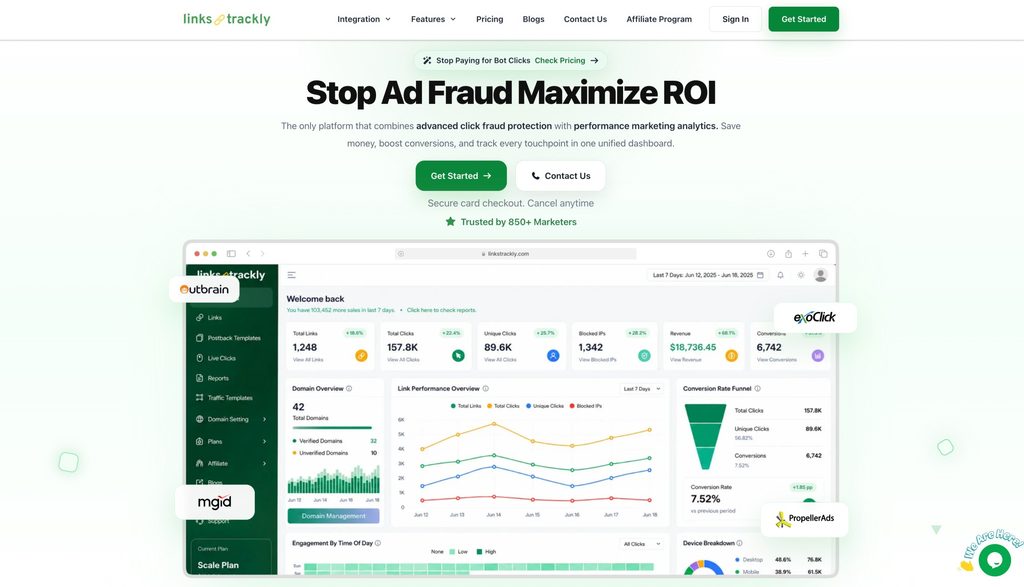
Linkstrackly provides branded link shortening and click analytics, including click counts, unique visitors, and geographic data. These capabilities can help marketers understand how tracked promotional links are performing.
Step 5: Track Website Conversions
Clicks tell you that someone interacted with a link. They do not tell you whether that person completed an important action.
To measure actual business outcomes, you need conversion tracking.
First, define what counts as a conversion.
For example:
- Completing a registration form
- Submitting a contact request
- Purchasing a product
- Booking a meeting
- Signing up for a free trial
Then connect the conversion event to your website analytics, advertising platform, CRM, or another suitable measurement system.
If someone clicks a sponsorship link and later submits a form, your measurement setup should help connect that action to the original campaign when technically and legally possible.
Keep in mind that attribution can be affected by browser restrictions, consent settings, device changes, and incomplete tracking data.
Step 6: Monitor Traffic Quality
A high click count does not always mean a successful sponsorship.
Some traffic may come from bots, automated systems, repeated clicks, or visitors who have little interest in the offer.
For this reason, examine traffic quality alongside volume.
Useful indicators include:
- Unexpected spikes in traffic
- Repeated or unusual click patterns
- Geographic patterns that do not match the intended audience
- Very low engagement after the click
- Unusual conversion behavior
- Suspicious referral activity
Do not automatically classify every repeated click or unusual location as fraudulent. Shared networks, privacy tools, VPNs, and automated previews can influence tracking data.
Linkstrackly offers anti-fraud and traffic-quality features designed to help identify and manage suspicious advertising traffic. Its broader performance tracking capabilities can also provide additional visibility into campaign activity.
For sponsorship campaigns, evaluate whether those features fit your particular traffic sources and setup rather than assuming every type of sponsorship traffic is automatically covered.
Step 7: Compare Sponsorship Performance
Once your links and analytics are working, start comparing results.
Consider this example:
| Placement | Clicks | Leads | Conversions |
|---|---|---|---|
| Event website | 800 | 40 | 8 |
| Newsletter | 500 | 45 | 12 |
| Social media | 1,000 | 20 | 3 |
The social media placement generated the most clicks, but the newsletter produced the most leads and conversions.
This tells you that the highest-traffic placement was not necessarily the most effective for generating customers.
A useful comparison should include the sponsorship cost, audience relevance, lead quality, and final business outcomes.
Step 8: Prepare Regular Performance Reports
Do not wait until the partnership ends to review performance.
Create a reporting schedule that matches the sponsorship duration.
For a short campaign, weekly reports may be sufficient. For a year-long partnership, monthly or quarterly reviews may be more practical.
A useful report should include:
- Sponsorship name
- Sponsor or partner name
- Campaign dates
- Agreed deliverables
- Promotional placements
- Tracking links
- Total clicks
- Unique visitors
- Referral traffic
- Leads
- Conversions
- Revenue, where measurable
- Sponsorship expenditure
- ROI or other agreed outcome measures
- Recommendations for improvement
Keep the reporting format consistent so that sponsors can compare performance over time.
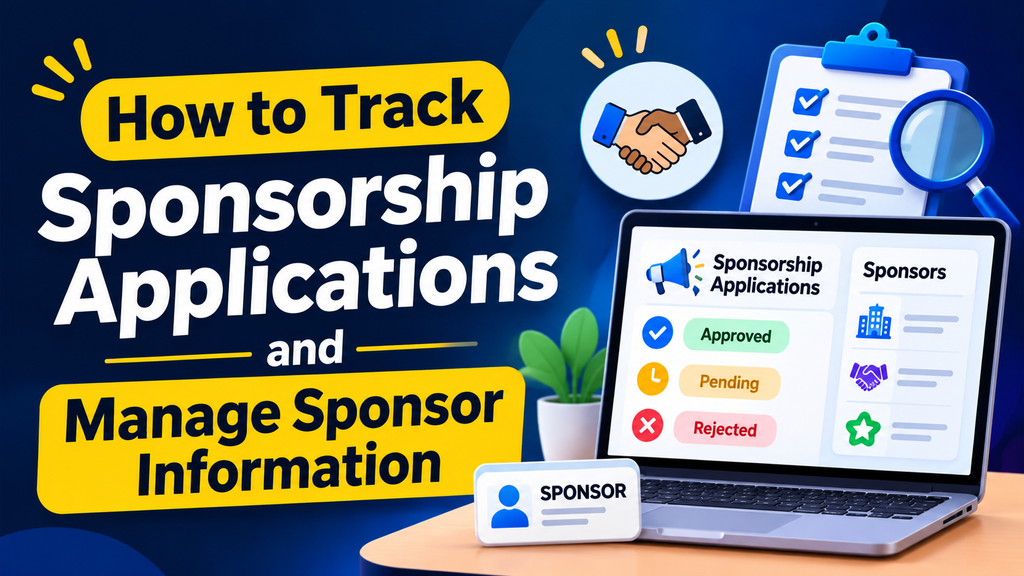
5. How to Track Sponsorship Applications and Manage Sponsor Information
Tracking sponsorship applications is a related but different process from measuring sponsorship campaign performance.
An organization receiving sponsorship requests needs to manage applications, review submissions, communicate with applicants, and record decisions.
For example, a professional association might receive 100 sponsorship applications for its annual conference. Without an organized process, it can become difficult to remember which applicants submitted documents, which packages they requested, and which agreements have been approved.
If you are researching how to track sponsorship application progress, start by separating application management from performance measurement.
5.1 Create a Central Application Register
Maintain a structured record of every application.
Useful fields include:
- Application ID
- Organization name
- Contact person
- Email address
- Requested sponsorship package
- Requested sponsorship amount
- Application submission date
- Supporting documents
- Review status
- Assigned reviewer
- Approval or rejection date
- Follow-up notes
A spreadsheet can work for a small program. Larger organizations may need a dedicated application or CRM system.
5.2 Use Clear Application Statuses
Create a consistent status system.
For example:
| Status | Meaning |
|---|---|
| Submitted | Application received |
| Under review | Team is evaluating the application |
| Information requested | Additional details are required |
| Approved | Application accepted |
| Rejected | Application not selected |
| Agreement pending | Contract or confirmation outstanding |
| Completed | Sponsorship agreement fulfilled |
These statuses help prevent applications from being overlooked.
5.3 Assign Responsibility
Every application should have an owner.
If multiple team members review applications, assign responsibility for each stage.
This makes it easier to identify pending decisions, missing documents, and delayed communication.
5.4 Record the Final Sponsorship Agreement
Once an application is approved, record the agreed sponsorship package, payment amount, promotional benefits, delivery dates, and reporting requirements.
This information becomes the starting point for measuring performance later.
For example, if an agreement promises two newsletter mentions, one website placement, and a speaking opportunity, the organization should record whether each deliverable was completed.
5.5 Connect Application Records With Campaign Results
This is where application management and Sponsorship tracking come together.
An application register tells you which sponsorships were approved. A campaign measurement system tells you what happened after those sponsorships became active.
Connect the two using a consistent sponsorship ID.
For example:
SP-2026-014
That identifier can appear in the application register, agreement, reporting spreadsheet, and campaign naming convention.
This helps maintain a clear record from the initial application through to final performance reporting.
Importantly, a link analytics platform is not necessarily an application-management system. Linkstrackly can support the link and traffic measurement side of this process, while application submissions and approvals should be managed through an appropriate form, spreadsheet, CRM, or sponsorship management solution.
6. What Is a Sponsorship Tracker?
A sponsorship tracker is a system used to organize sponsorship information, activities, deliverables, costs, and performance results.
It can be a simple spreadsheet or a more advanced software solution.
The purpose is to keep important sponsorship information in one place instead of spreading it across emails, documents, and separate reports.
A practical sponsorship tracker should help you answer questions such as:
- Which sponsors are currently active?
- What sponsorship packages have been purchased?
- How much has each sponsor invested?
- Which promotional benefits have been delivered?
- Which tracking links belong to each sponsor?
- How many visitors did each sponsor generate?
- How many leads or conversions resulted?
- Which agreements need renewal?
6.1 Essential Columns for a Sponsorship Tracker
Here is a useful structure:
| Field | Information to record |
|---|---|
| Sponsor ID | Unique reference number |
| Sponsor name | Business or organization |
| Campaign name | Event or partnership |
| Sponsorship tier | Package or level |
| Start date | Campaign start |
| End date | Campaign end |
| Investment | Sponsorship cost |
| Deliverables | Agreed promotional benefits |
| Tracking URL | Sponsor-specific link |
| Clicks | Recorded link clicks |
| Unique visitors | Estimated distinct visitors |
| Leads | Recorded leads |
| Conversions | Completed target actions |
| Revenue | Attributable sales |
| Status | Active, completed, pending |
| Notes | Issues and recommendations |
6.2 Example Sponsorship Tracker
Imagine a business working with three event partners.
| Sponsor | Investment | Clicks | Leads | Customers |
|---|---|---|---|---|
| Partner A | $2,000 | 600 | 30 | 6 |
| Partner B | $3,500 | 900 | 45 | 9 |
| Partner C | $1,500 | 300 | 12 | 2 |
This simple comparison provides an overview of the campaign.
However, it should not be used to rank sponsors without considering audience relevance, the number of deliverables, lead quality, revenue, and campaign duration.
6.3 Spreadsheet or Dedicated Software: Which Should You Choose?
A spreadsheet is often sufficient when you manage a small number of sponsorships and only need basic records.
Dedicated software may be more useful when you manage:
- Hundreds of applications
- Multiple sponsorship packages
- Complex approval processes
- Contract renewals
- Payment schedules
- Multiple event teams
- Detailed sponsor reporting
Some organizations use separate tools for different purposes. For example, a CRM may manage sponsor relationships, a project management tool may monitor deliverables, and a link analytics platform may measure promotional traffic.
You do not necessarily need one system to do everything.
7. How Event Management Platforms Handle Sponsorship Revenue Tracking
Events can involve several revenue sources, including ticket sales, exhibitor fees, sponsorship packages, advertising placements, and other commercial partnerships.
For organizers, understanding these revenue streams is essential for evaluating the financial performance of an event.
This is why event management platforms sponsorship revenue tracking is an important consideration when selecting software for conferences, exhibitions, and professional events.
However, it is important to distinguish between sponsorship revenue management and sponsorship marketing performance measurement.
They are related, but they are not identical.
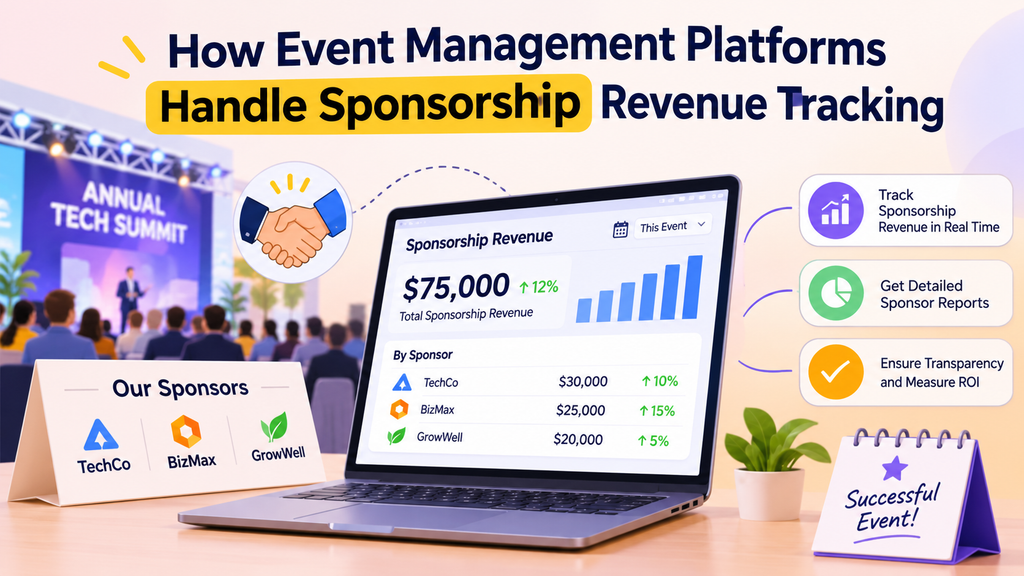
7.1 Sponsorship Revenue Tracking
Revenue tracking focuses on money received or expected from sponsors.
An event organizer may need to record:
- Sponsor name
- Sponsorship package
- Contract value
- Invoice amount
- Payment received
- Outstanding balance
- Payment due date
- Renewal value
- Additional sponsorship purchases
For example, a conference might sell:
- One presenting sponsor package for $15,000
- Three gold sponsor packages for $7,500 each
- Five silver sponsor packages for $3,000 each
The organizer can calculate total contracted sponsorship revenue and compare it with the amount actually collected.
7.2 Track Sponsorship Deliverables Separately
Receiving payment does not automatically mean that all promised benefits have been delivered.
A sponsor may have paid for a website banner, email promotion, booth placement, and a presentation opportunity.
The event team should record the completion of each deliverable.
A useful reporting structure includes:
| Deliverable | Planned | Completed |
|---|---|---|
| Website logo placement | 1 | 1 |
| Newsletter promotion | 2 | 2 |
| Social media mention | 3 | 2 |
| Event booth | 1 | 1 |
| Speaking opportunity | 1 | 1 |
This helps organizers identify incomplete commitments before the event concludes.
7.3 Measure Marketing Performance Alongside Revenue
Revenue from sponsorship sales tells you how much the event earned from sponsors.
It does not tell you how much traffic or business the sponsor received.
For that, organizers should use separate promotional tracking links and agreed reporting metrics.
For example, a sponsor may receive 700 website visits from an event partnership. Another may receive 350 visits but generate twice as many qualified leads.
Both the organizer and the sponsor benefit from understanding these differences.
7.4 What Should You Look for in Event Management Software?
If you manage an event, look for capabilities such as:
- Sponsor database management
- Sponsorship package management
- Application and approval workflows
- Contract management
- Invoicing and payment records
- Deliverable management
- Attendee registration
- Reporting and exports
- CRM integrations
- Marketing analytics integrations
Some platforms may combine several of these capabilities, while others focus on specific tasks.
A sensible approach is to select event software for operational and financial management, then connect it with appropriate analytics tools for measuring website traffic and promotional results.
8. How to Calculate Sponsorship ROI Correctly
Measuring sponsorship ROI is not always as straightforward as measuring the return from a paid advertisement.
Some sponsorships generate immediate sales. Others create brand awareness, strengthen relationships, provide access to new audiences, or influence purchases that happen months later.
The first step is to decide which outcomes can reasonably be measured.
8.1 Use the Right Formula
For a simple revenue-based calculation:
ROI = [(Revenue Attributed to Sponsorship − Sponsorship Cost) ÷ Sponsorship Cost] × 100
Let’s understand this through an example.
A company sponsors an industry webinar for $2,500.
After the campaign, it records:
- 400 tracked visitors
- 40 leads
- 8 new customers
- $8,000 in attributable revenue
The calculation is:
ROI = [($8,000 − $2,500) ÷ $2,500] × 100
ROI = 220%
This indicates a 220% return based on the specified revenue and sponsorship cost.
If the company also incurred $1,000 in additional delivery and sales costs, those costs should be considered in a more complete profitability calculation.
8.2 Include All Relevant Sponsorship Costs
Do not consider only the sponsorship package price.
Depending on the campaign, additional costs may include:
- Travel and accommodation
- Booth design and construction
- Promotional materials
- Staff time
- Product samples
- Creative production
- Agency fees
- Follow-up sales expenses
Including relevant costs gives you a more realistic picture.
8.3 Account for Long-Term Benefits
Some partnerships may generate benefits that are difficult to measure immediately.
For example, a company might sponsor a professional association for six months. During that period, its team builds relationships with potential customers who eventually purchase products several months later.
A short reporting window might underestimate the partnership’s contribution.
Consider measuring results at multiple intervals:
- During the sponsorship
- Immediately after the campaign
- 30 days later
- 60 or 90 days later, where appropriate
Use a consistent attribution policy so that the same revenue is not counted multiple times across different marketing channels.
8.4 Separate Direct and Assisted Conversions
A direct conversion occurs when a visitor completes a purchase or action through a journey attributed directly to the sponsorship under your chosen model.
An assisted conversion occurs when sponsorship exposure contributes to a customer journey that also includes other marketing interactions.
For example:
- Someone sees a brand at a conference.
- They visit the company’s website through a sponsor link.
- They later search for the brand on Google.
- They click a search advertisement.
- They purchase a product.
A last-click attribution model may credit the search advertisement, even though the sponsorship played a role in introducing the brand.
This is why a single attribution model should not be treated as the complete truth.
For important campaigns, compare last-click results with other available attribution information and clearly explain the limitations.
9. Common Sponsorship Tracking Mistakes to Avoid
Even a well-funded marketing team can make measurement mistakes.
Here are some common problems and how to prevent them.
Mistake 1: Measuring Only Impressions
Impressions show exposure, not necessarily interest or business value.
Solution: Combine visibility metrics with clicks, website visits, leads, and conversions.
Mistake 2: Using the Same Link Everywhere
When every promotional placement uses the same untagged destination, it becomes difficult to identify individual traffic sources.
Solution: Create unique URLs or use consistent campaign parameters for each placement.
Mistake 3: Ignoring Conversion Tracking
A campaign may generate hundreds of visitors but very few meaningful actions.
Solution: Define conversions before launch and configure appropriate analytics or CRM measurement.
Mistake 4: Confusing Clicks With People
One person can click several times. Automated traffic can also influence click totals.
Solution: Review unique visitor measurements and traffic quality alongside click counts.
Mistake 5: Forgetting to Monitor Deliverables
An event might receive sponsorship revenue without delivering every promotional benefit promised in the agreement.
Solution: Maintain a separate deliverables checklist and review it regularly.
Mistake 6: Ignoring Lead Quality
A campaign that generates 100 unqualified leads may be less valuable than one that generates 20 relevant prospects.
Solution: Track qualified leads and downstream sales outcomes.
Mistake 7: Using Inconsistent Campaign Names
If one team uses event_sponsor, another uses event-sponsorship, and another uses conference_partner, reporting becomes fragmented.
Solution: Create a shared naming convention before the campaign begins.
Mistake 8: Making Unsupported ROI Claims
Attributing every sale after an event to the event sponsorship can produce misleading reports.
Solution: Use a documented attribution method and distinguish directly attributed revenue from assisted or estimated impact.
Mistake 9: Ignoring Privacy Requirements
Tracking technologies can involve personal data and identifiers.
Solution: Follow applicable privacy laws, provide appropriate notices, obtain consent where required, and avoid collecting unnecessary personal information.
Mistake 10: Reviewing Results Only at the End
Waiting until a campaign ends means that problems may go unnoticed for weeks.
Solution: Schedule regular reporting and investigate unusual performance changes promptly.
10. How Linkstrackly Can Help With Sponsorship Link Performance
Measuring sponsorship performance requires more than collecting numbers from different websites.
You need a practical way to organize promotional links, understand visitor activity, and identify which campaigns are attracting attention.
This is where Linkstrackly can become part of your marketing measurement workflow.
Linkstrackly is a link tracking and performance marketing platform that combines link analytics, campaign attribution capabilities, and traffic-quality features.
Although sponsorship management and sponsor application approval are different tasks, the platform’s tracking capabilities can support the promotional link measurement side of sponsorship campaigns.
Here are some practical ways to use it.
10.1 Create Branded Links for Sponsor Promotions
Long URLs containing tracking parameters can look cluttered when shared publicly.
Linkstrackly provides branded link shortening, allowing marketers to create cleaner promotional links.
For example, if a business sponsors a webinar, it can use an appropriate branded link for its sponsor placement.
The same approach can be used for event websites, newsletters, creator promotions, and other online sponsorship activities.
Using separate links for different placements makes reporting easier.
10.2 Monitor Click Counts
Click analytics help you understand how frequently people interact with promotional links.
For example, a marketing team might create individual tracked links for:
- A conference sponsor page
- A partner newsletter
- A creator’s promotional post
- An association’s website
- A sponsored blog article
By reviewing the available click information, the team can identify which links are receiving more attention.
This is useful for comparing placements and discussing performance with partners.
10.3 Understand Unique Visitors and Geographic Data
Linkstrackly’s WordPress-related offering describes click analytics that include click counts, unique visitors, and geographic data.
These insights can provide additional context about how people interact with tracked links.
For instance, a company sponsoring a regional business event may want to understand whether its promotional link attracts visitors from relevant geographic areas.
Geographic information should be treated as an approximate analytical indicator rather than definitive proof of someone’s physical location.
10.4 Improve Campaign Visibility
A sponsorship campaign may involve several partners and promotional channels.
Without organized tracking, it can be difficult to understand where traffic is coming from.
Combining tracked links with consistent campaign naming helps teams maintain better visibility into promotional activity.
Linkstrackly also presents performance tracking and attribution capabilities for marketers who want to understand their campaigns more clearly.
10.5 Monitor Traffic Quality
Not all recorded clicks represent genuine potential customers.
Linkstrackly offers anti-fraud features designed to detect and manage suspicious advertising traffic.
These capabilities can be relevant when sponsorship promotions are part of a broader performance marketing strategy.
However, traffic from sponsorship placements should be evaluated according to the specific tracking setup. Do not assume that every unusual visit is fraudulent or that advertising fraud controls automatically validate all sponsorship engagement.
10.6 Connect Link Analytics With Your Existing Workflow
A practical sponsorship measurement setup may involve several systems:
- Linkstrackly for tracked-link management and available click analytics.
- Website analytics for sessions and on-site behavior.
- A CRM for lead management and customer relationships.
- A form or application system for sponsor submissions.
- Accounting software for invoices and sponsorship revenue.
- A reporting spreadsheet or dashboard for consolidated results.
Each system has a different purpose.
For example, if your organization manages 20 event sponsors, you can assign each sponsor a unique tracking link, monitor the available link activity, and connect the results with your CRM and event reporting process.
This approach helps prevent the common mistake of expecting one marketing tool to manage every stage of a sponsorship relationship.
You can explore Linkstrackly’s features and available plans at Linkstrackly.com.
11. How to Build a Sponsorship Tracking Dashboard
A dashboard makes it easier to understand campaign results without checking multiple reports every time.
You can begin with a spreadsheet and expand your reporting system as your sponsorship program grows.
The important thing is to keep the dashboard simple and focused.
11.1 Add a Campaign Overview
Include:
- Total sponsorship investment
- Number of active sponsors
- Total promotional links
- Total clicks
- Unique visitors
- Leads generated
- Conversions
- Attributable revenue
These figures provide a quick overview of activity.
11.2 Add Sponsor-Level Performance
Create a separate row for every sponsor.
For example:
| Metric | Sponsor A | Sponsor B |
|---|---|---|
| Investment | $2,000 | $3,000 |
| Clicks | 600 | 900 |
| Unique visitors | 480 | 700 |
| Leads | 30 | 35 |
| Customers | 6 | 7 |
| Revenue | $6,000 | $8,000 |
This comparison helps identify differences in performance.
11.3 Include a Placement-Level Report
A single sponsor may receive several promotional placements.
Instead of reporting only one total, break the activity down by placement.
For example:
- Homepage banner
- Newsletter mention
- Social media post
- Webinar presentation
- Promotional QR code
This can help sponsors understand which benefits generated measurable engagement.
11.4 Add Performance Trends
Compare current performance with previous periods.
Useful comparisons include:
- Week-over-week clicks
- Monthly unique visitors
- Lead growth
- Conversion rate changes
- Revenue trends
- Campaign cost changes
A trend is often more informative than an isolated number.
11.5 Keep Data Sources Clear
Always identify where a number came from.
For example, clicks may come from a link analytics platform, conversions from website analytics, and revenue from accounting software.
Documenting the source reduces confusion and makes reporting easier to verify.
12. Best Practices for Better Sponsorship Performance
A good measurement process should not stop at reporting.
The real value comes from using the information to improve your future partnerships.
Here are some practical recommendations.
Set Expectations Before Signing the Agreement
Discuss the expected audience, promotional placements, reporting requirements, campaign duration, and success metrics before committing to a sponsorship.
Both parties should understand what will be measured.
Give Every Placement a Unique Identity
Use separate tracking links or distinct UTM content values for different promotional activities.
This makes performance comparisons easier.
Test Every Link Before Launch
Click each link on desktop and mobile devices.
Check that:
- The destination is correct.
- Redirects work properly.
- Tracking parameters remain intact.
- The landing page loads.
- The page works on mobile.
- Conversion forms function correctly.
A broken link can waste an entire promotional opportunity.
Use Relevant Landing Pages
Do not automatically send every sponsorship visitor to your homepage.
If someone clicks a link in a webinar promotion, a relevant webinar or product landing page may provide a better experience.
The landing page should match the promise made in the sponsorship message.
Maintain Consistent Reporting
Use the same definitions for clicks, visitors, leads, conversions, and revenue across campaigns.
This makes it easier to compare results fairly.
Share Findings With Partners
A useful report should explain what worked, what did not, and what could be improved.
For example, if an event newsletter generated more qualified leads than a website banner, you might recommend giving the newsletter placement more prominence in the next agreement.
Respect Audience Privacy
Use responsible measurement practices.
Explain relevant data collection, respect consent choices, avoid unnecessary personal data collection, and follow the privacy requirements applicable to your audience and location.
Review and Optimize Continuously
Use performance information to improve:
- Promotional messages
- Link placement
- Landing pages
- Audience targeting
- Sponsorship packages
- Follow-up campaigns
- Partner selection
The goal is not simply to collect more data. It is to make better marketing decisions.
13. What Does the Future of Sponsorship Measurement Look Like?
Sponsorship measurement is becoming increasingly connected to broader digital marketing analytics.
Brands and organizers want more than proof that a logo appeared on an event page. They want to understand how audiences interact with sponsorship content and whether those interactions contribute to meaningful business outcomes.
Several developments are influencing this process.
13.1 Greater Focus on Measurable Outcomes
Businesses increasingly want sponsorship agreements to include clear objectives and reporting expectations.
This does not mean every sponsorship must generate immediate revenue. Awareness, community engagement, and relationship building can also be valuable.
However, the expected outcome should be defined before the partnership begins.
13.2 More Connected Marketing Data
Sponsorship results are often spread across websites, email platforms, CRMs, event software, and social networks.
Connecting these data sources can provide a more complete picture of the customer journey.
For example, a tracked link may identify the initial sponsorship interaction, while a CRM records whether the visitor eventually became a customer.
13.3 More Attention to Privacy-Friendly Measurement
Browser privacy changes, consent requirements, and restrictions on third-party tracking have made marketers more careful about how they collect and interpret data.
First-party analytics, appropriate consent practices, and server-to-server integrations where supported can help organizations maintain useful measurement without relying on unnecessary personal tracking.
No method should be described as completely immune to browser restrictions or privacy limitations.
13.4 Better Traffic Quality Analysis
As digital promotion grows, businesses need to understand not just how much traffic they receive but also whether that traffic is meaningful.
Click patterns, visitor activity, engagement, and conversion behavior can provide useful signals.
The combination of link analytics and traffic-quality monitoring can help marketing teams make more informed decisions.
13.5 More Accountable Sponsorship Relationships
Sponsors and organizers both benefit when campaign expectations, promotional deliverables, and measurement standards are clear.
Consistent reporting can make renewal discussions more objective and help both parties identify opportunities to improve future partnerships.
Ultimately, the organizations that treat sponsorship as a measurable marketing activity rather than simply a branding expense will be better equipped to learn from their campaigns.
Conclusion
A sponsorship should deliver more than visibility. Whether you are investing in an industry conference, partnering with a content creator, supporting a professional association, or promoting your business through a newsletter, you should have a clear understanding of what the partnership achieves.
The right measurement approach helps you move beyond impressions and look at the bigger picture. You can identify which promotional placements generate clicks, understand where visitors come from, measure leads, evaluate conversions, and calculate the financial return of your campaigns.
The key is to establish clear objectives, use unique tracking links, maintain consistent campaign naming, monitor traffic quality, and connect your marketing data with actual business outcomes.
You do not need to build an unnecessarily complicated system. Start with a few meaningful metrics, organize your sponsor information, and improve your reporting process as your campaigns grow.
Platforms such as Linkstrackly can support this process by helping marketers create branded tracking links, monitor click activity, understand unique visitors, and gain more visibility into promotional campaigns.
Remember, a successful sponsorship is not simply about how many people saw your brand. It is about understanding how the partnership created value, what you learned from the results, and how you can make your next sponsorship investment more effective.
When you measure the right things, sponsorship decisions become easier to explain, evaluate, and improve.
FAQs
1. What is sponsorship tracking?
Sponsorship tracking is the process of measuring the performance and outcomes of a sponsorship agreement. It involves monitoring promotional visibility, link clicks, website visits, leads, conversions, and revenue where applicable. Businesses use this information to understand whether a sponsorship is meeting its objectives and providing value for the investment.
2. How do you track sponsorship performance?
Start by defining your sponsorship objectives and choosing relevant metrics. Create unique tracking links for individual sponsors and placements, add UTM parameters, and use analytics tools to monitor traffic. Connect website conversions and lead information with your CRM where possible. Review the results regularly and compare them with the original sponsorship objectives.
3. What are the most important sponsorship tracking metrics?
The most useful metrics depend on your campaign goals. Common indicators include impressions, audience reach, link clicks, unique visitors, referral traffic, engagement, leads, conversion rates, cost per lead, customer acquisition cost, revenue, and ROI. For awareness campaigns, reach may be important, while lead-generation campaigns should prioritize qualified leads and conversions.
4. How do you calculate sponsorship ROI?
You can calculate revenue-based sponsorship ROI using this formula:
ROI = [(Attributable Revenue − Sponsorship Cost) ÷ Sponsorship Cost] × 100
For example, if a sponsorship costs $2,000 and generates $6,000 in attributable revenue, the ROI is 200%. For a more complete profitability calculation, include relevant additional expenses and account for gross margin. Make sure your attribution method is consistent and avoids counting the same revenue multiple times.
5. What is a sponsorship tracker?
A sponsorship tracker is a spreadsheet or software system used to organize sponsorship agreements, partner information, costs, promotional activities, deliverables, and performance results. A useful tracker includes sponsor details, campaign dates, package information, tracking links, clicks, leads, conversions, revenue, and agreement status.
6. How do I track sponsorship applications?
You can track sponsorship applications using a spreadsheet, CRM, application management system, or dedicated sponsorship software. Record each applicant’s details, submission date, requested package, supporting documents, review status, assigned reviewer, and final decision. Use consistent application statuses such as submitted, under review, approved, rejected, and agreement pending.
7. What is sponsorship revenue tracking in event management platforms?
Sponsorship revenue tracking in event management platforms refers to recording and monitoring income generated through event sponsorship agreements. It may include sponsorship package values, invoices, payments, outstanding balances, and renewals. Organizers should also track promotional deliverables and sponsor campaign performance separately to understand both the financial and marketing outcomes of an event.
8. Can I track sponsorship links separately for each sponsor?
Yes. You can create a unique tracking link for each sponsor or promotional placement. For example, an event website, newsletter, social media announcement, and podcast description can each have a different URL. This makes it easier to identify which placement generates traffic. You can also add UTM parameters to provide additional campaign information in compatible analytics platforms.
9. What is the difference between sponsorship tracking and affiliate tracking?
Sponsorship tracking measures the outcomes of a sponsorship partnership, which may include brand visibility, engagement, website traffic, leads, and revenue. Affiliate tracking generally focuses on measuring referrals, clicks, and conversions generated by affiliate partners, often with commission payments tied to specific actions or sales. Both can use unique tracking links, but their commercial arrangements and performance objectives may differ.
10. Which tools can help with sponsorship tracking?
The right tools depend on what you need to measure. Event management software can help manage sponsor information and agreements, CRM systems can organize leads and relationships, website analytics can measure on-site behavior, and link tracking platforms can monitor promotional link activity. Linkstrackly offers branded link shortening, click analytics, unique visitor information, geographic insights, and broader campaign performance and traffic-quality capabilities. You can explore its features at https://linkstrackly.com/.